
Tag: Khabarovsk

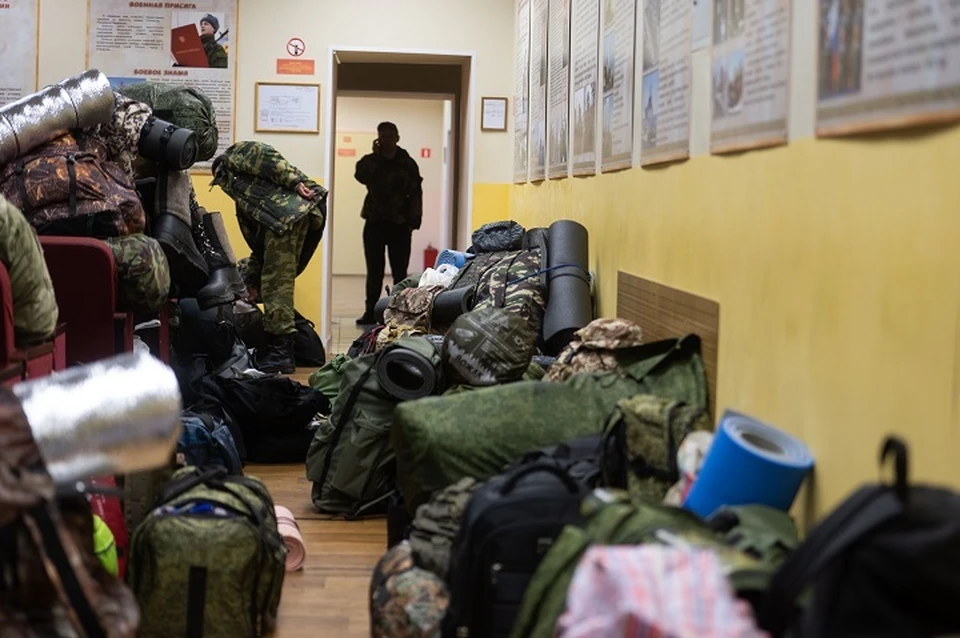
  • Disproportionate Mobilization of Indigenous Peoples in Khabarovsk Krai in raw figures
    Disproportionate Mobilization of Indigenous Peoples in Khabarovsk Krai in raw figures

    Author: Maria Vyushkova


    On August 1, 2024, a study was published by the publication “Important Stories” and the independent analytical group Conflict Intelligence Team. Based on data about payments to military personnel and their families, both teams managed to calculate the number of contract soldiers and mobilized personnel recruited from autumn 2022 to April 2024.

    According to these calculations, 4,496 people were mobilized in Khabarovsk Krai.

    How many of them were representatives of the region’s indigenous peoples?

    We can find the answer to this question in the speech of the President of the Association of Indigenous Peoples of the North of Khabarovsk Krai Lyubov Odzyal. She delivered this speach at an event called “Special military operation: Contribution of the Indigenous Peoples of the North and Far East”, which was held in Moscow on April 30, 2024, as part of the XIX international exhibition and fair “Treasures of the North”. Lyubov Odzyal stated that 200 representatives of the indigenous peoples of the Khabarovsk Territory were mobilized.

    According to the 2021 census, the population of the Khabarovsk Territory is 1,292,944 people. The indigenous peoples (Nanai, Negidal, Nivkh, Oroch, Udege, Ulchi, Evenki, Evens) number 21,129 people.

    This means that the number of mobilized from the non-indigenous population of the region is approximately 34 people per 10 thousand residents.

    As for the indigenous population the number is about 95 per the same 10 thousand.

    The numbers speak for themselves. Representatives of the indigenous peoples were indeed taken much more often.

    The consequences of this are already visible. In the Udege village of Gvasyugi, only 211 people live according to the census. Five of the mobilized people are now known to have died.

    War and disproportionate mobilization are a direct threat to the future of the indigenous peoples of Khabarovsk Krai.

    References:  

    https://istories.media/stories/2024/08/01/za-dengi-da

    https://vk.com/video-72178198_456239674

    https://ok.ru/video/7419024050720

  • Greed wins: gold miners massively pollute Russian rivers
    Greed wins: gold miners massively pollute Russian rivers

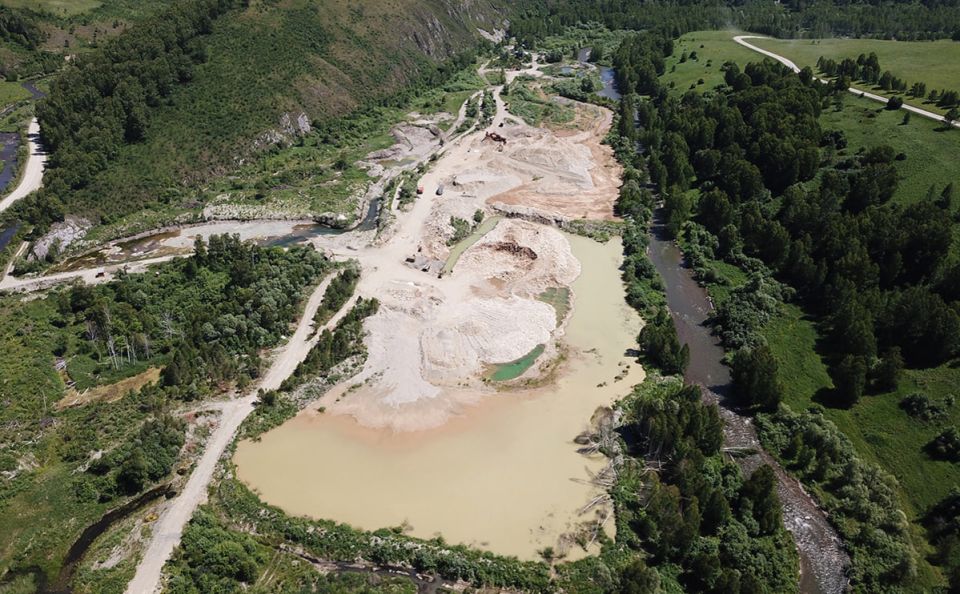
    In June, 231 cases of river pollution caused by suspended substances downstream from placer gold mining sites were documented on the Siberian and the Far East rivers. This pollution extended over 10,761 kilometres, as reported in an interim analysis by the Center for Satellite Monitoring and Civil Control (CSMiGK) available to the “Zolotari” project. Environmentalists describe it as the most extensive pollution from gold mining activities observed in recent years.

    As mentioned by Kedr.Media and Alexander Kolotov, the satellite images decrypted and analyzed by CSMiGK specialists revealed that between June 1 and June 30, there were 105 cases of river pollution in the Amur region, spanning 3,352 kilometres; 43 cases in Krasnoyarsk Krai, covering 2,750 kilometres; 36 cases in the Kemerovo region, covering 2,909 kilometres; 27 cases in Zabaykalsky Krai, spanning 1,444 kilometres; 14 cases in the Jewish Autonomous Region, covering 266 kilometres; and 6 cases in Khabarovsk Krai, spanning 40 kilometres.

    “The extensive nature of these environmental violations on the gold-bearing rivers of Siberia and the Far East clearly shows that greed is triumphing over nature, and the state has yet to counter this,” commented Alexander Kolotov, director of the “Conservation of Siberia and the Far East” foundation, regarding the satellite monitoring results. “If hundreds of gold mining licenses are issued each year without the ability to monitor their use, the outcome is predictable: isolated inspections and fines simply lose their effectiveness.”

    Kolotov explained that as placer gold mining became highly profitable due to rising gold prices, gold miners largely ignored environmental restrictions, assuming that the potential profits would more than cover any fines. “This is why we see murky streams stretching downstream from gold mines for tens of kilometres almost without interruption in the satellite images,” noted the environmentalist. “This situation can only occur when gold mining waste is intentionally discharged into the river without regard for environmental oversight by the state.”

    From May 15 (the start of satellite monitoring) to June 30, the Center for Satellite Monitoring and Civil Control recorded a total of 308 instances of river pollution with suspended substances downstream from placer gold mining sites, with the total length of identified pollution reaching 13,544 kilometres.

    Photo by abnews.ru

    Also, it is important to heed this observation by environmentalists: “Murky streams extend downstream from gold mines for tens of kilometres almost uninterrupted,” as noted by the environmentalist. “This is only possible when gold mining waste is intentionally discharged into the river without any consideration for environmental oversight by the state.” Another significant statement is: “Gold miners have largely stopped complying with environmental regulations because they anticipate that potential profits will outweigh any fines.”

    This means a long-term loss of drinking water and fish in these rivers for indigenous peoples. And not just during the years when gold mining cooperatives are active on the rivers, but for hundreds of years. Fish cannot reproduce in murky streams. As is well known, the fish stocks of Alaska’s gold-bearing rivers that do not flow into the sea have not recovered since the gold rush.

    Therefore, it is no surprise that Rosprirodnadzor (Federal Service for Supervision of Natural Resources of the Russian Federation) imposed such a large fine on Norilsk Nickel, with the largest portion attributed to potential damage to aquatic biological resources.

    It’s easier to deal with a large violator who is always in the public eye. But gold mining cooperatives are only fined small amounts, and only after the discovery of some pipe discharging waste into the river. This is one of thousands of such pipes. And it’s generally difficult to detect and prove the mass instances of machinery entering the rivers.

    However, the Center for Satellite Monitoring and Civil Control has recorded hundreds of violations and thousands of kilometres of murky water in rivers downstream from licensed sites.

    This is a serious reason for indigenous peoples, along with concerned local populations, to appeal to the Government and the State Duma with a demand to improve the relevant laws on placer gold mining. These laws should regulate the issuance of hundreds of licenses and prevent the mass pollution of rivers, which causes enormous and potentially long-term damage to aquatic biological resources and the nation’s food security.

    Many regional indigenous organizations and local environmental groups from Murmansk to Kamchatka could support such a public initiative.

    Photo by Alexey Gribkov