Category: Main

  • Manufacturing Indigenous Legitimacy

    Manufacturing Indigenous Legitimacy

    Russia’s Architecture of Captured Indigenous Representation and International Propaganda


    Introduction

    Russian Association of Indigenous Peoples of the North (RAIPON) was once regarded as the principal representative organization of Indigenous Peoples in the Russian North. Today it operates within an entirely different political logic.


    Through leadership capture, financial dependency, close partnerships with extractive industries, and state-directed diplomatic programs, the organization has been transformed into an intermediary through which the Russian state projects carefully managed narratives into international institutions.


    This transformation has profound implications that extend far beyond Russia. The capture of Indigenous representation demonstrates how authoritarian governments can preserve the appearance of participation while systematically eliminating independent voices. Rather than excluding Indigenous Peoples from international governance, the state has learned to speak through organizations that no longer represent them.

    Today RAIPON stands accused of becoming a de facto arm of the Kremlin, more a mouthpiece for state interests than a champion of Indigenous communities. Moreover, it has evolved into one of the most strategic tools utilized by the Russian state to advance its geopolitical agenda under the banner of Indigenous representation.

    This transformation is particularly visible on the global stage, where Russia leverages RAIPON to portray itself as a benevolent state actor defending Indigenous rights, while simultaneously co-opting Indigenous institutions to reinforce state narratives and economic interests. This report examines how a once-independent Indigenous platform was co-opted into a state apparatus, and the urgent implications of that shift.

  • Dmitry Berezhkov. A Time of Cowards and Scoundrels

    Dmitry Berezhkov. A Time of Cowards and Scoundrels

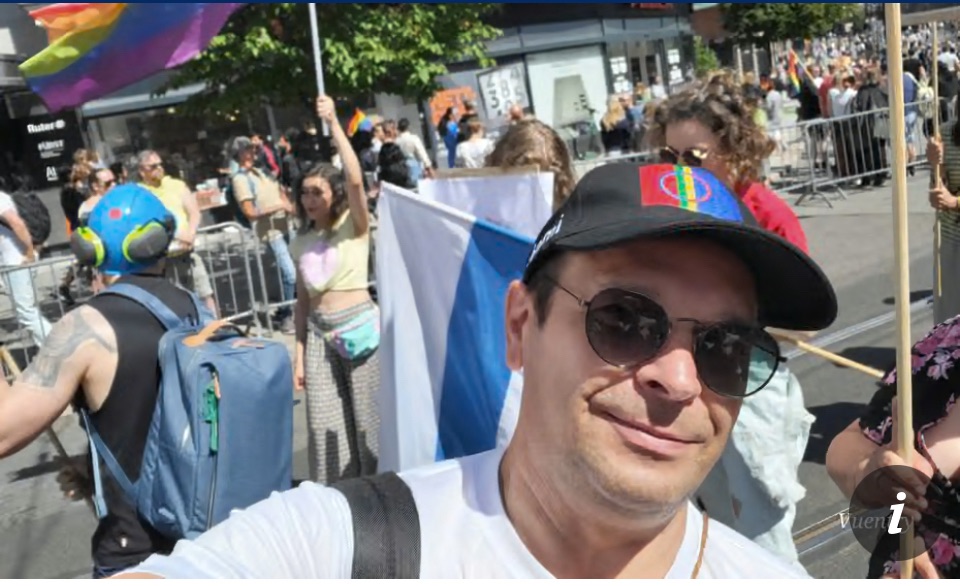
    Photo by Sergey Gavrilov

    We are living in strange times.

    Today, what was used to be an unquestionable truth—such as the slogans “No to war” or “Peace to the world”—is now called a crime by many. What was once considered an absolute priority—respect for the individual and for human rights—is today portrayed by many as an anachronism, a relic of the past, or a liberal conspiracy.

    What was once regarded as a moral duty—to stand up for those subjected to political repression—is now declared a violation of state foundations. Silence and obedience to political diktat are presented as “responsibility.” Refusal to help those unjustly persecuted is framed as a “balanced position.”

    Murderers are turned into “heroes.” Scoundrels and villains become moral authorities.

    A few days ago, after a month and a half of silence, Alexander Novyukhov, President of RAIPON—the Association of Indigenous Small-Numbered Peoples of the North, Siberia and the Far East of the Russian Federation—finally commented on the December arrests in Moscow of Indigenous human rights defenders.

    Among those arrested was Daria Egereva—a person widely known in the international Indigenous community for its consistent human rights work within the United Nations system, including on climate change, biodiversity, and the rights of Indigenous women.

    Today, Daria is in prison. Essentially, for the fact that for many years she openly, in good faith, and professionally did her job—defending the rights of Indigenous small-numbered peoples, one of the most vulnerable and marginalized groups in Russia.

    I have known both Dasha and Sasha Novyukhov for many years. Once, we all began as young activists in the Indigenous movement: Dasha in Tomsk, Novyukhov in Khanty-Mansiysk, and I in Kamchatka. We were full of enthusiasm and hope that we—the young generation of Indigenous peoples—could change life for the better, could ensure that our peoples would be able to live fully the way of life passed down to us by our ancestors: freely fishing, hunting, herding reindeer on ancestral lands, without the oppression of state bureaucracy, without constant humiliation by officials and predatory businessmen.

    Twenty-five years ago, RAIPON was a unifying political force for the Indigenous small-numbered peoples of the Russian North. It was an organization that took a principled stand in defense of Indigenous rights—both within Russia and at the international level.

    We, representatives of what was then the young generation of Indigenous peoples, lived in a time when Russia still adopted federal laws that did not diminish our peoples’ rights, but rather systematically developed their legal status in line with international law.

    However, Alexander Novyukhov already stood out back then from us—young activists who entered the Indigenous movement out of conviction. From the very beginning, he chose a different path: combining public activism with building a career within the state power structure.

    This path is indeed rational for a careerist: participation in public movements provides visibility and access to high-ranking officials, while a state career, in turn, strengthens one’s position within Indigenous organizations themselves. Judge for yourself:

    • 1999–2001:  Deputy Chairman of the Committee for Indigenous Peoples of the North, Berezovsky District Administration, Khanty-Mansi Autonomous Okrug–Yugra
    • 2001–2003:  Head of the Department for Regulation of Relations with Subsoil Users, Committee for Indigenous Peoples of the North, KhMAO–Yugra
    • 2003–2008:  Assistant to the Deputy Chairman of the Government of KhMAO–Yugra on Indigenous Affairs, Governor’s Administration
    • 2008–2011:  Assistant to the Deputy Chairman of the Government of KhMAO–Yugra, Governor’s Office
    • 2011–2016:  Advisor to the First Deputy Governor of KhMAO–Yugra
    • 2016–2021:  Deputy of the Duma of KhMAO–Yugra from the  United Russia  party
    • 2021–present:  Member of the Federation Council of the Russian Federation from KhMAO–Yugra

    And in parallel:

    • President of the regional Indigenous organization  Saving Yugra  (2001–2016)
    • Vice President of RAIPON (2016–2021)
    • First Vice President of RAIPON (2021–2025)
    • President of RAIPON since April 2025

    A perfect bureaucratic ladder in Putin’s Russia. Novyukhov has always consistently voted at meetings—no matter which ones—in favor of all government initiatives, and has successfully blocked public initiatives that displeased the authorities.

    In addition, he successfully built financial relationships with oil companies in the Khanty-Mansi region—the richest oil-producing region in Russia.

    But his most terrible crime is not even this.

    Alexander Novyukhov bears direct responsibility for the war in Ukraine and for the deaths of hundreds of thousands of people, including thousands of Indigenous people on both sides. As a senator of the Federation Council, Novyukhov voted  in favor  of the invasion in February 2022— “Russia Votes to Use Troops Abroad After Separatist Recognition” .

    Moreover, the leadership of RAIPON—where Novyukhov was First Vice President at the time—went even further and issued a separate statement supporting President Putin’s decision to invade Ukraine, titled  “RAIPON supports the decision of President Putin to start the war in Ukraine ,” which was also signed by Alexander Novyukhov.

    And today, this man—whose hands are stained with the blood of innocents, women, children, and his own Indigenous kin killed in this war—lectures us about the “presumption of innocence and fair decisions”? About his work “to ensure sustainable development and the protection of special constitutional rights of Indigenous peoples of Russia”?

    There is hardly any point in analyzing Novyukhov’s statement regarding Daria Egereva’s arrest in detail—almost every line of it is false and propagandistic, turning into truth and truth into lies. One example is enough: the claim that  “Indigenous peoples have freely developed within the Russian state for many centuries” —as if centuries of colonial domination of Siberia and the Arctic by the Russian Empire never existed.

    However, I want to dwell on one particular moment—Novyukhov’s assertion that  “the Association has no moral right to defend people suspected of ties with organizations officially recognized as extremist.”

    In July 2024, Russian authorities designated  55 organizations  working in the field of Indigenous and minority rights as extremist, falsely labeling them as “branches” of a fabricated  “Anti-Russian Separatist Movement.”  The same tactic was previously used with the fictitious  “International LGBT Movement.”

    Once again: such organizations  do not exist . They were entirely invented by the Russian Ministry of Justice and the FSB to facilitate mass repression.

    Our organization—the  International Committee of Indigenous Peoples of Russia (ICIPR) —was included in that list. We issued a public statement and, together with dozens of Indigenous organizations worldwide, submitted an appeal to the UN stating that the mass criminalization of Indigenous organizations constitutes a blatant violation of international law and opens the door to further repression.

    Later in 2024, the list was expanded:  172 organizations , including ICIPR and the Indigenous activist network  Aborigen Forum , were reclassified as terrorist organizations.

    Many of these organizations, operating abroad, openly speak about independence from Russia and about Russia’s continued imperial nature.

    We never did.

    Even today, as political exiles forced to flee Russia, ICIPR members have  never  advocated independence. On the contrary, Pavel Sulyandziga—one of the most well-known Indigenous leaders—has repeatedly stated that he does not support separatism or the “collapse of Russia.”

    Yes, we speak of  self-determination . As all Indigenous peoples of the world do. This principle is enshrined in core UN documents.

    Russia abstained from voting on the UN Declaration on the Rights of Indigenous Peoples—but voted  in favor  of the 2014 UN General Assembly Outcome Document on the World Conference on Indigenous Peoples, thereby recognizing the Declaration and committing to its principles.

    This is what self-determination means: consultation, consent, respect for Indigenous ways of life. For a city dweller, a pipeline is just a line on a map. For a reindeer-herding community, it can be a death sentence.

    This is what we spoke about. This is what  Aboriginal Forum  spoke about at the UN.

    And Novyukhov knows all of this perfectly well.

    He knows that the Russian authorities deliberately lumped together Indigenous activists inside Russia with political movements abroad simply to find scapegoats—unable to reach some, they struck the most vulnerable.

    And making his lying, immoral statement, the scoundrel and villain Alexander Novyukhov knew exactly what he was doing.

    We live in a time of scoundrels and villains. And that is our tragedy.

    Dmitry Berezhkov

    Source

  • Open Statement of Concern to the UN Expert Mechanism on the Rights of Indigenous Peoples (EMRIP)

    Open Statement of Concern to the UN Expert Mechanism on the Rights of Indigenous Peoples (EMRIP)

    from
    the International Committee of Indigenous Peoples of Russia (ICIPR)

    10 July 2025

    To: Chair and members of the Expert Mechanism on the Rights of Indigenous Peoples

    Cc: Albert Barume, UN Special Rapporteur on the Rights of Indigenous Peoples Ambassador Jürg Lauber,

    President of the UN Human Rights Council

    UN Permanent Forum on Indigenous Issues

    We, the International Committee of Indigenous Peoples of Russia (ICIPR), submit this statement with urgency and alarm: the credibility of EMRIP and the integrity of Indigenous representation face a grave threat.

    Global Indigenous representation mechanisms—EMRIP included—are now being systematically infiltrated by actors who no longer represent the will, rights, values of Indigenous Peoples. As you are aware, the Russian Association of Indigenous Peoples of the North (RAIPON), long co-opted by state and corporate interests, has dramatically increased its efforts to enter and influence Indigenous global governance mechanisms.

    We, Indigenous representatives of Russia, write to you not only as critics—but as witnesses. We remember what RAIPON once was. We were RAIPON too. And because we lived through its capture—we know exactly how dangerous this is.

    In our earlier lives, many of us helped build the Russian Association of Indigenous Peoples of the North. It was once an authentic, grassroots Indigenous platform— born in the 1990s during a period of hope and political openness. It shaped federal Indigenous legislation. It gave us voice in the Arctic Council and the United Nations. It connected our communities to the world.

    We built RAIPON with the intention of forging a national Indigenous movement grounded in resistance, dignity, and self-determination. But over time, we watched RAIPON fall. In 2013, it was forcibly overtaken by state-aligned actors. Today, that organization is no longer ours. It has been captured, repurposed, and weaponized by the Russian state.

    Paradoxically, while the domestic space for Indigenous expression and resistance continues to collapse, RAIPON is increasingly showcased abroad as a symbol of Russia’s supposed commitment to Indigenous rights. The movement we helped build has been turned into an instrument to suppress the very voices it was meant to uplift. And now, the mechanisms of the United Nations risk becoming its next stage.

    RAIPON is gaining ground in UN forums, Arctic governance spaces, and global civil society venues. RAIPON-linked individuals not only speak at these forums, they help run them. They occupy prestigious seats – enjoying consultative status at the UN and a Permanent Participant seat at the Arctic Council. On the surface, their approach is careful, diplomatic, and seemingly aligned with Indigenous priorities. Their representatives speak the right language, engage with protocols, and present themselves as natural allies. But it is a calculated and effective campaign, backed by state propaganda diplomacy, vast extractive capital, and a growing apparatus of trained Indigenous spokespersons who echo government lines.

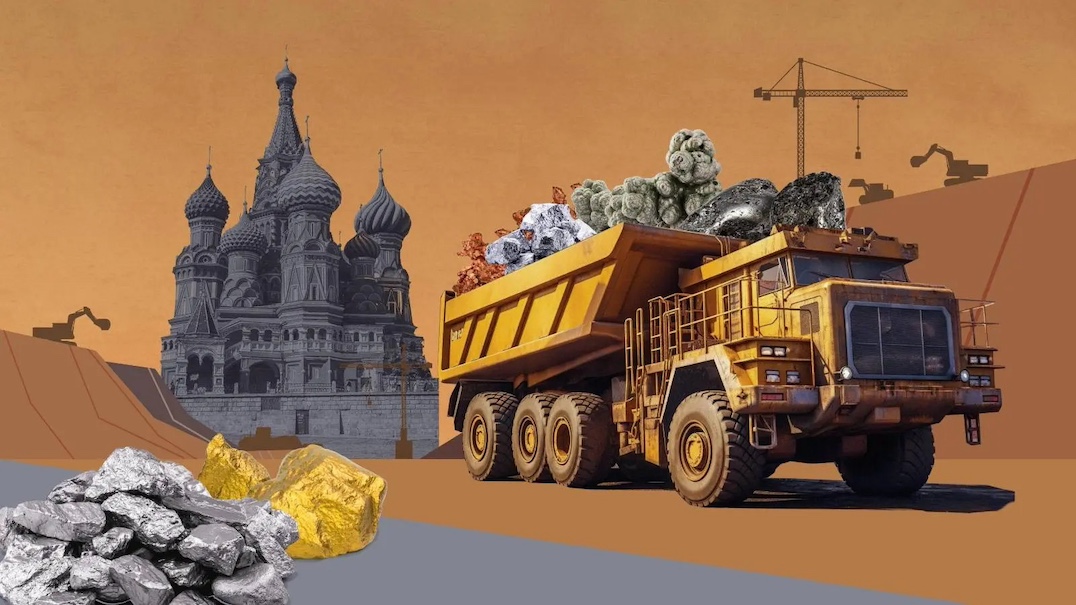
    We urge EMRIP to critically assess the appointment of Antonina Gorbunova, whose inclusion on the Mechanism as an “independent expert” is deeply troubling. She is openly affiliated with RAIPON and receives funding and institutional support from Norilsk Nickel (Nornickel)— the world’s biggest polluter on Indigenous homelands. The mining company funnels funding into RAIPON and parallel groups (i.e.“ KMNS Soyuz”, a union for Indigenous Peoples of the North created with Nornickel’s backing). This is not independence—it is extractive complicity. How can an “independent” expert, elevated not by Indigenous communities, but by state-linked platforms and extractive capital be tasked with defending the rights of Indigenous Peoples to land and self-government?

    We also raise concerns about Mr. Alexey Tsykarev, a former EMRIP member who now heads Russia’s School of Indigenous Diplomacy——a joint venture of state agencies, state-aligned businesses, and RAIPON. Tsykarev is not Indigenous himself, but a government-aligned staff member hired by the Russian state and its corporate partners to train and position so-called Indigenous diplomats.

    Notably, he has been declared persona non grata in several Baltic and Nordic countries due to his assessed threat to national security—underscoring how closely his activities align with Kremlin soft power strategies. His continued role in Indigenousdiplomacyundermines both the credibility and the safety of international Indigenous platforms.

    The school explicitly aims to train and place Indigenous diplomats into global forums. This manufactured class of Indigenous envoys is being inserted into international institutions – a strategic manipulation of identity and narrative. This school does not cultivate Indigenous agency—it manufactures compliance. It trains Indigenous delegates not to question power, but to perform loyalty. Funded by the Russian state and private business (Nornickel) endorsed by RAIPON, it is part of a wider strategy of Indigenous disempowerment disguised as inclusion. And while RAIPON has leveraged its influence to position its people in key roles, independent voices are denied travel, funding, or accreditation.

    This is not Indigenous diplomacy. This is Indigenous-washing.

    We name it for what it is: a sophisticated strategy by authoritarian regimes to decorate repression with the faces of those they silence at home. Indigenous- washing manipulates identity to hide harm. It is a brutal new chapter of colonialism—where the colonized are used to colonize further, weaponizing representation itself.

    This is not a future threat—it is happening now.

    Across the world, governments increasingly seek to instrumentalize Indigenous platforms to serve state agendas. States are learning that the best way to silence Indigenous Peoples is not through force—but through appointment. They manufacture loyalty, promote obedient leaders, and fund state-aligned NGOs, all while criminalizing or exiling true Indigenous independent leaders and institutions.

    Indigenousmovementsmustremainaccountabletothepeoples,notto authoritarianagendas or corporate interests. It is a betrayal of our collective struggle when the voices of Indigenous resistance are replaced by performers of diplomacy, selected for their obedience rather than their truth.

    Indigenous Rights Mechanisms were not built to stage state narratives. They were built to challenge them, to be a force for legislative change and a shield for vulnerable communities. If we do not act now, we risk losing not only credibility —but entire communities who will no longer see the UN as a place for justice.

    We refer EMRIP to two key investigations:

    • “RAIPON: From Nation-Based Change Agent to a Weapon of State- Controlled Propaganda” (ICIPR, 2024)
      https://indigenous-russia.com/ archives/38572
    • “They work for the benefit of those at the top.” How the Association of Indigenous Peoples became an enrichment and lobbying tool” (Arctida, 2024)
      https://arctida.io/en/investigations/oni-rabotayut-na-blago-verhushki

    These reports provide detailed evidence of how the Russian government and extractive companies like Nornickel strategically fund and influence so-called Indigenous organizations to serve their agenda – both domestically and internationally.

    We must not allow this model to globalize. If the international Indigenous platform does not draw a line now, the machinery of manipulation will replace the movement entirely.

    We call on EMRIP to ensure that those who betrayed Indigenous Peoples do not define Indigenous Future.

    We ask you to act with clarity, independence, and moral courage that this moment demands.

    In resistance and solidarity,

    International Committe of Indigenous Peoples of Russia (ICIPR)


    Website: https://icipr.international
    E-mail: [email protected]

  • Our voices will endure—even if they try to silence them.

    Our voices will endure—even if they try to silence them.

    On May 13, 2025, the Prosecutor General’s Office of the Russian Federation declared the activities of the Batani International Fund for the Development and Solidarity of Indigenous Peoples “undesirable” on Russian territory.

    This decision is more than a bureaucratic formality—it’s a signal. Another attempt to silence the voices of those who have faced decades of marginalization, forced relocation, land dispossession, and cultural assimilation: the Indigenous peoples of Russia.

    This is not the first time the Russian authorities have tried to silence our independent voice. The first attempt came in 2016, when we were labeled a “foreign agent.” Our organization was shut down under allegations of numerous legal violations, and several of our members faced criminal prosecution.

    In 2018, we rebuilt the Batani Foundation to once again bring together activists, researchers, and allies dedicated to defending the rights of Indigenous peoples—not only in Russia, but around the world. As a Mexican proverb says, “They tried to bury us. They didn’t know we were seeds.”

    Our mission is sustainable development, the protection of Indigenous languages, cultures, and the environment, and the amplification of minority voices on the global stage.

    The Russian government claims our work is “anti-Russian.” But we are not a threat—we are witnesses. We are not enemies of the state—we are partners of Indigenous peoples. And we will not be silenced.

    We will continue to speak for those whose voices are being suppressed. We remain open to collaboration—with the international community, human rights organizations, UN representatives, journalists, and all who share our values of freedom, dignity, and equality.

    This decision by the Russian authorities only underscores one thing: our work is needed now more than ever.

    The Batani Foundation Team

    May 18, 2025

    Sourced from Indigenous Russia

  • Historic International Conference on Indigenous Peoples of the North, Siberia, and the Russian Far East Held on Orcas IslandInternational Conference on Indigenous Peoples of the North, Siberia, and the Far East and the Future of Russia Held on the Island”) reports on a recent international conference focused on the rights and future of Indigenous peoples in Russia’s northern regions.

    Historic International Conference on Indigenous Peoples of the North, Siberia, and the Russian Far East Held on Orcas IslandInternational Conference on Indigenous Peoples of the North, Siberia, and the Far East and the Future of Russia Held on the Island”) reports on a recent international conference focused on the rights and future of Indigenous peoples in Russia’s northern regions.

    From April 14 to 17, 2025, a historic international conference took place on Orcas Island, Washington State, USA, on the traditional lands of the Lummi Nation. The event focused on the current situation and future of the Indigenous peoples of the North, Siberia, and the Russian Far East in contemporary and post-Putin Russia. It was organized by the Batani International Foundation, the International Committee of Indigenous Peoples of Russia, the Indigenous Russia platform, and Russian-Speaking America for Democracy in Russia.

    The conference brought together Indigenous representatives from Russia’s northern regions, members of Russian civil society, scholars, politicians, human rights defenders, activists, journalists, and international partners. Together, they engaged in open dialogue on Indigenous rights, Russian imperial policy, decolonization, and the democratic future of Russia. A cornerstone of the event was the adoption of a landmark document titled the Orcas Island Declaration: A Statement of Reconciliation and Respect.


    April 15 – Day One

    The first day featured four key sessions:

    1. The Situation of Indigenous Peoples of the North, Siberia, and the Far East
      Representatives of the Itelmen, Sámi, Dolgan, Udege, Shor, and other Indigenous groups shared accounts of the rights violations and challenges faced in their regions.
    2. Contemporary Challenges
      This session addressed the effects of repression, rights violations, and environmental exploitation, along with insights from international institutions on legal protection and advocacy.
    3. The Future of Russia: Decolonization and Self-Governance
      Experts discussed possible models for a post-imperial Russian state that would respect Indigenous rights and self-determination.
    4. Collaboration with Pro-Democracy Movements
      Participants reviewed the current state of cooperation between Indigenous organizations and Russia’s democratic opposition, proposing practical steps to strengthen dialogue and coordination.

    April 16 – Day Two

    The second day was devoted to the collective development of the conference’s final document. After intensive discussions and consultations, participants adopted the Orcas Island Declaration: A Statement of Reconciliation and Respect.

    Adoption of the Orcas Island Declaration

    The declaration serves as a foundational document that:

    • Condemns colonial policies, forced assimilation, and repression against Indigenous peoples in Russia;
    • Emphasizes the need to restore historical justice;
    • Commits to collaboration with democratic forces for a future based on equality and human rights;
    • Calls for the creation of a permanent dialogue platform;
    • Sets concrete goals, including monitoring rights violations, offering legal assistance, developing legislative initiatives for Indigenous rights and land/resource protection, and advancing research and education projects.

    Inspired by reconciliation efforts in Canada, the U.S., Australia, and Norway, the declaration urges Russia to undertake a similar path—acknowledging its colonial legacy, restoring respect for Indigenous communities, and enacting institutional reforms. The document is more than a conference outcome; it is a moral and political guidepost for those advocating for the rights of Russia’s Indigenous peoples.

    In the afternoon, the Lummi Nation hosted a community event for conference participants and residents. Speakers included representatives of the Native American organization Se’Si’Le, as well as Pavel Sulyandziga, Tyan Zaochnaya, and Vladislav Inozemtsev. This gathering symbolized international solidarity and underscored the shared histories of colonization and the global movement for Indigenous rights.


    April 17 – Day Three

    On the final day, conference participants visited the Lummi Nation reservation and met with members of the Tribal Council. This visit was both a gesture of respect and gratitude and a first step toward building a lasting partnership between Indigenous peoples of Russia and the United States.


    The conference marked a significant milestone toward envisioning a new Russia—democratic, inclusive, and respectful of every nation’s right to self-determination and dignity.

  • Just Transition Indigenous Summit will be held on October 8-10 in Geneva
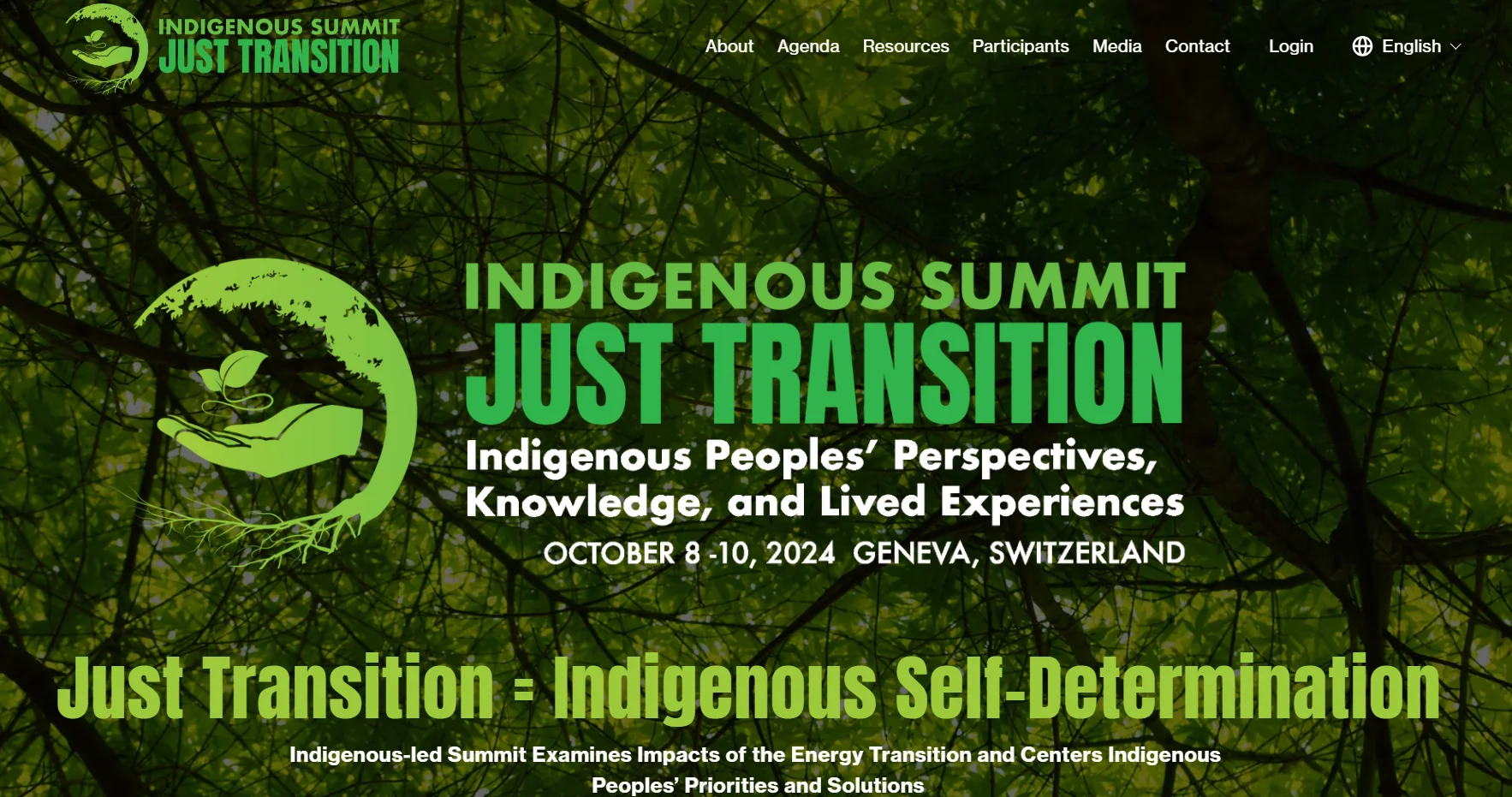
    Just Transition Indigenous Summit will be held on October 8-10 in Geneva

    The Just Transition Indigenous Summit aims to address the impacts of the energy transition on Indigenous communities and prioritize their perspectives and solutions. Scheduled for October 8-10, 2024, in Geneva, this summit will convene over 100 representatives from Indigenous groups across the globe.

    As governments and corporations pivot towards a low-carbon economy to address the climate crisis, there is often a neglect of the rights of Indigenous Peoples as defined in the United Nations Declaration on the Rights of Indigenous Peoples (UNDRIP). These rights include the principles of self-determination and Free, Prior and Informed Consent (FPIC). The summit intends to challenge conventional narratives regarding the Just Transition and underscore the necessity of integrating Indigenous values and rights into all phases of project development and implementation.

    The objective of the summit is to affirm a rights-based approach relevant to any extractive projects proposed on Indigenous lands. It will establish criteria and safeguards that align with the principles of Just Transition. Discussions will focus on ensuring that projects do not replicate the harms associated with fossil fuel extraction and other traditional resource developments.

    This summit represents a significant gathering where Indigenous Peoples from seven socio-cultural regions will unite to collectively redefine the Just Transition and the notion of a “Green Economy” from their distinct perspectives.

    Rodion Sulyandziga, Chair of the Indigenous Peoples Global Coordinating Committee, emphasizes the importance of Indigenous-led initiatives within the broader context of environmental policy and resource management, underscoring the commitment to the protection and upliftment of Indigenous voices in the transition to a sustainable future.

    The Just Transition Indigenous Summit serves as a pivotal platform for advocating the rights of Indigenous Peoples, driving forward their priorities and contributions in the ongoing movement towards a more equitable and sustainable global economy.

  • Russia’s Control Over Sami People

    Russia’s Control Over Sami People

    The situation regarding the Indigenous Sami people in Russia is grave, as they are being compelled to conceal their identity due to government pressures and legal changes. The Russian administration’s actions threaten their cultural heritage and autonomy, outlining a broader narrative of dominance over minority groups.

    The Russian government is implementing measures that compel Indigenous Sami people to suppress their identity. This initiative is likened to an attempt for “total control” over these communities, undermining their cultural expressions and traditions. The Ministry of Justice has introduced 55 new Indigenous groups, further complicating the representation of Sami identity within legal frameworks.

    Cultural Erosion

    The enforced assimilation policies pose a significant threat to the Sami’s traditional way of life. As legal pressures mount, many Sami individuals experience a disconnection from their cultural roots, leading to a gradual erosion of their identity. This tactic is detrimental not only to the Sami themselves but also to the richness of cultural diversity that exists within Russia.

    Historical Context

    Historically, Indigenous communities, including the Sami, have faced marginalization and systemic oppression. The current situation marks a continuation of such practices, reflecting a persistent struggle against the dominant narratives imposed by state authorities. It is crucial to recognize the historical context behind these contemporary issues to understand the depth of the conflict.

    International Response

    The global community has begun to take notice of the plight of Indigenous peoples in Russia, with calls for intervention and support. Activists and human rights organizations are urging for a unified response to safeguard the rights of the Sami and other Indigenous groups. Addressing these urgent concerns is essential in preserving the cultural integrity and livelihoods of marginalized communities.

    Advocacy for Indigenous rights appears essential in combating these repressive measures. By raising awareness and pushing for policy changes, there is hope for the Sami people to reclaim their identity and cultural heritage. Continuous international support and solidarity are necessary in the pursuit of justice and recognition for Indigenous rights.

    Taken from here

  • Joint Side Event of Arctida and ADC Memorial Brussels at the OSCE Human Rights Conference: Criminalization and Destruction of Indigenous Peoples in Russia: State and Corporate Violations
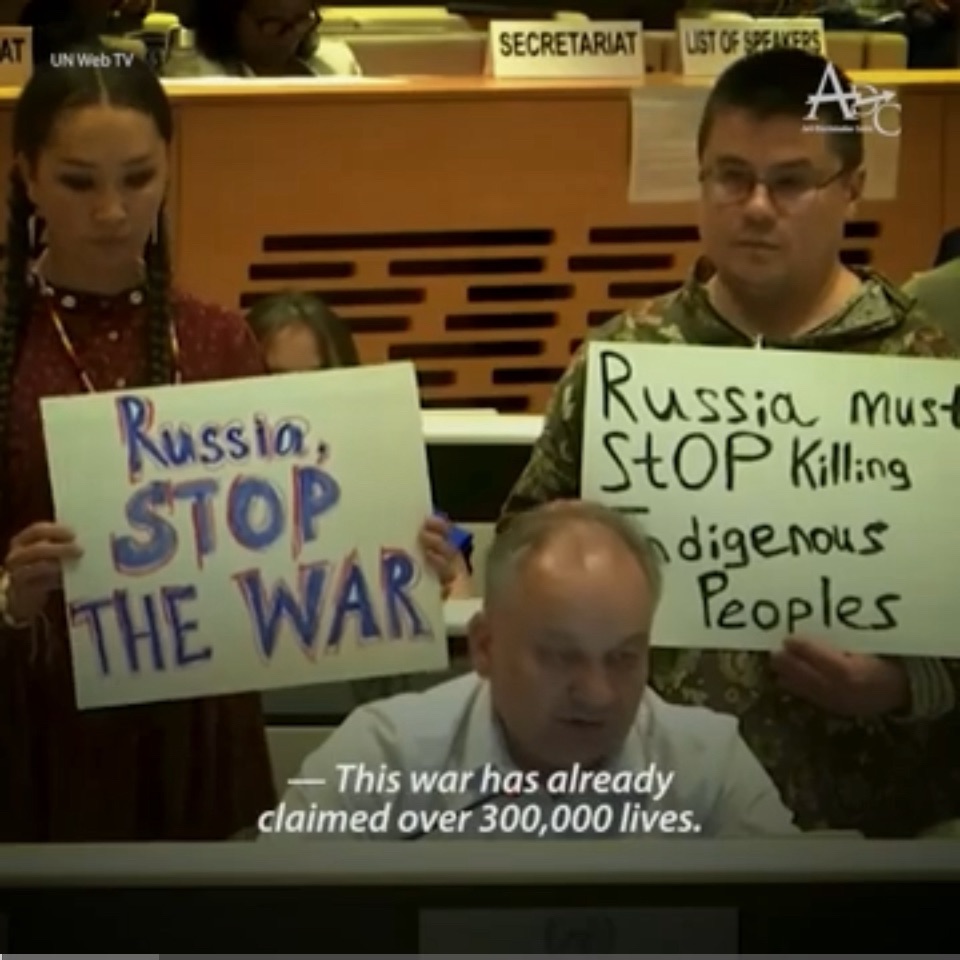
    Joint Side Event of Arctida and ADC Memorial Brussels at the OSCE Human Rights Conference: Criminalization and Destruction of Indigenous Peoples in Russia: State and Corporate Violations

    Date: October 8, 2024
    Time: 13:30-14:30
    Location: Hotel Sofitel Victoria, Warsaw, Opera Room

    This event will focus on the severe challenges facing Indigenous peoples in the Arctic zone of Russia, including state repression and environmental devastation by mining companies.

    The discussion will be led by Ilya Shumanov, head of the NGO Arctida, alongside independent experts from the Indigenous peoples’ movement. Shumanov will present recent findings from his team, revealing how GONGOs (government-organized NGOs) funded by mining companies like Nornickel, in collaboration with corrupt Indigenous representatives, are lobbying for the removal of international sanctions on these corporations.

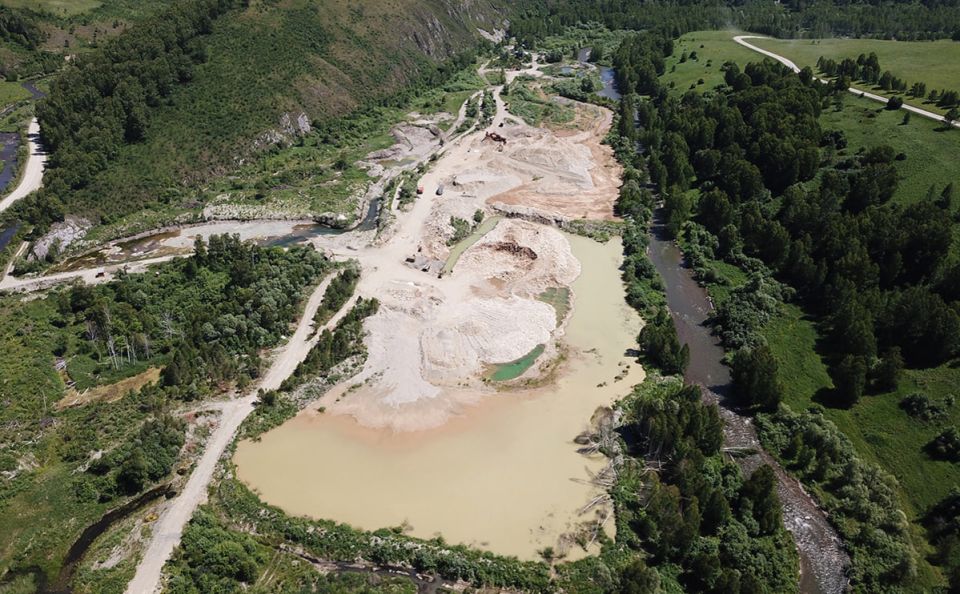
    Independent experts will provide insights into the real situation on the ground, where traditional lifestyles in the Tundra and Taiga are under threat. Mining operations are destroying the environment, polluting water and air, and making it impossible for Indigenous peoples to continue their traditional practices of hunting, fishing, and gathering. Despite the vast wealth generated by these companies in the Arctic, none of it reaches the Indigenous communities. Those who speak out against this exploitation and destruction are criminalized and branded as extremists by the Russian state.

    Taken from here

  • THE STATEMENT OF THE INTERNATIONAL COMMITTEE OF INDIGENOUS PEOPLES OF RUSSIA (ICIPR) REGARDING THE INCLUSION OF 55 ASSOCIATIONS IN THE LIST OF “EXTREMIST ORGANIZATIONS”
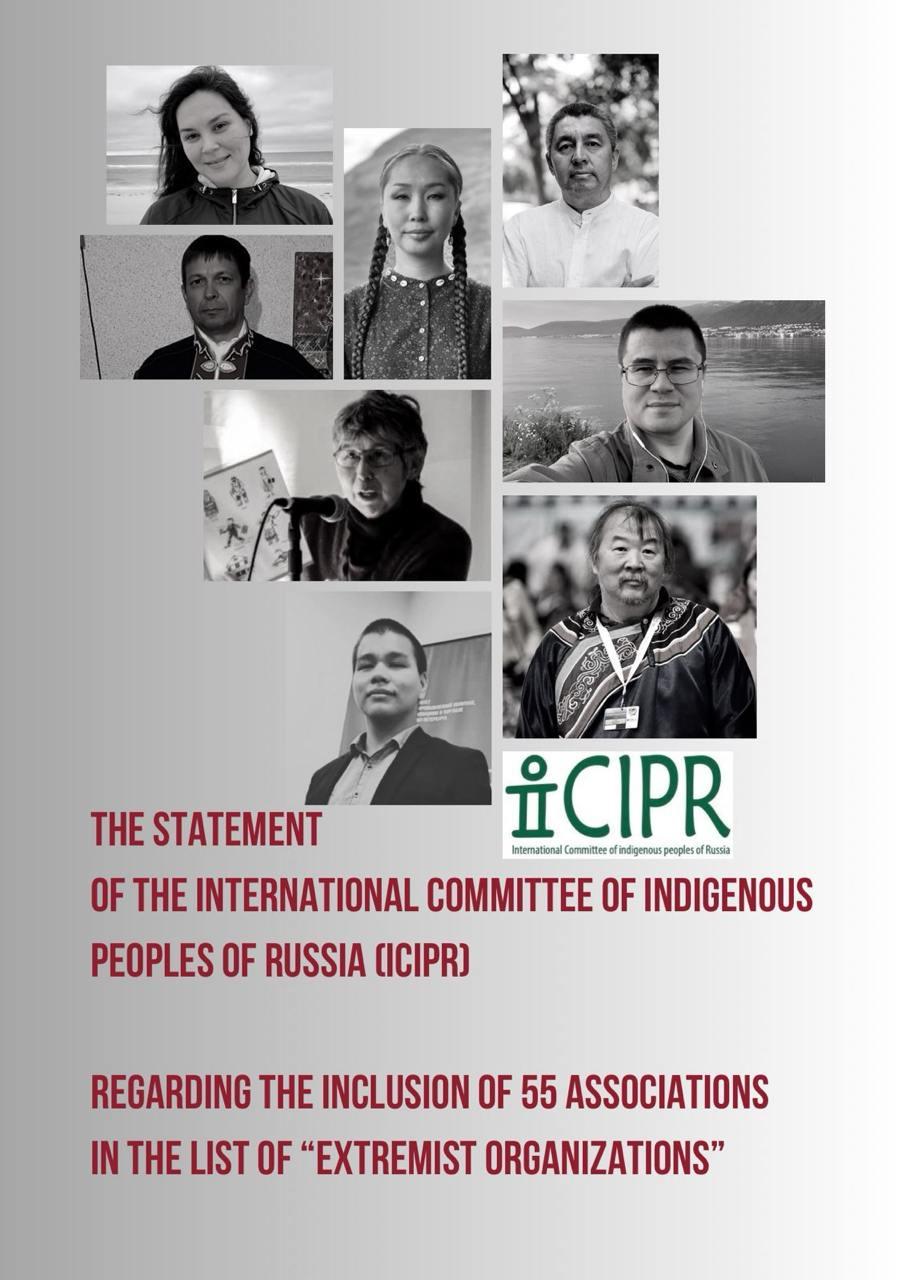
    THE STATEMENT OF THE INTERNATIONAL COMMITTEE OF INDIGENOUS PEOPLES OF RUSSIA (ICIPR) REGARDING THE INCLUSION OF 55 ASSOCIATIONS IN THE LIST OF “EXTREMIST ORGANIZATIONS”

    The International Committee of Indigenous Peoples of Russia (ICIPR) expresses extreme concern and indignation over the inclusion of 55 indigenous peoples’ organizations, national minorities, decolonial, and other associations in the list of “extremists” by the Ministry of Justice of the Russian Federation.

    Aborigen-Forum, an informal association of independent experts, activists, leaders, and public organizations of the indigenous small-numbered peoples of the North, Siberia, and the Far East, also appeared in the list.

    The list also includes the International Committee of Indigenous Peoples of Russia (ICIPR), according to the publication on the website of the Ministry of Justice of the Russian Federation.

    Earlier, we expressed concern when, on June 7, the Supreme Court of Russia, at the request of the Ministry of Justice of the Russian Federation, recognized the so-called “Anti-Russian Separatist Movement” as an extremist organization. We feared that, since such an organization does notify exist and the wording is very broad, any organization criticizing the Russian authorities could be included under this decision.

    Now it is evident how this decision is being implemented. The organizations defending the rights of indigenous peoples are being included into the list of the “extremist” organizations.

    Andrey Fedorkov, the lawyer who collaborates with the human rights project Support for Political Prisoners. Memorial, comments for Idel.Realii:

    Currently, anyone who displays any symbols of their region, used by any organization advocating for the freedom and independence of their region, is at risk. This includes anyone who distributes relevant materials or provides links related to this topic.

    We can see how absurd the application of the law is. My prediction is that a significant number of criminal cases will follow based on these articles.

    Our committee also sees this as a reaction from the Russian government to the participation of indigenous movements in international platforms, such as the UN.

    Just two weeks ago (July 8-12, 2024), a session of the UN Expert Mechanism on the Rights of Indigenous Peoples (EMRIP) concluded in Geneva, where members of our organization raised issues of human rights violations against indigenous peoples in Russia, as well as Russia’s influence on UN bodies.

    Additionally, shortly before the UN session, ICIPR published a report on the Association of Indigenous Peoples of the North, Siberia, and the Far East of the Russian Federation (RAIPON), which is controlled by the Russian government.

    • It is important to note that immediately after the EMRIP session in 2022, Russia blocked our website iRussia.

    • In 2023, after the EMRIP session, ICIPR member and indigenous human rights defender Pavel Sulyandziga was added to the list of foreign agents.

    • And now, in 2024, after the EMRIP session, we have been included in the “extremist” list.

    WE SEE THAT THE REPRESSIVE MACHINE IS GATHERING MOMENTUM.

    THE METHODS OF PERSECUTION AGAINST INDIGENOUS RIGHTS ACTIVISTS ARE INTENSIFYING.

    The International Committee of Indigenous Peoples of Russia (ICIPR) is an international organization of indigenous peoples, established in March 2022 as a response by several leaders and activists of indigenous peoples of Russia to the onset of the war in Ukraine.

    All founding members of ICIPR were previously activists or community leaders of indigenous peoples in Russia and were forced to leave the country for various political reasons.

    The aim of ICIPR is to promote the rights of indigenous peoples of the Russian Arctic, Siberia, and the Far East to their traditional lands, resources, and self-determination at national and global levels during wartime and amidst political repression in Russia.

    WE, representatives of the indigenous small-numbered peoples of the North, Siberia, and the Far East, are deeply alarmed by our inclusion in the “extremist list.” We express our extreme concern regarding the protection of indigenous peoples’ rights in this situation.

    WE, as representatives of the indigenous peoples of Russia, stand in solidarity with other associations that have also been included in this list.

    WE call upon all international organizations, NGOs, as well as intergovernmental, scientific, and human rights bodies, including the UN, the Council of Europe, and the Arctic Council, to CONDEMN the decision of the Ministry of Justice of the Russian Federation to include 55 organizations in the “extremist” list.

    WE ASK FOR SUPPORT IN THE STRUGGLE OF THE INDIGENOUS PEOPLES OF RUSSIA FOR THEIR RIGHTS.

    Translated from

  • Yana Tannagasheva’s Address at the 17th Session of UN EMRIP: A Voice for Indigenous Rights in Russia
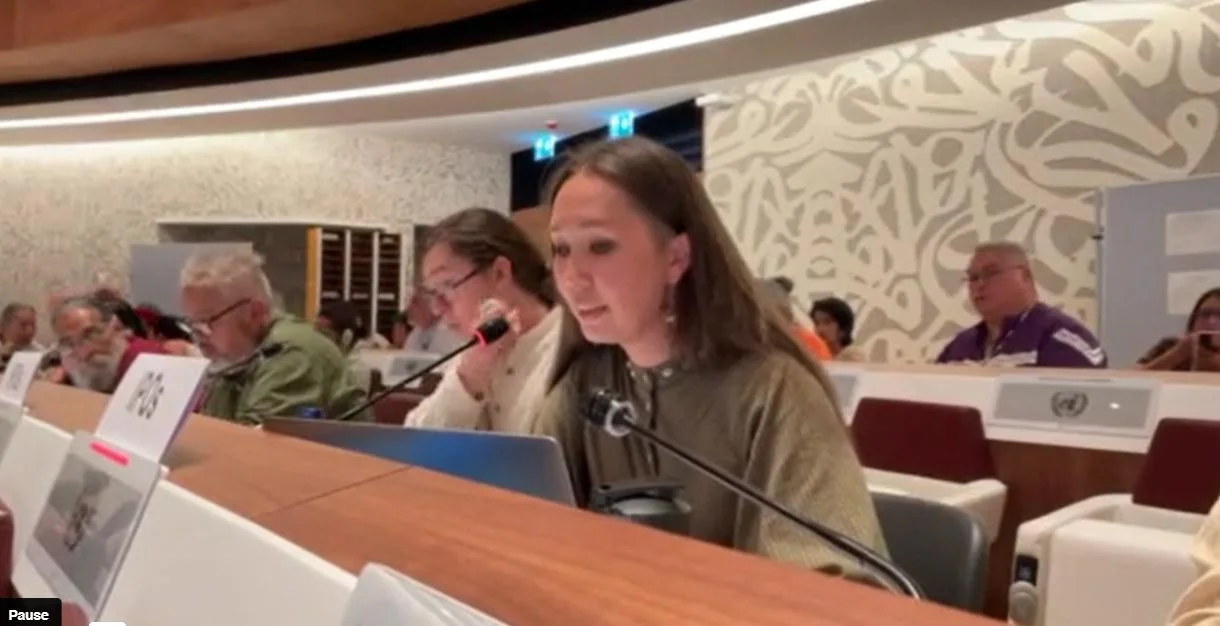
    Yana Tannagasheva’s Address at the 17th Session of UN EMRIP: A Voice for Indigenous Rights in Russia

    Thank you, Mr./Madam Chair, for the floor

    The Russian government talks all the time about the colonialism of IP in other countries but has never said that the IP of the North, Siberia and the Far East were also colonized and continue to suffer. The everyday reality of the Indigenous Peoples of Russia is profoundly different from the rights described by Russian government and some of non-independent Indigenous representatives from Russia. 

    At this time, I am going to speak on behalf of three Indigenous women (Buryat and Sakha Indigenous Peoples of Russia) who applied to attend this session, but for unknown reasons, unfortunately, were denied at the same time and were unable to travel to Geneva, although their tickets had already been purchased. These three strong activists represent anti-war organizations working on decolonial issues and drawing attention to violations of Indigenous rights in Russia and the impact of the war in Ukraine on their communities. 

    I will read their message.

    We, the undersigned Indigenous activists of Russia, are deeply concerned about the current tendency at the UN of Russia’s introducing its representatives into international human rights and Indigenous Rights mechanisms, and we are also very concerned about the exclusion of independent Indigenous voices from Russia from mechanisms such as the UN EMRIP and the PFII. 

    We were not allowed to attend the 17th session of the EMRIP, but we hope that our voices will still be heard loudly. We believe that preventing independent representatives of Indigenous Peoples of Russia from attending UN sessions is a strong influence of the Russian Federation. Russia is trying to spread its propaganda in every possible way. Those who manage to participate in UN sessions are being pressurized by the Russian authorities in every possible way. 

    Russia needs the natural resources of Indigenous Peoples. By selling it, the country earns billions of dollars to wage wars, to maintain a high level in the capital, to generously feed the power structures and keep the oligarch class and the elite loyal. Unfortunately, some Indigenous People’ representatives fall under such influence. Such Indigenous representatives become a tool of Russia’s propaganda.

    We call on the EMRIP, the PFII, the VF, UN treaty bodies, and the Special Rapporteur on the Rights of Indigenous Peoples to pay special attention to the representation of Indigenous Peoples of Russia, and we ask for ensuring the full and unhindered participation of independent Indigenous representatives in all future processes. It is very strange that the Association of the IP of Yamal made the same statement twice today. But nobody from independent indigenous from Russia.

    We believe in the independence and commitment of UN mechanisms to freedom, inclusiveness, universality in the protection of Human Rights and the Rights of Indigenous Peoples.

    Thank you!