
Tag: colonisation

  • Our voices will endure—even if they try to silence them.

    Our voices will endure—even if they try to silence them.

    On May 13, 2025, the Prosecutor General’s Office of the Russian Federation declared the activities of the Batani International Fund for the Development and Solidarity of Indigenous Peoples “undesirable” on Russian territory.

    This decision is more than a bureaucratic formality—it’s a signal. Another attempt to silence the voices of those who have faced decades of marginalization, forced relocation, land dispossession, and cultural assimilation: the Indigenous peoples of Russia.

    This is not the first time the Russian authorities have tried to silence our independent voice. The first attempt came in 2016, when we were labeled a “foreign agent.” Our organization was shut down under allegations of numerous legal violations, and several of our members faced criminal prosecution.

    In 2018, we rebuilt the Batani Foundation to once again bring together activists, researchers, and allies dedicated to defending the rights of Indigenous peoples—not only in Russia, but around the world. As a Mexican proverb says, “They tried to bury us. They didn’t know we were seeds.”

    Our mission is sustainable development, the protection of Indigenous languages, cultures, and the environment, and the amplification of minority voices on the global stage.

    The Russian government claims our work is “anti-Russian.” But we are not a threat—we are witnesses. We are not enemies of the state—we are partners of Indigenous peoples. And we will not be silenced.

    We will continue to speak for those whose voices are being suppressed. We remain open to collaboration—with the international community, human rights organizations, UN representatives, journalists, and all who share our values of freedom, dignity, and equality.

    This decision by the Russian authorities only underscores one thing: our work is needed now more than ever.

    The Batani Foundation Team

    May 18, 2025

    Sourced from Indigenous Russia

  • The European Parliament Discussed the Issues of Indigenous Peoples
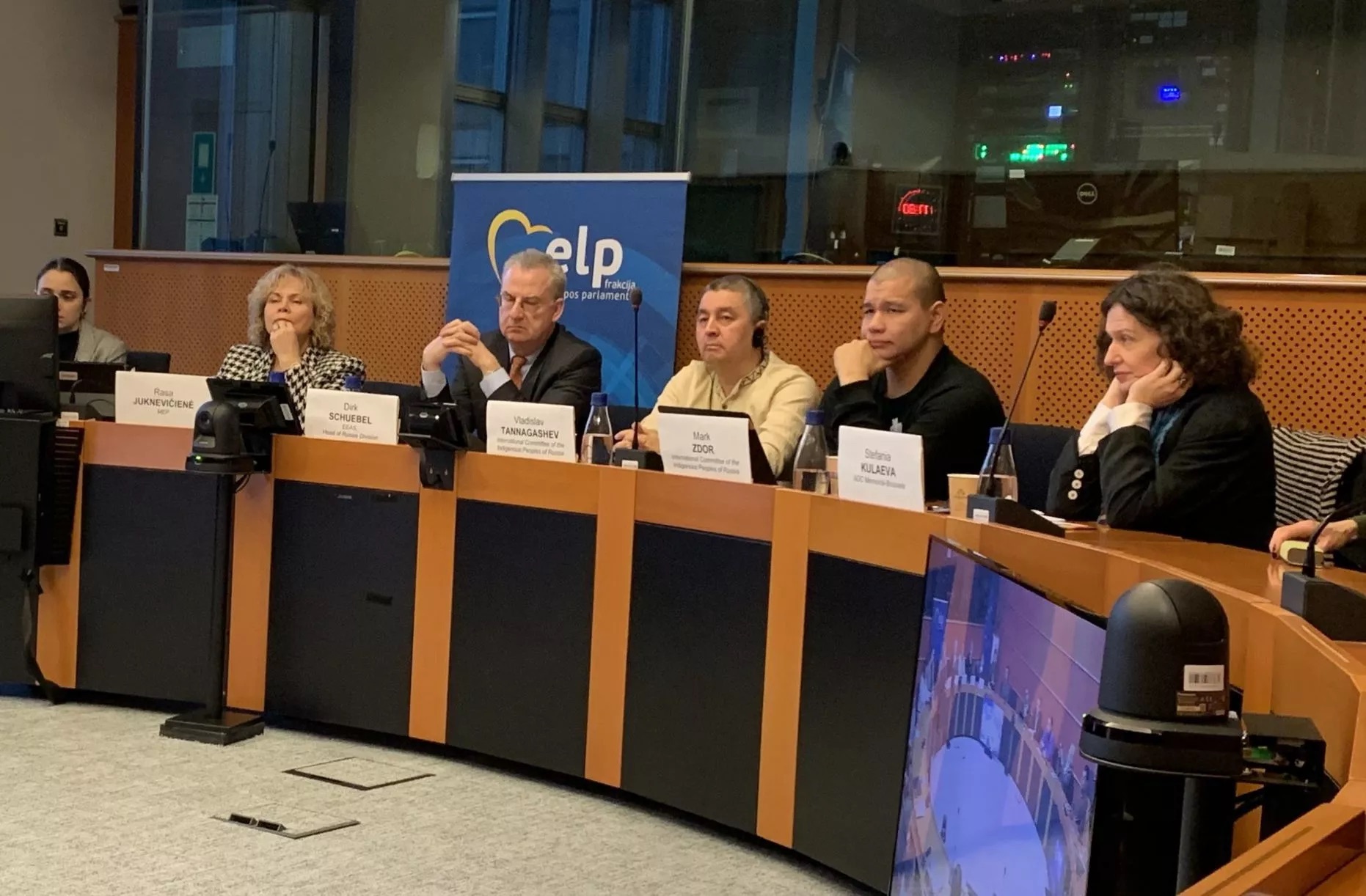
    The European Parliament Discussed the Issues of Indigenous Peoples

    On February 4, 2025, the European Parliament in Brussels hosted a discussion titled “Land Exploitation, Oppression of Peoples: Discrimination and Persecution of Indigenous Peoples of Siberia, the North, and the Far East.” This event was organized by the Anti-Discrimination Center “Memorial” (Brussels) in collaboration with Lithuanian MEP Rasa Juknevičienė. It continued the partnership initiated on October 25, 2023, during the event “Resisting Russian Colonial Pressure: Voices of Different Peoples” held in the European Parliament.

    Moderated by Rasa Juknevičienė and Stefania Kulaeva from ADC “Memorial,” the discussion featured speakers including Vladislav Tannagashov, a founding member of the International Committee of Indigenous Peoples of Russia (ICIPR); Mark Zdor, a native of Chukotka, ICIPR member, and anti-war activist; Dirk Schuebel, Head of the Russia Division at the European External Action Service; and Anastasia Crickley, an expert on minority rights and former chair of the UN Committee on the Elimination of Racial Discrimination. The event began with a screening of the first part of the documentary “Shor Gold.”

    Speakers highlighted their support for Ukraine and condemned Russian aggression. They detailed how Russian authorities are destroying the habitats of indigenous peoples, repressing protesters, and decimating male populations in native villages through mobilization, turning residents into “cannon fodder.” Both primary speakers and other participants emphasized the discriminatory nature of Russia’s national policies, including the suppression of the cultures, languages, and religions of minority peoples.

    Dirk Schuebel expressed support for Ukraine and activists opposing Russian aggression, affirming readiness to back such initiatives. MEP Rasa Juknevičienė discussed a European Parliament resolution emphasizing historical responsibility and the connection between history and current issues. She shared her personal experience overcoming Russia’s imperial influence on the Baltic states, fighting for Lithuania’s liberation, and thanked Ukraine for its courage in battling for independence and democracy.

    An ADC “Memorial” expert discussed protecting indigenous rights as part of anti-discrimination efforts, expressing support for organizations like the ICIPR, which have been labeled as extremists and terrorists in Russia merely for peaceful advocacy. ADC “Memorial” unequivocally condemns such repression of indigenous rights defenders and minority rights advocates, expressing solidarity with their principled human rights and anti-war stance.