Tag: War on Ukraine

Articles related to Russia’s criminal and unprovoked aggression against its neighbour and the terrible impacts on indigenous peoples in both Ukraine and Russia

  • Influence of Putin’s aggression against Ukraine on Indigenous Peoples of Russia
    Influence of Putin’s aggression against Ukraine on Indigenous Peoples of Russia

    Dear colleagues, brothers and sisters,

    Tomorrow is the first anniversary of the bloody Russian aggression against Ukraine, unleashed by the imperial policy of dictator Putin. This war has already cost the Ukrainian nation tens of thousands of lives, including the lives of the indigenous peoples. This war is a tragedy for the Ukrainian Nation.

    In this war, are also dying representatives of the indigenous peoples of Russia succumbed to state propaganda and went to the war as soldiers of the Russian army. We, in cooperation with the Anti-Discrimination Centre Memorial, decided to prepare a report on the impact of this injustice war on the indigenous peoples of Russia to show that this war is also a tragedy for small-numbered indigenous nations of Russia. 

    The first edition of the iCIPR report on the war’s influence on the indigenous peoples of Russia was published on 24 August 2022. You can see it at https://indigenous-russia.com/archives/27991.

    Here is the second edition.

    Dmitry Berezhkov – editor-in-chief of the Indigenous Russia information center, member of the International Committee of Indigenous Peoples of Russia (iCIPR)


    The report by the International Committee of Indigenous Peoples of Russia (iCIPR) and the Anti-Discrimination Centre Memorial to the anniversary of the beginning of Russian aggression against Ukraine. 

    Second edition, 23 February 2023

    Introduction 

    After Vladimir Putin’s return to the presidency in 2012, the Russian Government turned its attention to civil society organizations. Draconian laws enacted since 2012 regulate the work of organizations engaged in activities deemed political by the Government. The constant harassment of these organizations by the authorities has made it next to impossible to openly and freely discuss Indigenous Peoples’ rights, especially land rights and self-determination. A particularly worrisome aspect was the accelerating expansion of extractive industries on Indigenous Peoples’ traditional lands, regulated and encouraged by the Government, without their Free, Prior, and Informed Consent (FPIC) and paying neglect attention to the environmental standards.

    As a result, today, the once vibrant Indigenous activist movement in Russia has been reduced to a handful of people. Those activists must be extremely careful, as anyone who openly questions the authorities’ political and economic choices is at risk of criminal prosecution. A number of prominent Indigenous rights defenders left the country[1], fearing for their safety. Some who stay in Russia experience arbitrary criminal prosecution initiated by the state or extractive industries.

    After the start of the Russian invasion of Ukraine in February 2022, the repressive Russian legislation was much strengthened, and critical Indigenous voices fear persecution can no longer effectively stand up for their rights and publicly criticize the Government, its proxy organizations, and crony extractive businesses. 

    Indigenous soldiers in the war

    The war’s most direct and unfortunate impact on Indigenous peoples is the participation of Indigenous soldiers in the Russian army fighting in Ukraine. Many experts and mass media have repeatedly pointed to the disproportionate conscription of Russian ethnic minorities and indigenous peoples into the army compared with the titular population of Russia. For example, according to the “Ethnic and regional inequalities in the Russian military fatalities in the 2022 war in Ukraine”[2] report, a soldier drafted into the war from Buryatia is about 100 times more likely to die than a resident of Moscow.

    The other visible example is the drafting campaign in the Udege indigenous community Gvasugi in the Russian Far East (Khabarovsk krai). According[3] to the Russian Ministry of Defense, Sergey Shoigu, only about one percent (300 thousand persons) of the total Russian mobilization resource (25 million people) were mobilized. At the same time, in Gvasugi village, where only two hundred persons live, 14 men were mobilized[4]. That consists[5] of 11 percent of the total male population of the village and about 30 percent of the mobilization resource (men who could be sent to war according to their age and other standards).  

    Hundreds of deaths of Indigenous soldiers from Chukotka, Khabarovsk Krai, Tyva, Yakutia, and other Russian regions have already been confirmed[6]. However, the total number of Indigenous soldiers’ deaths is difficult to estimate as many Indigenous peoples in Russia have Russian names, making it impossible to distinguish them from non-Indigenous servicemen in open databases. The Russian Government does not publish reliable data on fallen soldiers and makes no statistics on Indigenous Peoples’ share in its rare information reports[7]

    Most Indigenous Peoples officially recognized[8] by Russia are numbered several thousand or even hundreds of people. So while any loss of life is a tragedy, for small-numbered Indigenous Peoples, it could be a question of their very survival. Tragically, many who return home alive will likely suffer from injuries and mental health problems. At the same time, Russia’s healthcare infrastructure in remote areas where most Indigenous peoples live has minimal capacity[9] to address these issues.

    In many poor remote areas where Indigenous Peoples live, even in the usual time, the military contract service was one of the few paid jobs available and better paid than many other public jobs. Today the Russian Government is attracting[10] disadvantaged and underserved people for the war in Ukraine, promising them a salary several times higher than the average wage in the region while does not provide[11] potential recruits with realistic information about what to expect in the war. 

    Still, a lot of male Indigenous Peoples’ representatives attempted to avoid forced mobilization of the Russian army. While some[12] tried to disappear into forests pursuing their usual traditional activities, others had to leave[13] Russia, which again will negatively reflect on the general statistics of their small-numbered nations.   

    Influence of the war on the social and economic life of Indigenous communities 

    Since the beginning of Russia’s invasion of Ukraine, sanctions by Western governments were quickly followed by foreign businesses choosing to leave[14] the Russian market. International trade links between Russia and the West based on the exchange of raw materials mined mainly on the lands of the indigenous peoples of the Russian Arctic, Siberia, and the Far East for Western goods and technologies were almost destroyed during the war.

    In an economy like Russia’s one, closely linked to international trade, this led to immediate economic consequences felt by many within Russia. The country is already experiencing shortages of some essential supplies like medicines[15] and aircraft[16] produced by Western companies. The lack of such goods is hitting remote Indigenous communities especially hard, as many are only accessible by air transport much of the year and cannot receive high-level medical services in remote villages. According to our indigenous informants’ reports from Russia, their communities have already met with the problem of runaway inflation and rising prices of consumer goods, especially in remote villages which do not have year-round access to the rest of Russia, except by air transport.

    The sanctions influence various aspects of indigenous peoples’ life differently in Russia. For example, indigenous hunters in Siberia were unable[17] to sell peltries, while fur hunting is the basis of their traditional economies. The cause of the problem is that Russia has lost access to the European fur auctions, which were the primary consumers of Russia’s furs. 

    In other regions, indigenous communities met with the problem[18] of a lack of access or high prices on the western-produced equipment, which has long been used in the daily lives of Indigenous reindeer herders, hunters, fishermen, including snowmobiles, off-road transportation, satellite communications etc. 

    The war and Russian extractive industry: lowering environmental and human rights standards

    Using the “wartime” and sanctions pretext, Russian authorities and mining businesses are subsequently lowering[19] environmental standards in the country to “support the Russian economy”. According to the Russian Socio-Ecological Union (RSEU)[20], this trend includes: reducing mandatory requirements for ensuring ecological safety; complicating access and depriving citizens of the right to participate in issues related to nature and habitat protections; reducing state oversight over the activities of environmentally hazardous facilities; reduction or cancellation of the legislative ban on economic development of protected areas and requirements for forest conservation; extension of deadlines for federal environmental projects and state programs beyond the responsibility of the current generation of officials.

    One of the most dangerous tendencies is the intentional shrinking of the State Environmental Impact Assessment (SEIA) requirements. Aleksandr Fedorov, a member of the Russian Ministry of Natural Resources and Ecology’s Public Council, mentioned[21] several weakening procedures for the state environmental assessments initiated by state or business: reduce the scope of specific SEIAs, dilute the range of issues addressed by SEIAs, decrease the importance of SEIAs in decision-making; limit civil society participation during SEIAs and other assessments; depriving citizens of the right to organize their own public environmental impact studies.

    For example, in November 2022, in Lovozero village in the Murmansk region where Russian Sami live, the regional Government organized public hearings[22] on changing the status of the Seydyavr State Nature Reserve. This Natural Reserve has created near Lovozero village around the sacred Seidozero lake, where several Sami historical and religious significance sites are located. 

    According to the regional Government, the main idea[23] of the reorganization is the increasing tourist traffic to Seydozero and the possibility of rare-earth metals mining for Lovozero mining and processing plant on the Natural Reserve territory. Expanding the potential of rare-earth metal mining became necessary for Russia due to Western sanctions on the supply of microelectronics, which Russia needs[24] primarily to develop its military industry. Thus, the reorganization of the reserve threatens by mass tourism on the sacred lake (to which the Sami themselves have limited[25] access), on the one hand, and pollution of the territory due to the expansion of mining operations in this area on the other hand.  

    The weakening of the SEIAs’ procedures led to formalizing public hearings, now the almost only approach for local communities, including indigenous ones, to participate in decision-making regarding new development projects on their communal lands. Considering the Lovozero example, the local authorities gave only six days[26] after the public hearings for local residents to study a rather complex, technical 170-page document of the Natural Reserve reorganization rationale and present their opinion. 

    Similar nominal public hearings procedures are applied to other indigenous communities around the Russian Arctic, Siberia and the Far East, including among reindeer herders[27], who rarely have the opportunity to visit villages to participate in the public hearings. 

    The other significant tendency is escaping Western mining companies, investors and buyers from Russia and their replacement by Russian, Chinese, and other non-Western businesses. For example, this summer, president Putin raised the stakes[28] in his economic war against the West and signed a decree that seized complete control of the Sakhalin-2 gas and oil project in Russia’s Far East to force the oil Shell company out of Russia. Today the Sakhalin-2 project operates by Russian natural gas state monopoly Gazprom which has been repeatedly proven to violate[29] the rights of indigenous peoples. 

    That means Russian indigenous communities lost their opportunity to apply to Western mining businesses on international human rights and environmental standards, which they follow more thoroughly than Russian or non-Western companies. 

    The other challenge connected to the war is today’s impossibility of organizing independent research on mining business influence on indigenous communities or verifying the Russian stakeholders’ information. The country is closed to international field visits. During the war, several international institutions, including the Initiative for Responsible Mining Assurance (IRMA)[30] and the Council of Europe Framework Convention for the Protection of National Minorities, canceled their country visits. 

    Victimization of civil society institutions

    The war in Ukraine has provided the Russian Government with a new opportunity to tighten an already minimal civic space in Russia. Soon after the start of the war, Russian authorities blocked[31] the last remaining independent media outlets in Russia, Russian language media based abroad, and access[32] to various social media outlets. The Government continues[33] its destructive campaign to expel from the country the independent human rights, environmental and expert organizations that, in the past, have provided invaluable assistance to Indigenous communities in defending their rights to lands, resources, and self-determination. As a result, the overwhelming majority of Russia’s Indigenous population lost access to independent sources of information except for the government ones, while indigenous communities lost the opportunity to apply for help from independent media and human rights organizations. 

    The criminal prosecution of Segey Kechimov[34] could be considered an example. 

    Sergey Kechimov is a Khanty indigenous person who lives with his wife near the sacred Khanty lake Numto in Khanty-Mansiisk autonomous region. This region is the most oil-rich in Russia. One of the biggest Russian oil companies, “Surgutneftegas,”[35] has been exploring and extracting oil near the lake since 2012. Since then, Sergey Kechimov has been trying to protect Khanty’s traditional lands against oil pollution near his reindeer herding camp. In 2017 after a conflict with oil workers whose dog mauled his reindeer, Sergey Kechimov was sentenced by a local court for threatening oil workers. 

    In those days, indigenous communities, independent media, human rights and environmental organizations were able to create a powerful public campaign to protect Kechimov’s rights as a victim of authorities and the oil industry on national[36] and international[37] levels. Even though Sergey was finally sentenced, the sentence was relatively painless – 30 hours of communal work only. 

    But in December 2022, he was sentenced[38] again for threatening oil workers with already six months of liberty restriction, and immediately after the court, he was again arrested by the local police, which brought an accusation against him for police disobedience. 

    Today the investigation against him continues, and nobody from human rights organizations or independent media can support him as there are no remaining such organizations in the region now. In 2022 Sergey Kechimov didn’t receive any legal support or media attention, as well as support from his own community. While some local indigenous organizations serve[39] the interests of the regional authorities and oil companies, others are intimidated by the recent strengthening[40] of the repressive Russian legislation and can not support Sergey Kechimov in his fight. 

    Intimidation of indigenous critique voices 

    Indigenous activists and indigenous rights defenders also didn’t avoid prosecution from authorities. 

    In February 2022, the next day after the Russian invasion of Ukraine, Chukchi student Mark Zdor who studied at the St. Petersburg University named after AI Herzen, was arrested[41] by the police after he, with his classmates, participated in the antiwar protest action in St. Petersburg. Mark was fined to 10 thousand rubles. Several days later, after the police came to his house to continue the investigation, he left Russia, fearing for his safety.  

    In May 2022, an indigenous activist from Pevek (Chukotka region), Igor Ranav, was fined[42] for his antiwar position (the exact perpetration was the phrase “Yes to the peace! No to the War!” / “Миру — Мир, нет, Войне!”), which he published on one of the social networks).

    Several days later, the other indigenous activist from Nenets okrug Konstantin Ledkov has also been fined[43] for the second time for the phrase “Crimea belongs to Ukraine” / “Крым это Украина”. 

    In July 2022, during the session of the UN Expert Mechanism on the rights of indigenous peoples in Geneva, a representative of Shor peoples, Yana Tannagasheva, made a presentation on violations of the indigenous peoples’ rights by coal companies in the Kemerovo region. After the presentation, Ms. Tannagasheva was approached by a Russian diplomat, who acted in an intimidating manner by asking for her name, phone number and her business card in a reportedly aggressive way. Numerous delegates of the session, including representatives of indigenous peoples, NGOs, and the UN Special Rapporteur on the rights of indigenous peoples, witnessed[44] this incident. The same Russian diplomat later approached the Secretariat of the EMRIP session, asking for information about the list of speakers, including the speakers’ names and the organizations they represent. 

    Later during the session, several states and indigenous delegations made statements condemning the inappropriate behavior of the Russian state representative just in the UN building. 

    Fortunately, Yana Tannagasheva received[45] political asylum today in Sweden, where she had been forced to escape from Russia after years of intimidation by authorities and coal companies. She is safe now and does not fear threats from the Russian side. But according to her, the Russian diplomat who threatened her during the EMRIP session didn’t know that fact as he supposed she continued to live in her village in the Kemerovo region. In this light, the attempt to intimidate the delegate and receive personal data could definitely be considered a severe threat to any indigenous activists who continue to live in Russia and trying to inform international human rights bodies about violations of their indigenous rights. 

    Immediately after the incident, the International Committee of Indigenous Peoples of Russia (ICIPR), the organization Ms. Tannagasheva is part of, issued a statement[46] condemning the assault on the website[47] “Indigenous Russia” that is today become the only media that specialize in publishing information about violations of Indigenous rights in Russia. Just after posting the statement, the director of Indigenous Russia received an email from the website’s hosting provider, saying it had received[48] a request from the Russian Government to remove the page from the Internet within 24 hours.

    The other side of this problem is that Indigenous leaders and IP rights defenders in Russia are afraid now to express their opinion publicly, especially on the international level where RAIPON’s and other Russian propagandists’ voices[49] are primarily heard. Considering the latest restrictive wartime legislation according to which persons who critique the political regime and authorities could be imprisoned for a long term, the voice of indigenous peoples in Russia is now at the lowest level since the Soviet Union. 

    Polarization of the indigenous movement

    Before Vladimir Putin came to his third presidential term in 2012, the indigenous movement in Russia was more or less united behind the idea of protecting Indigenous rights and didn’t afraid to confront the state or business if such rights were violated. The biggest Indigenous organization – the Association of Indigenous Peoples of the North, Siberia and the Far East (RAIPON)[50], which has regional departments in all regions where indigenous peoples live, represented the interests of most indigenous communities in Moscow. 

    But this organization came under the complete control of Putin’s regime in 2013 after Russian authorities promoted[51] Grigory Ledkov, a member of the Russian Parliament, to the RAIPON’s leadership. After that, the RAIPON’s role was primarily reduced to rubber-stamping government decisions institution.  

    In 2022 while some rare indigenous activists or alliances protested[52] against the war, RAIPON, in partnership[53] with some smaller indigenous organizations, since the first days of the war, approved[54] president Putin’s operation against Ukraine. In order to give the impression that all Russian ethnic groups supported the war, Raipon joined with the authorities in numerous patriotic actions in remote indigenous communities[55] and cities[56]

    War propaganda became not the only concern of RAIPON in 2022. The other important activity became manhunting and reports to the authorities against those criticizing President Putin’s policy. For example, it was Raipon’s representatives who provided[57] the authorities with information about the protest activities of student Mark Zdor, after which the police began to investigate him. 

    The other example is a decision[58] of RAIPON’s Coordinating Council in April 2022, which applied to the Russian general prosecutor’s office to check the website “Indigenous Russia” on extremism that finally came to a decision of the Russian authorities to ban[59] access to the website from the territory of the Russian Federation. 

    Divided peoples

    Indigenous peoples whose ancestral lands are divided by national borders suffer additional impacts of the war due to suspending their cross-border cognate ties. The cross-border dimension is particularly evident with the Arctic Indigenous Nations living in Russia and other Arctic countries. 

    For example, the war in Ukraine has resulted in a suspension[60] of all cooperation between Russian and non-Russian members of the Sámi Council, the Sámi’s main representative body. The break followed an explicit expression of support by some[61] Sámi leaders in Russia for the Russian Government’s decision to launch the war against Ukraine. And although not all Russian Sámi organizations endorsed the Government on that issue, the decision to suspend Russian participation was made unanimously by the Executive Board of the Sámi Council, a body that consists of four people, one of which is a representative of Russian Sámi.

    In a similar situation are the Russian and foreign parts of the Aleut International Association and Inuit Circumpolar Council. While they didn’t announce the break in cooperation with their Russian members officially, the actual contacts are extremely limited. 

    The growing isolation of the Russian political regime and escalation of its antagonism with the West will likely lead to a further reduction in transborder contacts.

    Conclusions

    Indigenous peoples in Russia are among the most vulnerable groups in the Russian population. Dispossessed of their ancestors’ lands, they have minimal access to their traditional resources for hunting, fishing and other traditional economic activities. They are also excluded from industrial development decisions on their traditional territories. As a result, many Indigenous communities depend on the state’s meager allowance for subsistence. 

    Since the Russian invasion of Ukraine in February 2022, Russian indigenous communities have been experiencing increased pressure from the state and businesses, which announced the war support as a main priority of the Nation’s current development. While corrupt Russian bureaucrats and extractive companies, using the pretext of wartime, lowering environmental standards for accessing the indigenous traditional lands, the indigenous communities themselves suffer heavy losses due to the unprecedented drafting to the Russian army and the negative influence of the rapidly degrading Russian economy and living standards. 

    Most remote Indigenous communities of the Russian Arctic, Siberia and the Far East are cut off from alternative sources of information other than state TV channels. Unfortunately, due to the poor quality of life, many indigenous soldiers and their families, drugged by propaganda, see military service as a tool to improve their economic situation. 

    Proved human losses among indigenous peoples of the Russian Arctic, Siberia, and the Far East because of the war numbered today hundreds of lives. This is a particular disaster for small-numbered indigenous nations for which the loss of any community member is a tragedy. 

    All the new repressive laws initiated by President Putin to intimidate the Nation, increase Russia’s isolation, and expel the last independent media, human rights, and environmental institutions from Russia are incredibly disastrous to the ability of indigenous communities of the Russian Arctic, Siberia, and the Far East to defend their rights and provide information on violations of such rights at international venues, including the UN.  

    [1] New Report Highlights Indigenous Rights Violations in Russia – https://www.culturalsurvival.org/news/new-report-highlights-indigenous-rights-violations-russia

    [2] Ethnic and regional inequalities in the Russian military fatalities in the 2022 war in Ukraine – https://osf.io/preprints/socarxiv/s43yf

    [3] ‘Partial mobilisation’ of Russian reservists – a sign of Putin’s desperation? – https://www.france24.com/en/europe/20220921-partial-mobilisation-of-russian-reservists-may-reveal-putin-s-desperation

    [4] Подарки для семей мобилизованных доставили в национальное село Гвасюги – https://indigenous-russia.com/archives/29376

    [5] Война и коренные народы России: проблемы статистического анализа – https://indigenous-russia.com/archives/30103

    [6] Представители коренных народов России, погибшие на войне против Украины (список) – https://indigenous-russia.com/archives/29542

    [7] Russia says 89 troops were killed in New Year’s attack, blames use of mobile phones – https://www.reuters.com/world/europe/russias-defence-ministry-says-89-killed-makiivka-blames-use-mobile-phones-2023-01-03/

    [8] Federal Law No. 82-FZ on ensuring traditional rights of sparsely distributed indigenous peoples of the Russian Federation – https://www.fao.org/faolex/results/details/en/c/LEX-FAOC079128/

    [9] The COVID 19 impact on indigenous peoples of the Russian Arctic, Siberia, and the Far East – https://indigenous-russia.com/archives/6552

    [10] ‘They’re mostly after loans’ Tuvans, trying to scramble out of poverty, are dying in a foreign war – https://meduza.io/en/feature/2022/09/15/they-re-mostly-after-loans

    [11] Demoralised Russian soldiers tell of anger at being ‘duped’ into war – https://www.theguardian.com/world/2022/mar/04/russian-soldiers-ukraine-anger-duped-into-war

    [12] В карельском селе мужчины ушли в лес за клюквой и избежали мобилизации – https://m.pln24.ru/allworld/462494.html

    [13] “I just want to help my people,” says exiled Sámi leader – https://thebarentsobserver.com/en/indigenous-peoples/2023/02/i-just-want-help-my-people-says-exiled-sami-leader

    [14] Более 40% иностранных компаний решили уйти из России – https://www.dw.com/ru/s-nacala-vojny-bolee-40-inostrannyh-kompanij-resili-ujti-iz-rossii/a-63639653

    [15] Прокладки и сахар снова на полках. Дефицита больше не будет? – https://meduza.io/feature/2022/04/28/prokladki-i-sahar-snova-na-polkah-defitsita-bolshe-ne-budet

    [16] Авиакомпания на Камчатке закрылась из-за отсутствия самолетов – https://ria.ru/20220520/kamchatka-1789782772.html

    [17] Бардалеев: Санкции США и ЕС виноваты в падении цен на забайкальскую пушнину – https://chitamedia.su/news/1415937/

    [18] «В Россию и на Запад едут разные контингенты украинских беженцев» – https://iz.ru/1351412/sergei-gurianov/v-rossiiu-i-na-zapad-edut-raznye-kontingenty-ukrainskikh-bezhentcev

    [19] Russia slashes environmental protections as war rages, economic crisis looms – https://thebarentsobserver.com/en/industry-and-energy/2022/06/russia-slashes-environmental-protections-war-rages-economic-crisis-looms

    [20] Российский социально-экологический Союз и Госсовет России – за экологическое благополучие – https://rusecounion.ru/ru/deecologicalization

    [21] Environmental lawlessness during wartime – https://uwecworkgroup.info/environmental-lawlessness-during-wartime/

    [22] В Ловозере прошли общественные слушания по созданию природного парка «Сейдъявврь» – https://www.hibiny.com/lovozero/news/item-v-lovozere-proshli-obshchestvennye-slushaniya-po-sozdaniyu-prirodnogo-parka-seydyavvr-277394/

    [23] Отчет о научно-исследовательской работе по теме «Обследование и обоснование реорганизации государственного природного заказника регионального значения «Сейдъявврь» в одноименный природный парк». Книга 2. – https://indigenous-russia.com/wp-content/uploads/2022/11/materialy_keo_seydyavr.pdf

    [24] Корпоративный конфликт недели: как делят Соликамский магниевый завод – https://ko.ru/articles/korporativnyy-konflikt-nedeli-kak-delyat-solikamskiy-magnievyy-zavod/

    [25] Саами запретили посетить сакральное место!!!! – https://indigenous-russia.com/archives/26392

    [26] How Russia Implements the Free, Prior and Informed Consent Principle – https://indigenous-russia.com/archives/29948

    [27] «Газпром» ответил на претензии ямальских КМНС – https://uralpolit.ru/news/yanao/06-01-2023/268139

    [28] Russia seizes control of Sakhalin gas project, raises stakes with West – https://www.reuters.com/business/energy/russia-decree-sakhalin-2-project-knocks-mitsui-mitsubishi-shares-2022-07-01/

    [29] Как национальный вопрос стал головной болью для эвенков Хандинской общины – https://baikal.mk.ru/social/2021/12/15/kak-nacionalnyy-vopros-stal-golovnoy-bolyu-dlya-evenkov-khandinskoy-obshhiny.html

    [30] Initiative for Responsible Mining Assurance – https://responsiblemining.net

    [31] Russian liberal radio mainstay Ekho Moskvy closes  after pulled off air – https://www.themoscowtimes.com/2022/03/03/russian-liberal-radio-mainstay-ekho-moskvy-closes-after-pulled-off-the-air-a76730

    [32] Russia bans Instagram and Facebook as court declares Meta an ‘extremist organisation’ – https://www.euronews.com/next/2022/03/21/ukraine-war-facebook-temporarily-allows-posts-calling-for-violence-against-russians-or-put

    [33] Moscow Helsinki Group banished by court order in Russia – https://www.euronews.com/2023/01/25/moscow-helsinki-group-banished-by-court-order-in-russia

    [34] Indigenous Russia – Cергей Кечимов tag – https://indigenous-russia.com/archives/tag/кечимов-сергей

    [35] Surgutneftegas company – https://www.surgutneftegas.ru/en/

    [36] Один на озере нефти – https://www.svoboda.org/a/27199956.html

    [37] The reindeer herder struggling to take on oil excavators in Siberia – https://www.theguardian.com/world/2017/mar/17/reindeer-herder-oil-excavators-siberia

    [38] Сергей Кечимов вновь признан виновным в угрозе убийством сотрудникам нефтяной компании “Сургутнефтегаз” – https://indigenous-russia.com/archives/28640

    [39] Депутат окружной Думы Александр Новьюхов: «Югра единственный регион в мире, где есть таежное оленеводство» – https://indigenous-russia.com/archives/9456

    [40] Russians laws on civil society are becoming more repressive – https://www.nhc.no/en/russian-foreign-agent-law-becoming-more-repressive/

    [41] Марк Здор. Биография – https://docs.google.com/document/d/1KI0xNapCVbgnBvfULDfGSdGCOh-bh4Sx9YUx2mF57cE

    [42] Чукотский активист обвиняется в дискредитации Вооруженных сил РФ – https://sm.news/chukotskij-aktivist-obvinyaetsya-v-diskreditacii-vooruzhennyx-sil-rf-71340-u3t5/

    [43] В Нарьян-Маре мужчину оштрафовали на 35 тысяч рублей из-за высказываний о Крыме – https://ovd.news/express-news/2021/05/28/v-naryan-mare-muzhchinu-oshtrafovali-na-35-tysyach-rubley-iz-za-vyskazyvaniy

    [44] The letter of the Special Rapporteur on the situation of human rights defenders; the Special Rapporteur on the issue of human rights obligations relating to the enjoyment of a safe, clean, healthy and sustainable environment; the Special Rapporteur on minority issues and the Special Rapporteur on the implications for human rights of the environmentally sound management and disposal of hazardous substances and wastes to the Russian Federation – https://spcommreports.ohchr.org/TMResultsBase/DownLoadPublicCommunicationFile?gId=27565

    [45] The cost of fighting for Indigenous people and environmental rights in Russia – https://www.iwgia.org/en/news/4394-the-cost-of-fighting-for-indigenous-people-and-environmental-rights-in-russia.html

    [46] ICIPR statement against intimidation of indigenous delegates by the Russian state’s representative during the EMRIP 15th session in Geneva – https://indigenous-russia.com/archives/22619

    [47] Indigenous Russia – https://indigenous-russia.com

    [48] ICIPR statement at EMRIP 15th session. Agenda # 10. Future work of the Expert Mechanism – https://indigenous-russia.com/archives/22796

    [49] Дебаты на Форуме ООН по вопросам коренных народов: переселение Норникелем ненцев на Таймыре – https://sakhalife.ru/debaty-na-forume-oon-po-voprosam-korennyh-narodov-pereselenie-nornikelem-nenczev-na-tajmyre

    [50] Russian Association of Indigenous Peoples of the North – https://arctic-council.org/about/permanent-participants/raipon/

    [51] Moscow staged RAIPON election thriller – https://barentsobserver.com/en/politics/2013/04/moscow-staged-raipon-election-thriller-03-04

    [52] Statement of the International Committee of Indigenous Peoples of Russia – https://indigenous-russia.com/archives/19347

    [53] Открытое заявление лидеров Федеральных национально-культурных автономий и институтов гражданского общества в поддержку решений Президента Российской Федерации – https://domnarodov.ru/events/news/otkrytoe-zayavlenie-liderovfederalnyh-nacionalno-kulturnyh-avtonomij-i-institutov-grazhdanskogo-obschestva

    [54] RAIPON supports the decision of President Putin to start the war in Ukraine – https://indigenous-russia.com/archives/19434

    [55] Старейшины коренных малочисленных народов Севера и краеведы Олы сняли клип в поддержку России – https://magadanmedia.ru/news/1274286/

    [56] Нина Вейсалова: “Наши северяне сегодня героически защищают безопасность России, выполняя высокую миссию и государственные задачи” – https://indigenous-russia.com/archives/24747

    [57] Марк Здор. Биография – https://docs.google.com/document/d/1KI0xNapCVbgnBvfULDfGSdGCOh-bh4Sx9YUx2mF57cE

    [58] Ассоциация КМНСС и ДВ РФ обратится в Генпрокуратуру РФ с просьбой о проверке iRussia на экстремизм – https://indigenous-russia.com/archives/20923

    [59] Федеральная служба по надзору в сфере связи, информационных технологий и массовых коммуникаций. Универсальный сервис проверки ограничения доступа к сайтам и (или) страницам сайтов сети «Интернет» – https://blocklist.rkn.gov.ru

    [60] Cooperation with Russian side on hold – https://www.saamicouncil.net/news-archive/cooperation-with-russian-side-on-hold

    [61] Samerådets vicepresident hade Z på gitarren – allt samarbete stoppas – https://www.svt.se/nyheter/sapmi/sameradet-stoppar-samarbete-med-ryssland

  • Indigenous Of Russia, The Silent Victims Of Putin’s War
    Indigenous Of Russia, The Silent Victims Of Putin’s War

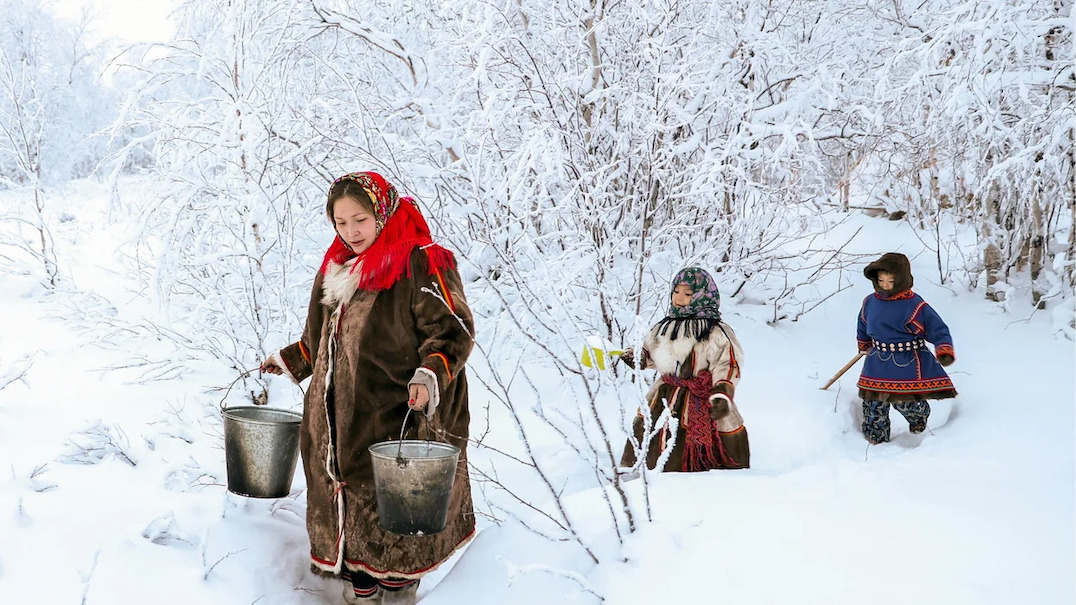
    The number of indigenous people in Russia has been declining for decades, but the war in Ukraine has accelerated the trend. Already vulnerable, indigenous groups are more likely to be mobilized and bear the brunt of Western sanctions.

    While Russia continues its supposed mission to “denazify” Ukraine, back on home turf its own indigenous people are bearing what may be the heaviest consequences of the Kremlin’s war.

    There are 47 indigenous groups living in Russia, some of them with populations of less than a hundred or even a few dozen. The 2021 All-Russian Population Census showed that the number of indigenous people has substantially declined in the last 10 years.

    Russian independent news site Vazhnyye Istorii (Important Stories) reports on certain groups that were already on the verge of extinction, and how their situation has gotten even worse after Russia unleashed a full-scale war in Ukraine.

    The tragedy for these peoples is not only the disproportionately high numbers of mobilized men, but also the effect of Western sanctions as well as the reduction of state benefits that are now being spent on war.

    Extinction risks

    According to the 2021 All-Russian Population Census, 67% of indigenous groups have substantially decreased in size compared to the previous census in 2010. Most of them have been decreasing in number throughout the history of modern Russia, but the trend has accelerated in the last decade.

    Dmitry Berezhkov, editor of the Russia of Indigenous Peoples website, and a representative of one of the indigenous groups, the Itelmens, says that census data should be treated with a certain degree of skepticism. The government has been known to “draw up” figures for the sake of propaganda or solving government budget tasks. For example, according to the 2010 census, the smallest indigenous group was the Kereks living in Chukotka. There were only four of them a decade ago, but in the 2021 census they numbered 23.

    Another example is the Nenets, the largest of the indigenous peoples. In the 2021 census, 49,787 people were recorded as Nenets. “There is a big suspicion that this is a political figure that has been drawn up,” Berezkhov said. “If the Nenets cross into 50,000, they will no longer be considered an indigenous people under Russian law.

    Berezkhov said he believe that their number has already grown beyond 50,000 but the authorities have artificially reduced it in order to maintain this indigenous status for them — as they are one of the groups most involved in traditional nature management, reindeer herding and other types of traditional economic activities.

    “Removing them would affect the government’s framing of indigenous people,” he explained

    However, the state also plays an insidious role. There are, for example, no state benefits that come with identifying oneself as an indigenous person. A different state policy is required, different legislation and basic principles in the country so that the rights of minorities, the rights of vulnerable groups of the population are respected.

    Uprooted and assimilated

    The authorities consider indigenous peoples to be an objectionable obstacle blocking up these territories: they shouldn’t be there, they’re unnecessary and interfering with the development of the country. This leaves indigenous people with nowhere to earn money, nowhere to live and develop: they are driven out of their own land.

    Berezhkov cites the example of the village of Kazas in the Kemerovo region, which used to be a national village where the Shors lived. Most of its inhabitants were engaged in traditional crafts — hunting, fishing etc. In 2012, the Yuzhnaya coal company commissioned a pit in the area. Because of this, the ecology suffered greatly, the Lysaya mountain, sacred to the Shors and whose spirit was considered the guardian of the village and keeping in touch with the world of their ancestors, was destroyed.

    In the same year, the company demanded that the residents of the village sell their houses to it in order to develop coal deposits. Under pressure, the residents were forced to move. “The village was destroyed, houses were burned, these families were forced to leave. They moved to the cities, and their children assimilated in the urban environment, they forgot the language,” says Berezhkov.

    Men disproportionately drafted

    The war in Ukraine has and will continue to hit Russia’s indigenous people hard, most of all because indigenous men are being disproportionately mobilized for the war.

    “If losses in war affect large ethnic groups for generations, then for small groups, even the death of several people is already a great tragedy,” Berezhkov says. “If the group is made up of only 200 people, and two young men died in the war, that’s two ethnic families that won’t ever exist,” he laments.

    According to Berezhkov, it is the male population that suffers the most in the war and this has a particular influence on the preservation of indigenous peoples. “Men [among representatives of indigenous peoples] are more involved in traditional nature management: their activities allow them to maintain the status of a people who conduct traditional hunting, fishing and forest activities,” the expert explains.

    “Women are much more mobile, in many cases they choose more comfort for their children: they move to larger villages, and from larger villages to cities, where it is easier for them to start a family. They marry representatives of other nations and to a greater extent [than men] assimilate.”

    Mobilization is taking place disproportionately in the country’s ethnic outskirts, Berezhkov says. The expert cites the example of Gvasyugi in the Khabarovsk Territory — this is a national Udege village. A local television report said that 14 representatives of the Udege people were mobilized from there, and judging by the size of the male population of the village, this constitutes 30% of those in the village who are potentially eligible for mobilization. “This is a gigantic figure, which, of course, does not compute with the data given by Shoigu and Putin [that the mobilization will affect 1% of the population],” says Berezhkov.

    “Ethnic activists say that the authorities are purposefully destroying these peoples, calling up as many of them as possible,” continues Berezhkov. “However, this may also be due to the fact that indigenous peoples live in poor suburbs, where people have poverty and loans, and they trust the authorities, they believe they can make money from fighting.”

    He explains that indigenous peoples have fewer sources of information than the rest of the population: they watch and trust one state propaganda channel. “And this is natural, because the main concern for them is to hunt, fish and think less about politics,” says Berezhkov.

    A photo of a reindeer herder and reindeer
    A reindeer herder and reindeer near the Merlenke nomadic school in Eveno-Bytantaysky, Russia Sergei Karpukhin/TASS via ZUMA

    Economic concerns

    This thesis is confirmed by the data of other researchers. Aleksey Bessudnov, Associate Professor at the Faculty of Sociology at the University of Exeter in England, revealed ethnic disparity in the mortality of Russian military personnel in Ukraine. He found out that, for example, a man from Buryatia is 100 times more likely to die in a war in Ukraine than a man from Moscow.

    “I am, however, skeptical about the idea that the state deliberately conducts ethnic cleansing,” says Berezhkov. “The state, by and large, does not care about the small indigenous peoples.”

    The situation of indigenous peoples is also affected by the economic situation that has developed in the country due to the war. “In remote villages where indigenous people live, this is manifested in the fact that planes no longer fly there so frequently: it has become unprofitable for businessmen to take food to shops, people have to get to larger villages for food themselves. There are problems with medical equipment and modern medicines,” says Berezhkov.

    Indigenous peoples were also hit by the withdrawal from the Russian market of Western companies that worked in their places of settlement. “Western business meant Western standards. We, the indigenous communities, could approach these Western companies with demands to comply with the standards of international law in terms of the environment, and the rights of indigenous peoples. Now they have left, the standards are rapidly falling. Indigenous peoples can no longer appeal to international law. And Russian companies do not take into account our interests,” Berezhkov says.

    No money, no language

    In 2023, the authorities also reduced the amount of subsidies to support indigenous peoples. According to Berezhkov, cuts in spending on indigenous peoples are also due to the war, which is of course affecting the country’s budget dearly.

    “This language is our greatest cultural wealth, but, unfortunately, we are losing it.”

    “Financial support from the state has always been insufficient,” says Berezhkov. According to him, in Russia, regional authorities use money to support indigenous peoples but only if it comes with benefits for themselves. For example, in the Murmansk region, under a program for indigenous peoples, an apartment building was constructed. But in the end only one Saami family was settled there. The rest of the apartments were given to non-indigenous people on a waiting list.

    Support from the state is not enough for the preservation of languages. Berezkhov says that the preservation of such languages is highly dependent on government programs; in foreign countries, unlike Russia, attention is paid to dying languages. For example, in Scandinavia, the Sami language is now being revived. In Russia only 10% of the Sami people use it, according to the census data.

    Even Vladimir Putin admitted that little attention is paid in Russia to the preservation of indigenous languages. At the request of a resident of the Udege village of Krasny Yar in Primorsky Krai to introduce teaching of the Udege language, Putin replied: “This [the languages of the minority peoples of Russia] is our greatest cultural wealth, but, unfortunately, we are losing it.”

    Source

  • Alexey Bessudnov. Ethnic and regional inequalities in the Russian military fatalities in the 2022 war in Ukraine

    December 2022

    Abstract

    This paper explores ethnic and regional inequalities in mortality in the Russian army during the 2022 war in Ukraine. The analysis is based on a newly available data set containing the names of about 9,500 Russian servicemen killed in Ukraine from February to November 2022. The data set was collected by a team of volunteers from the social media and other available sources. There are large inequalities in the army mortality rates across Russian regions, with the highest mortality of soldiers originating from poor regions in Siberia and the Russian Far East and the lowest from Moscow and St.Petersburg. Some ethnic minority groups, in particular Buryats and Tuvans, are overrepresented among the fatalities, compared to their population share. Once regional inequalities are taken into account, ethnic gaps in mortality are reduced substantially. It is likely that ethnic fatality gaps are largely driven by socio-economic inequalities: young men in poorer regions see the career in the military as more attractive. The paper places these findings in the context of the previous research on inequalities in US military casualties.

    Source

  • Forced mobilization in Russia among indigenous peoples for the war in Ukraine. Open letter for UN
    Forced mobilization in Russia among indigenous peoples for the war in Ukraine. Open letter for UN

    To whom:

    • UN Secretary General, Mr. António Guterres
    • UN Human Rights High Commissioner, Mr. Volker Türk
    • UN Special Rapporteur on Human Rights in Russia
    • UN Special Rapporteur on Indigenous Peoples, Mr. Francisco Calí Tzay
    • Members of the UN Permanent Forum on Indigenous Issues
    • Members of the UN Expert Mechanism on the Rights of Indigenous Peoples

    Copy:

    • Council of Europe Secretary General Ms. Marija Pejčinović Burić
    • President of the Council of Europe Parliamentary Assembly Mr. Tiny Kox
    • Council of Europe Commissioner for Human Rights, Ms. Dunja Mijatović
    • European Commission against Racism and Intolerance Chair Ms. Marouda Maria Daniella
    • Secretariat of the Council of Europe Framework Convention for the Protection of National Minorities

    Since September 21, 2022, in Russia there has been taking place a massive mobilization among the civilian population for the war against Ukraine. We, the representatives of indigenous peoples, speak against this inhuman war unleashed by the Putin regime, and we call on UN bodies, international organizations and states to take all measures to help stop the Russian aggression against Ukraine and the mass mobilization carried out among the Russian population.

    During the mobilization, the Russian authorities are committing massive human rights violations, undermining the right to freedom of movement, the right to freedom of expression, and others. In many cases, mobilization in Russia is carried out by violent methods, against the will of the persons enrolled for military service. The indigenous peoples of the Russian Federation also got drafted.

    According to the Universal Declaration of Human Rights, the International Covenant on Civil and Political Rights, everyone has the right to life, liberty and security of person. The right to life is an inalienable right of every human being. No one may be arbitrarily deprived of life.

    The UN Declaration on the Rights of Indigenous Peoples, one of whose goals is to overcome historical injustices that have resulted in indigenous peoples becoming victims of colonization, losing their lands, territories and resources, establishes additional guarantees for the protection of the rights of these peoples.

    The Declaration states that persons belonging to indigenous peoples have the right to life, physical and mental integrity, liberty and security of person, that indigenous peoples have the collective right to live in freedom, peace and security as distinct peoples and must not be subjected to any acts of violence. It also points out that states should consult in good faith with the indigenous peoples concerned, through their representative institutions, in order to obtain their free, prior and informed consent, before taking and implementing legislative or administrative measures that may affect them.

    However, the ongoing mobilization activities among indigenous peoples in Russia massively violate their individual and collective rights.

    Numerous evidence and analysis confirm that mobilization in Russia is most active in rural areas and in poor regions of the country. This is happening because the authorities are afraid of the growth of protest moods in major cities, and the development of corruption in Russia makes it possible for wealthier citizens to pay a bribe that allows them to evade the draft.

    Meanwhile, more than two-thirds of the indigenous peoples of Russia live in rural areas. Indigenous peoples continue to be one of the most socially vulnerable groups in the population. With the exception of some oil and gas producing regions, indigenous peoples, in general, live in the most economically disadvantaged areas of the countries.

    Small communities of indigenous peoples are generally located in remote areas, with undeveloped infrastructure, communications and a low level of education. In these areas, indigenous peoples face considerable difficulties in accessing alternative information, being subject to informational influence by state authorities.

    In recent years, Russian authorities have been particularly aggressive in their harassment of human rights organizations, including indigenous human rights organizations that have previously helped indigenous communities defend their rights.

    As a result, this led to a disproportionately high rate of conscripts among Russia’s indigenous peoples. While the Russian authorities claim that no more than 1% of the number of those liable for military service in the country will be called up for military service, in some villages of the Russian Arctic, Siberia and the Far East, where indigenous peoples live, more than 20% of the male working-age population was mobilized.

    In particular, there were reports that 181 people were mobilized from the village of Bogorodsk in the Komi Republic, out of a total population of about 700 people, which is 26% of the population of the village. In the village of Olenek in the Olenek national district of the Republic of Sakha (Yakutia), 50 people were to be mobilized, that is 39% of masculine population of the village aged 18 to 35 years. Due to the lack of stationary medical facilities in hard-to-reach northern settlements, cases of mobilization of people with chronic diseases without a medical examination have become more frequent. Fathers with many children are also mobilized, which puts their families living in harsh climatic conditions on the brink of survival.

    There are known cases of mobilization of representatives of the indigenous peoples of the North, engaged in reindeer herding. Such cases were recorded in the settlements of Andryushkino, Kolymskoye, Sangar and Topolinoye in the Republic of Sakha (Yakutia), which are places of compact residence of Evens, Yukaghirs and Chukchis.

    The male population among indigenous peoples is quite often the main guardian of the traditional way of life. In many northern regions, traditional activities such as reindeer herding, fishing and hunting are under threat of extinction, so the recruitment of young men can cause irreparable damage to the traditional way of life, economy and culture of the indigenous population. In some settlements where a mixed population lives, more than half of those mobilized are representatives of indigenous peoples.

    There are already numerous testimonies of the deaths of representatives of indigenous peoples involved in the war with Ukraine. The police, the Russian Guard and the Russian intelligence agencies are persecuting indigenous activists and indigenous human rights activists who speak out against the war with Ukraine and mobilization. Aggressive state propaganda does not provide an opportunity to convey an alternative point of view to remote communities, which cannot but resemble a difficult colonial past, through which the indigenous peoples had to go.

    In addition, despite the numerous recommendations of UN bodies to the Russian Federation, there are no statistics in the country that would take into account the data, how many representatives of indigenous peoples were mobilized for the war.

    On October 31, President Putin announced the end of mobilization in Russia. However, no official document on the end of the mobilization was issued, and numerous testimonies show that Russian authorities continue to draft soldiers secretly, including among Russian prison inmates, students, and other population categories.

    Considering that many indigenous peoples of the Russian Arctic, Siberia and the Far East are extremely small in number, and some of these peoples number only a few hundred people, mobilization carried out without any prior consultation threatens the very physical existence of the indigenous peoples of Russia, violates their rights enshrined in United Nations Declaration on the Rights of Indigenous Peoples.

    In connection with the above, we ask you:

    1. To help end the war unleashed by President Putin against Ukraine, withdraw the Russian army from Ukrainian territory and restore Ukraine’s state borders in accordance with the 1991 international agreements.

    2. To pay close attention to the problems of violation of the rights of the indigenous peoples of Russia, occurring in the course of mass mobilization.

    3. To address the Russian Federation with a demand to stop mass violations of the rights of indigenous peoples in the context of ongoing mobilization.

    4. To address the leadership of Russia with a demand to stop mobilization for the war with Ukraine among the indigenous peoples of Russia

    5. To contact the Russian Federation with a request to provide statistics on how many representatives of indigenous peoples were involved in the war, how many representatives of indigenous peoples died and how many people from among the indigenous peoples were injured.

    6. To create a separate commission to study the impact of Russia’s war against Ukraine on indigenous peoples.

    7. To prepare a separate report on the impact of the war on the indigenous peoples of Ukraine and Russia.

    Signatures

    You can sign the letter here:

    Source

  • Organization Sign-On Letter: Stop Perpetuating Racist Rhetoric Against Ethnic Minorities and Indigenous Peoples in Russia  
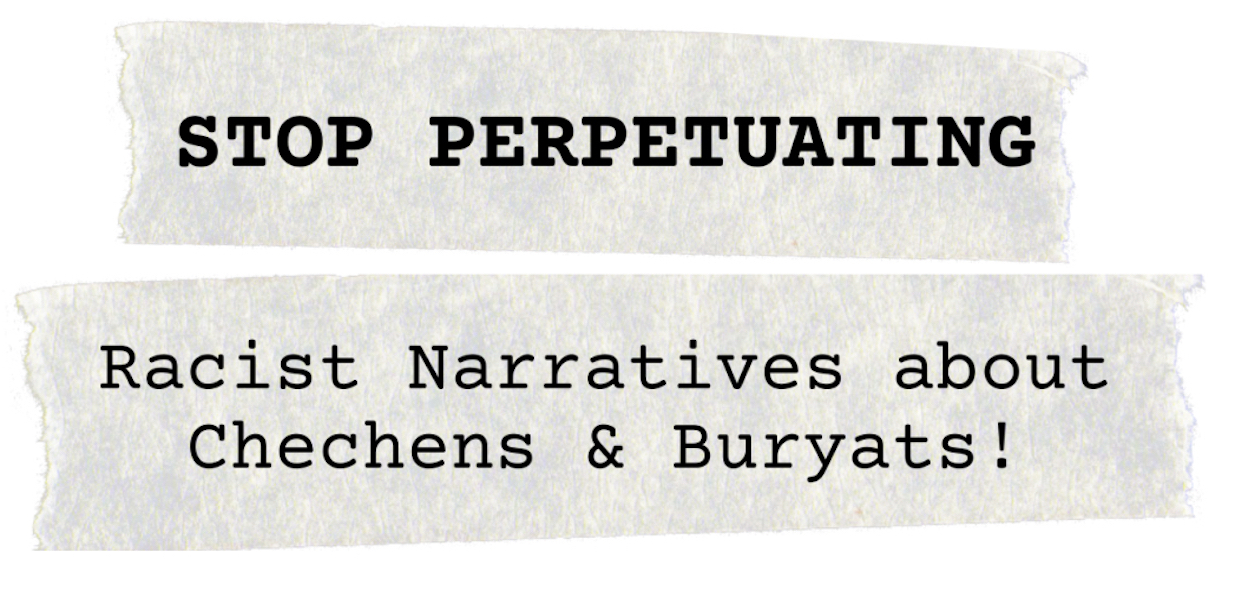
    Organization Sign-On Letter: Stop Perpetuating Racist Rhetoric Against Ethnic Minorities and Indigenous Peoples in Russia  

    In a recent interview, Pope Francis mentioned Chechens and Buryats as “cruelest” perpetrators of the war in Ukraine. “When I speak about Ukraine, I speak about the cruelty because I have much information about the cruelty of the troops that come in. Generally, the cruelest are perhaps those who are of Russia but are not of the Russian tradition, such as the Chechens, the Buryati and so on,” the Pope shared in an interview with America The Jesuit Review magazine published on November 28, 2022. CNN reported on the Pope’s remarks on November 29, but mainstream media in Europe and the U.S. has previously amplified this misinformation, which is steeped in racism. On August 9, 2022, coincidentally International Day of the World’s Indigenous Peoples, journalist and author of “Killer in the Kremlin” John Sweeney in an interview with CNN stated, “On the outskirts of Bucha…the Russian soldiers we saw weren’t ethic Russians, they were Buryats, Mongols…” implying Buryats and Mongols were solely responsible for the atrocities. 

    Enough is enough!

    We denounce this racist and hateful rhetoric and call the world’s attention to the fact that these narratives are created and promoted by the Russian State, which is now attacking Ukrainian independence. Minorities and Indigenous Peoples in Russia face stereotypes, discrimination, and marginalization, and Russian propaganda has deliberately used them as faces of the war in order to distance violence and injustice from the Russian political regime. The Pope’s repetition of Russian propaganda is an ill-informed and dangerous accusation that perpetuates harmful, racist and colonial myths that stem from Russia’s long and violent imperial  history. These accusations by the Pope are forms of double colonialism, genocide, and a horrific history set to repeat.   

    The Russian Federation is home to millions of people of diverse ethnicities, including Indigenous populations spread across roughly two-thirds of Russian territory and representing 2% of that region’s population. There are 47 Peoples recognized as Indigenous under Russian law and defined as “Indigenous small-numbered Peoples of the Russian Federation.” Within the Federation, to be recognized as “Indigenous”, a group must fit distinct qualities, including numbering under 50,000 individuals, practicing traditional customs, inhabiting a remote area, and maintaining a distinct ethnic identity. This State-imposed definition prevents approximately 140 Indigenous Peoples, including for example, Buryats, Altaians, Sakha, and Peoples of southwestern Russia, from claiming Indigenous rights through official recognition by Russia. 

    Many see Putin’s recent forced mobilization of soldiers for the war against Ukraine as an “ethnic cleansing of Indigenous Peoples” as it has disproportionately affected ethnic and Indigenous people in Russia. 

    This summer, Pope Francis made an apology to Indigenous Peoples in Canada for the Church’s role in the genocidal atrocities that took place at boarding schools and apologized for the “colonizing mentality” of the times. But his latest interview with America shows that colonial mentality is yet to be overcome. As the head of the Catholic Church, the Pope needs to acknowledge the Church’s role in past atrocities around the world and actively work to stop the perpetuation of racist, colonial narratives. 

     We, representatives of Indigenous Peoples, other nations, and civil society:  

    • Demand the Pope apologize to Chechens and Buryats for perpetuating colonial stereotypes. Whole Peoples should not be vilified and blamed for the actions of the Russian State. 
    • Strongly encourage that Pope Francis meets with Indigenous Peoples from Russia to start a discussion about overcoming the stereotypes of our common colonial history. 
    • Also demand that mainstream media, like CNN,  recognize their role in sustaining these stereotypes and call them out outright. 

    Signed

    Source

  • Ukraine’s parliament appealed to support self-determination of indigenous peoples in Russia

    Ukraine’s parliament appealed to the international community to support the right to self-determination of the indigenous peoples of the Russian Federation. The corresponding resolution No. 8105 was supported by 322 people’s deputies.

    The appeal emphasizes that, implementing its aggressive imperialist policy, Russia has been committing genocide against enslaved peoples for centuries, ignores the principle of equality and self-determination of peoples, and grossly violates the rights of indigenous peoples and citizens belonging to national minorities.

    It is noted that even while waging a war of aggression against Ukraine, the Russian authorities are committing genocide against the peoples of the Russian Federation, in particular using mobilization for this purpose.

    The Verkhovna Rada expresses its support for the inalienable right of the peoples of the Russian Federation to self-determination in accordance with the UN Charter, generally recognized norms and principles of international law.

    The Parliament calls on the international community to take all necessary measures to stop the Kremlin regime’s persecution of the leaders and members of the national liberation movements of the peoples of the Russian Federation; cessation of the practice of deportation and internal displacement of Russian citizens with the aim of distorting the ethnic composition of the regions of the Russian Federation; indisputably guaranteeing the citizens of the Russian Federation the right to free expression of views, opinions, participation in peaceful assemblies, freedom of association, freedom of conscience and religion, as well as ensuring the free development of traditions and cultural identity of the peoples of Russia.

    In addition, the parliament calls for the strengthening of all-round support for Ukraine for its victory in the Russian-Ukrainian war with the subsequent de-imperialization of the Russian Federation and the decolonization of the peoples annexed and kept within it.

    In addition, the Verkhovna Rada adopted a statement in connection with the criminal decisions of the leadership of the Russian Federation regarding the attempt to annex the temporarily occupied territories of Donetsk, Luhansk, Zaporizhzhia and Kherson oblasts of Ukraine with a call to the world community.

    The corresponding resolution No. 8091 was supported by 315 parliamentarians.

    According to the text of the statement, the Verkhovna Rada addresses the United Nations, the European Union and NATO, the parliaments and governments of all countries of the world, international organizations, and all people of good will with a number of demands. In particular, the parliament calls to condemn the pseudo-referendums held by the Russian Federation with the aim of annexing the temporarily occupied territories of Ukraine,

    • to increase the sanctions pressure on Russia and Russian officials,
    • to recognize the Russian Federation as a state sponsor of terrorism,
    • to introduce sanctions provided for a state sponsor of terrorism, including
    1. a full embargo on trade in energy carriers with state and private companies affiliated with the Russian Federation, and
    2. disconnection from the SWIFT system of all Russian financial institutions.

    Also, it calls to support the aspirations of the Ukrainian people for Ukraine to become a member of the European Union and NATO as soon as possible.

    Source

  • How the Pope’s Racist Comments Parrot Russian Propaganda
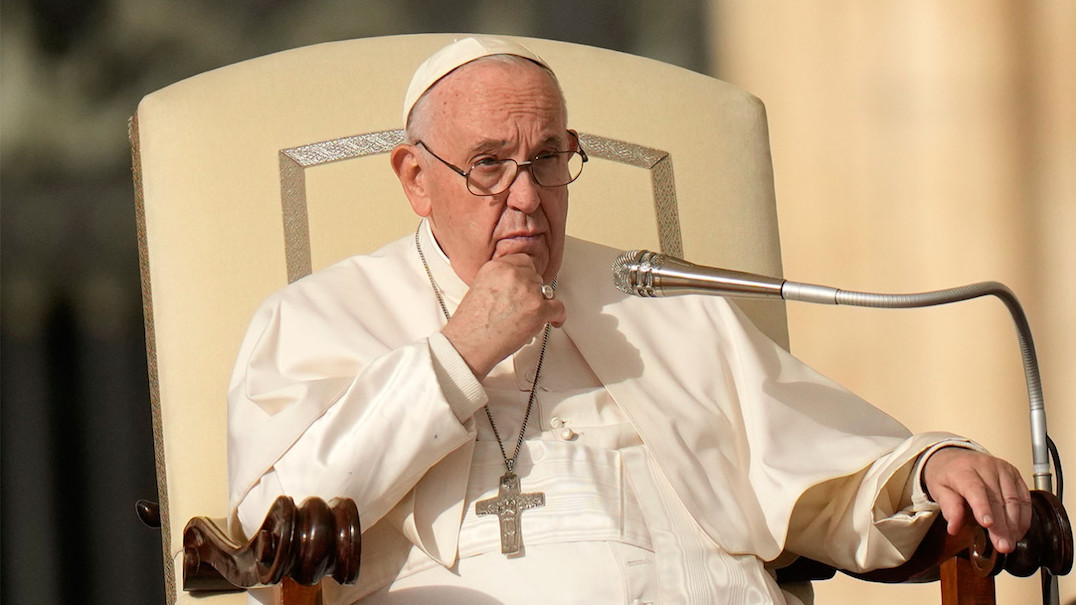
    How the Pope’s Racist Comments Parrot Russian Propaganda

    In an interview with America Magazine published on Monday, Pope Francis off-handedly disparaged Russia’s Buryat and Chechen ethnic minorities, characterizing them as the “cruelest” soldiers in the Russian military.

    By saying this, Pope Francis — whether on purpose or by accident — repeated one of the best-known stereotypes in the canon of Russian propaganda, namely that of the innate nobility of Russian soldiers and officers who strive to protect the vulnerable and fight for what is right, while non-ethnic Russian soldiers are marauders and murderers.

    This deeply problematic trope’s main characteristic is the casual way it is used, not only by pro-Kremlin activists and propagandists, but by Russian opposition politicians too. Even some Ukrainian news editors are guilty of using it — and inevitably see their readership spike with every headline about “militant Buryats.”

    Unlike English, the Russian language makes a clear distinction between Russian citizens (российские/rossiyskie) and ethnic Russians (русские/russkie). The latter are the torch bearers of “the Russian tradition,” romanticized by the Pope and with whom all the stereotypes associated with Russia are associated: vodka, balalaikas, and banyas; they read Tolstoy, Dostoyevsky and Chekhov, and they are proud of their poetic language and the significance of their culture.

    Ethnic minorities in Russia have a completely different status, however, usually unable to learn their native language as schoolchildren and then regularly denied housing and prestigious jobs as adults. They’ll also regularly be searched and subjected to document checks on the streets and in the metro simply due to their surnames or their appearance.

    Chechens experience this day-to-day racism more than any other group in Russian society, the legacy of two wars fought between Moscow and Chechnya following the collapse of the Soviet Union that left many ethnic Russians believing that Chechens have a natural inclination to violence.

    And yet despite being frequently treated as second-class citizens in Russia, members of Russia’s ethnic minorities have served in Ukraine in huge numbers, with Buryatia, Dagestan and Kalmykia among the most “mobilized” of Russia’s regions. Russia may well be a multiethnic country, but it’s also one in which racial discrimination thrives.

    When Pope Francis made his comments about Chechens and Buryats, he did several things. First, he handed Russian propaganda an easy win, allowing it to denounce the West for its obvious racism. Despite representing a country that is itself highly xenophobic (if not in words, then in deeds), Russian Foreign Ministry spokesperson Maria Zakharova immediately took to social media to express her indignation at the Pope’s words. The Pope’s comments managed to make Zakharova appear reasonable, even though her job involves spouting nonsense on a daily basis.

    Second, the Pope’s comments have global reach and were read around the world. If the stereotype of Buryat and Chechen cruelty was previously confined to the Russian-speaking world, now the rest of the planet has been made aware of it. Of course, many Buryats and Chechens live outside Russia in multiple diasporas around the world.

    Third, despite preaching Christian values and being a moral authority for tens of millions of people, Pope Francis indulged an entire segment of Russian society with extreme nationalist and even overtly racist views, casually reinforcing racist stereotypes about two entire ethnic groups, and in doing so, setting the stage for intra-religious strife, given that Chechens are Muslims and Buryats Buddhists.

    What could have motivated Pope Francis to make these hurtful comments? It’s impossible to say for sure, but there are a few likely scenarios. The first is that the Pope has no serious interest in either Russia or Ukraine and therefore blindly accepts what he sees in news headlines just as any other person might.

    Reporting from Ukraine has been plagued by inaccuracies and outright falsehoods about the behavior of Russian ethnic minority soldiers. One particularly egregious example was a recurring story that attributed the massacre in the town of Bucha to Buryats in the Russian military.

    Since then, the Free Buryatia Foundation has published a full investigation into these claims and comprehensively refuted all stories alleging that there were Buryats in Bucha, establishing instead that the paratroopers stationed in the town came from the western Russian city of Pskov.

    While the untruths about there having been a Buryat presence in Bucha are the most notable example of racist slander against Russia’s ethnic minorities, there are innumerable others. All this, despite the fact that there is absolutely no evidence more war crimes have been committed by Buryat or Chechen soldiers in Ukraine than ethnically Russian soldiers.

    One final possibility is that the Pope deliberately spouted Russian propaganda in a poorly conceived attempt to avoid offending Russians as a whole — and President Vladimir Putin in particular — and thus risk a further rhetorical escalation that might dissuade the Kremlin from sitting down for peace talks with the Ukrainian government.

    The real question the Pope’s comments have raised, however, is whose behavior should actually be considered “the cruelest” here — that of Chechens and Buryats or that of Pope Francis and Vladimir Putin.

    Source

  • Fleeing Russia, Andrei seeks asylum in what for him still is historical homeland, Sapmi
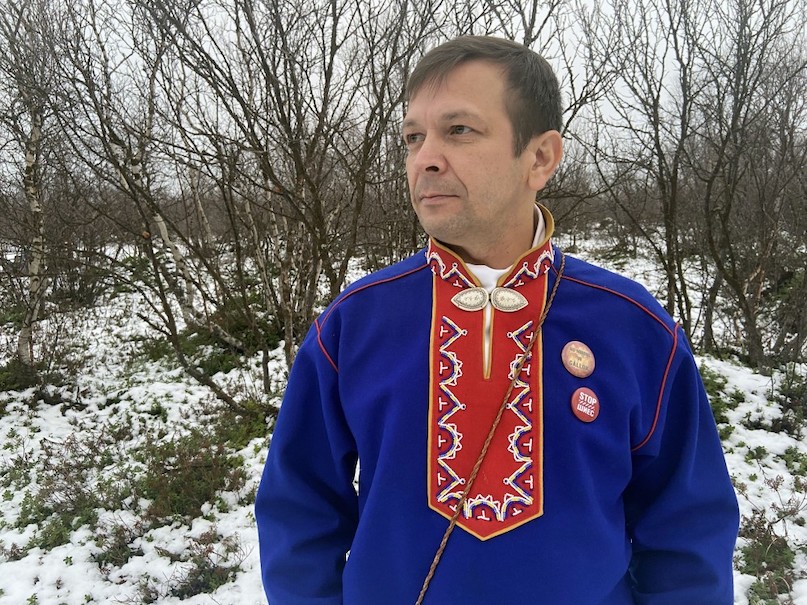
    Fleeing Russia, Andrei seeks asylum in what for him still is historical homeland, Sapmi

    “I’m pleased to be on this side of the border. To be free and not persecuted. To speak the truth openly and not be afraid.” Andrey Danilov promises to continue defending the rights of the indigenous peoples.

    “The consequences [of the war] hit hard on indigenous communities,” Andrei Danilov tells.

    Speaking with the Barents Observer in Neiden, a traditional cross-road for different Sámi groups in the borderland between Norway, Russia and Finland, Danilov expresses deep concern for how the war of aggression impacts native people on the Kola Peninsula and across Siberia and the Far East.

    “It is no secret that these are the most depressive regions of Russia with poverty, unemployment, and lawlessness by the state.”

    Soldiers fighting for Moscow in Ukraine include men from many of the indigenous groups of the Russian north. Including the Sámi on the Kola Peninsula.

    Andrei says only a few were mobilized from Lovozero, the main Sámi settlement on the Kola Peninsula.

    “But there are few people living in the town, so a few young men still bring the percentage of the population high.”

    “The number of deaths from indigenous peoples of the North is huge,” he notes.

    There are no accurate figures for the number of indigenous peoples’ fighters sent to the battlefields. Such information is classified. Social media posts from remote Arctic communities, however, show photos and videos of young men recruited into the Army by promises of pay-checks much higher than they could dream of earning in their home villages.

    To escape poverty, many have no other choice than to sign a contract. Or join the military as volunteers, a term fuelled by war propaganda from state-controlled media airing all but Russia’s big losses of lives in Ukraine.

    Additionally, many were forced into the war as Vladimir Putin called for a partial mobilization on September 21.

    Andrei Danilov notes how the Ukraine war is not only dividing the Sámi people inside Russia but also across borders in northernmost Europe.

    “Some of the Sámi support Putin’s actions. One of the Kola Sámi organizations even signed an appeal in support of the war in Ukraine,” Danilov tells.

    Sámi Ivan Matrekhi, former head of the Association of Sámi in Murmansk Oblast (OOSMO), was outspoken and pictured with a “Z” symbol.

    With Kremlin’s “Z” on two reindeer, the Sami in Lovozero staged a pro-army, pro-Putin message.

    As a consequence, the Sámi Council decided to temporarily suspend official meetings with the Russian side.

    The Council was set up to represent all Sámi in the four countries; Russia, Finland, Norway and Sweden. Today, only the three Nordic countries’ representatives are meeting.

    “The cooperation that lasted 30 years is suspended. So we see that the war has a very strong impact on the Sámi,” Andrei Danilov explains.

    Danilov was born in Lovozero, but lived in the mining town of Olenegorsk, an hour’s drive south of Murmansk until he decided to flee to Norway in February.

    “I left Russia, but did not leave my historical homeland Sapmi. Now, I’m an asylum seeker.”

    When Andrei’s ancestors were herding reindeer up here inside the Arctic Circle, state borders didn’t exist. They could freely move from east to west, from inland to coast. Fishing, hunting, farming, and herding.

    Norway, Russia border was agreed upon in 1826. Norway was at the time part of Sweden. Finland, also previously ruled by Stockholm, became a Grand Duchy under Russia in 1809.

    Real trouble for reindeer migration and the Sámi nomads came in the 1920s after the revolution and with Stalin’s closure of borders to the West.

    Throughout Stalin’s terror regime, and the following Cold War, the Sámi groups on the Kola Peninsula had little, if any, contact with brothers and sisters in the three Nordic countries. 

    Andrei is now witnessing a second Iron Curtain dividing Europe’s Arctic indigenous peoples.

    “Some of the Sámi support Putin’s actions. This one of the Kola Sámi organizations even signed an appeal in support of the war in Ukraine,” Danilov tells. Photo: Thomas Nilsen

    “We continue to communicate. There is internet and social networks where the Saami are active.”

    “I really hope that cooperation will resume and we again will be able to attend joint events throughout Sampi,” Andrei Danilov says and ends by quoting a phrase from the famous Sámi movie about the 1852 riot in Kautokeino:

    “We must speak and try to understand, even when there is no hope.”

    Source

  • Russian asylum seekers who boated to Alaska island are Indigenous, Murkowski says
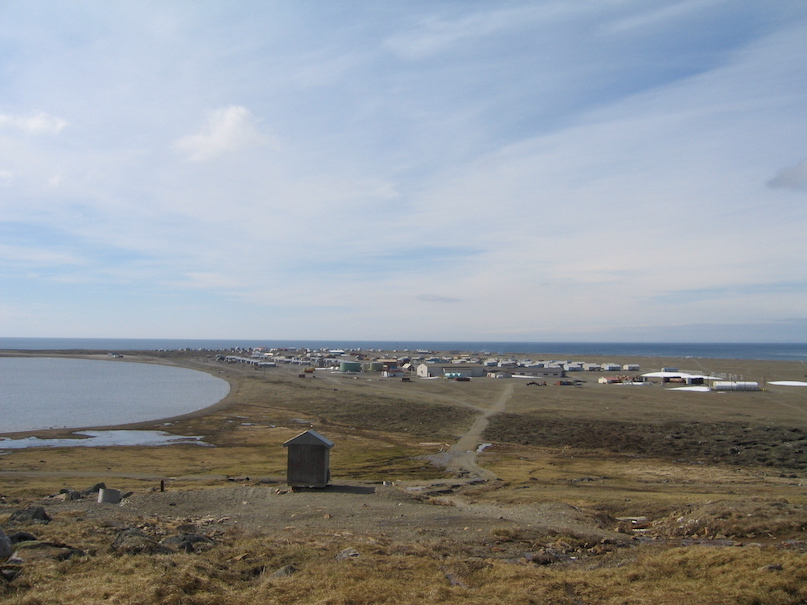
    Russian asylum seekers who boated to Alaska island are Indigenous, Murkowski says

    U.S. Sen. Lisa Murkowski on Saturday provided some details about the two asylum seekers who traveled from the Russian Far East to Alaska’s St. Lawrence Island earlier this month to avoid being conscripted into the nation’s military. The two men are Indigenous Siberians, and they said Putin’s government is targeting ethnic minorities in rural areas, like themselves, to fight in Ukraine.

    They were “so much in fear of their own government that they risked their lives and took a 15-foot skiff across those open waters. That says a lot,” she said. “It is clear that Putin is focused on a military conquest at the expense of his own people. He’s got one hand on Ukraine, and he’s got the other on the Arctic. So we have to be eyes-wide-open on the Arctic.”

    Murkowski raised the topic of the asylum seekers during the forum for U.S. Senate candidates during the Alaska Federation of Natives convention. She talked about them while highlighting the importance of security in the Arctic region.

    In an interview later in the day, Murkowski said she had spent about 45 minutes with the two Russians in Anchorage, where they had been sent after arriving at Gambell, a village on St. Lawrence Island. She spoke with them through and interpreter. Then two have since been taken to the Lower 48.

    Murkowski said the two are from a coastal community in the general area of Provideniya, a city in Chukotka, the peninsula closest to Alaska.

     Provideniya is about 230 miles west of Nome. Indigenous groups in Chukotka include the Chukchi and the Inuit.

    The men’s exact identities and locations were being kept confidential for the men’s safety, she said.

    “They shared with me that Putin has been targeting rural communities that are minority populations, that are Indigenous populations,” Murkowski said. 

    That account is consistent with other reports from Russia, she said.

    Elsewhere in that country, there have been reports of Tatars, Buryats and Tuvans being targeted for conscription.

    Source

  • Russia’s War on Ukraine: Colonial Efforts on Two Fronts
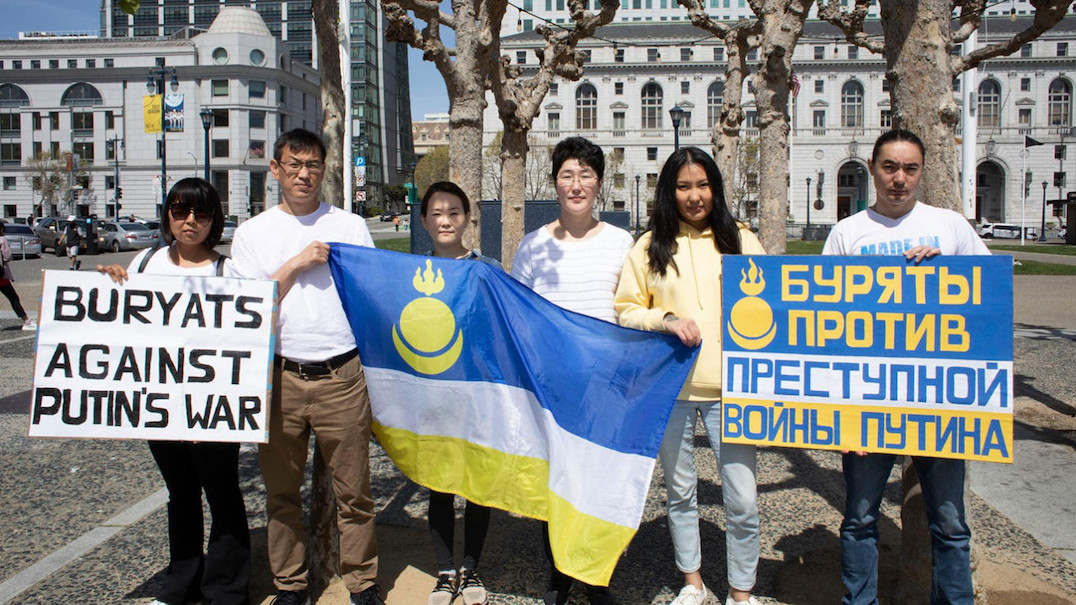
    Russia’s War on Ukraine: Colonial Efforts on Two Fronts

    Russia’s war in Ukraine is on its 211th day. As the number of fatalities wrought by Russia’s invasion escalates, Russian imperialism and colonial drive are further emphasized, both in Ukraine and Russia. The unlawful encroachment on the sovereign nation of Ukraine, acts of violence, and destabilization of the region are all efforts at new colonization. An overwhelming number of Russian soldiers killed in Ukraine come from Russia’s impoverished “ethnic republics”, which are also home to Indigenous Peoples, already devastated by economic instability, and beset by discriminatory official policies and social norms alike. The war has also put immense pressure on Russian civil society, making disagreement with Russia’s actions and anti-war sentiment and action chargeable, leading to a tremendous increase in censorship, criminal prosecutions, and enforcement of new restrictive laws. 

    The Russian State and local governments are increasingly reluctant to release information on the numbers of service people killed, much less on the ethnic identities of the deceased; nevertheless, independent news sites such as Vazhnie istorii (IStories) and MediaZona have conducted in-depth investigations into the numbers. Through analysis of thousands of publications, these studies reveal the number of fatalities to be significantly higher than the Russian government has put forth. Furthermore, one of MediaZona’s main conclusions was that “most of the dead soldiers are very young people from poor regions.” While “poor regions” does not necessarily denote areas where Indigenous communities live, Russian imperial politics have instituted, and continue to foster, poorer socioeconomic circumstances in areas where the majority of Russia’s Indigenous Peoples reside.  

    Military censorship has made it incredibly difficult to find reliable data and to form an accurate understanding of the numbers and demographics of Russian military personnel killed in Ukraine. The exact count of Russian soldiers killed is not known and estimates vary widely. The Russian Ministry of Defense has only released official data on losses twice: March 2 (498 dead) and March 25 (1,351). The General Staff of the Armed Forces of Ukraine reports Russia’s military death toll is around 35,000. An analysis of publications from regional media and social networks conducted by MediaZona, in collaboration with the BBC and a team of volunteers, confirms 6,219 deaths as of September 23. IStories’ investigation, which is updated daily, has verified 6,083 names of the deceased. MediaZona and IStories both emphasize that these numbers solely reflect data their teams have been able to verify through open sources rather than actual losses. In early June, the military prosecutor’s office in the Kaliningrad region demanded that the Pskov-based media site 60.ru take down their lists of deceased soldiers. This started a mass removal of lists from other regional media outlets. The Kaliningrad court’s decision, which stated that this information divulges State secrets and weakens morality, has become a norm throughout regions of Russia though individual obituaries continue to be published by regional media and social media public networks. As a consequence of the war, Russia’s mortality rate of young people has increased by approximately 20%. IStories’ investigative reports show that citizens of Saint Petersburg and Moscow, where over 12% of Russia’s entire population live, are hardly present among the fatalities. In contrast, in less heavily populated regions of the country, the mortality rate of young men has simply skyrocketed. 

    Monument to military glory in Victory Park in the city of Cheboksary, Chuvashia. By Aleksei Radchenko.

    The “ethnic republics” most impacted by this current situation include, but are not limited to, Dagestan, Buryatia, Chechnya, Bashkortostan, and Altai. The Republics of Dagestan and Buryatia rank first and second, respectively, among these regions. The number of deaths of people from Dagestan has increased by 130% during the war; in Buryatia, 110% (according to the Telegram channel “Demography fell”, in the first three months of the war, confirmed deaths of military personnel from Buryatia increased the mortality rate of Buryat men ages 18–45 by 70% and mortality rate of young men under 30 by 270%). In Buryatia, there is at least one funeral of a soldier daily. The disproportionate number of dead soldiers who come from these regions exemplifies contemporary Russian colonialism––ethnic republics are overwhelmingly economically depressed though often sites of lucrative, intensive extractive industries; unemployment is high, particularly in villages, making military enlistment one of the only ways for young men to earn money; and ubiquitous patriotic propaganda, alongside a history of conditioning and institutionalizing ethnic Russian primacy, instills incredibly complicated feelings of loyalty to nation(s).

    In March 2022, military registration and enlistment offices began to actively recruit contractors for a “special operation” without specifics (the war in Ukraine is called the “special operation” in Russia). Most of these aggressive recruitments unfolded in Russia’s economically depressed regions. Although varying among regions, in Dagestan offered salaries for enlisting in the “special operation” began at 177,000 rubles ($2,800 USD) for the rank of private, and went up to 215,000 rubles ($3,401 USD) for the rank of ensign. These numbers are astronomical when considering that the average salary in Dagestan is slightly more than 32,000 rubles ($506 USD). In 2020, Buryatia ranked 81st with regard to quality of life out of 85 regions in Russia and a 2022 RIA Novosti (Russian state-owned news agency) study based on data from the Ministries of Health and Finance, the Central Bank, and other open data sources found that out of these same 85 regions, Buryatia was 69th in terms of the population percentage living below the poverty line (19.9%). The regions with highest population percentages living below the poverty line in 2022 were the Republics of Tuva, Ingushetia, and Altai––notably also “ethnic republics” with Indigenous populations. 

    Monument dedicated to the soldiers of Buryatia who fell while on the fronts of WWII located in Komsomolskaya Square in the city of Ulan-Ude, Buryatia. By Sakri.

    In addition to financial incentives, military service is often seen as an important, respectable social elevator and an ideological civil position across Russia, and especially in these areas. For example, in Buryatia the city of Kyakhta is known as a “military city” where the 37th Independ Guards Motor Rifle Brigade is based, in which at least four thousand people serve, and where “almost every boy dreams of a military career”. While such military cities exist, it is often smaller villages that supply the army with people and, consequently, bear the greatest losses. Lack of employment opportunities are often felt throughout Russia’s ethnic republic, pushing general migration outflows to increase, but these strains are even more acute in villages. Inculcation of patriotism, which is a key part of recruitment for Russia’s war on Ukraine, is increasingly rooted in World War II. Monuments to the victories of the USSR during World War II (called the “Great Patriotic War” in Russia) are everywhere in Russia––from large cities to small villages like that of Selenduma (Selenginski district, Buryatia).

    Monument to those who died in the Great Patriotic War located in the village of Kani, Chechnya. The inscription under Stalin’s portrait reads: “Thank you for the victory!” By Vladimir Sevrinovsky. 

    During World War II, 386 Selenduma residents went to the front where almost half died. In their honor, a victory monument was erected in the village with all the names of the deceased. Today, the village of Selenduma has a population of 2,700 and the head of the rural administration’s reports that twenty three residents left for Ukraine means that every twentieth man (aged 15–44) is gone. The village of Kani (Kulinskii region, Dagestan)––once an extensive community––is now populated by around thirty families. In Kani there is the quintessential monument to those who died in World War II. So far, twenty men from the village have left for the war. 

    As elsewhere in Russia, the war has split societies, including Indigenous communities. Attitudes about the war are complicated and vary across and within regions. Ethnic republics are generally split over their loyalty to Putin and Russia and stance on the war. On the one hand, public demonstrations of support for the Russian invasion are frequent, but they are, time and again, met with resistance. There are Indigenous people who support the war and believe it to be righteous, protecting not only Russia, but their own communities. On March 1, 2022 the Russian Association for Indigenous Peoples of the North (RAIPON) issued a statement and public letter in support of the invasion of Ukraine, thereby backing the killing of civilians, women, children, Indigenous Peoples, and soldiers living in Ukraine. There are also Indigenous people who openly condemn the war, in particular mothers whose children have been sent to war. On March 11, the International Committee of Indigenous Peoples of Russia––comprised of “representatives of Indigenous Peoples living outside of Russia against [their] will”––released a statement of solidarity with the people of Ukraine in which they condemned RAIPON’s open endorsement of the war.

    These feelings reflect convoluted attitudes and identities throughout the country. Opposing the “special operation” is dangerous. Anti-war initiatives taken on by civil society are increasingly met with severe, suppressive measures by the State, therefore, even if individuals oppose the war, vocalizing anti-war sentiment can result in fines, detention, harassment, intimidation, other forms of violence, and the already prevalent practice in Russia––arrests and imprisonment.

    Prior to the invasion of Ukraine, Russian authorities had actively started using propaganda to preemptively justify a “special military operation” in Donbas. In the beginning of the war, Russian schools were given instructions for how to teach lessons about the war on Ukraine and similar recommendations were given to some Russian universities. The Ministry of Education sent elementary schools materials on how to lead lessons on “Anti-Russian sanctions”, “Heroes of our time”, and how to mitigate “fake news.”

    Children at school. The flag of the Russian Federation and a portrait of President Vladimir Putin hang on a wall with text reading “Russia — my motherland!” By Sergei Brovko / Kommersant. 

    Independent news and media sites in Russia have been blocked, state-operated news cannot publish or broadcast information that discredits the Russian government and its actions, and access to other media sources have been greatly restricted. In mid-March, Meta, the parent company of Facebook and Instagram, was banned in Russia due to allegations of extremist activities. The ban resulted in the blocking of Facebook, Instagram, Twitter, and a slew of other websites (social media, news, civil society, government domains). Thus, having applications for these banned networking services downloaded on one’s phone is a punishable offense. In March, “public dissemination of deliberately false information about the Armed Forces of the Russian Federation”, “public actions discrediting the use of the Armed Forces, including calls for unauthorized public events,” and “calls for sanctions against Russia” were codified under amendments to the Criminal Code, which has made speaking out against the war a criminally liable act with punishment ranging from fines of thousands of rubles to imprisonment. According to data gathered by OVD-Info, an independent human rights media project, there have been 16,334 detentions for taking anti-war positions or related to anti-war protests since February 24, 2022 (this includes “preventive” detentions authorities practice using face recognition software). At the end of June, OVD-Info knew of 2,457 administrative cases filed against individuals for “discrediting” the army of the Russian Federation. Not only is pro-war propaganda infused into all aspects of Russian life and imperial ideology and nationalism institutionalized, non-compliance with them is exceedingly risky. 

    Nevertheless, there are Russians who, despite the risks, openly oppose the war. For many ethnic groups, the war on Ukraine is immensely evocative of Russia’s imperial conquest of their own traditional territories and historical and contemporary Russification policies. Ruslan Gabbasov, head of the Bashkir National Political Center, says that lingucide and ethnocide has been occurring and “[t]oday, genocide has been added to this both towards the Ukrainian people and towards the peoples of Russia, whose representatives are sent to far for slaughter”. This is not the first time in recent history in which the Russian State, in an all-too-familiar colonial practice, has recruited and sent contractors from ethnic republics to fight in imperialist-driven wars. Alexandra Garmazhaprova, a Buryat journalist and president of the Free Buryatia Foundation, which seeks to expose and dismantle racism and xenophobia in Russia and demystify information about the war, wrote in 2015 about the participation of Buryat soldiers in the war in southeastern Ukraine.

    Not only are Indigenous ethnic minorities disproportionately dying in the State’s wars, they’re also deliberately used as the faces of wars, which often functions to distance war from a broader ethnic Russian public. The “national question”, which in the Soviet context described the two distinct modes in which nationhood and nationality were institutionalized, today manifests as paradoxical and concurrent State-upheld images of multinationality and ethnic Russian primacy. This question has taken on additional meaning in the context of the war on Ukraine. Preexisting anti-war and decolonial movements in Russia and diasporic communities and nascent ones, such as the Free Buryatia Foundation, are coming together to create a more united and collaborative movement. Members of Indigenous ethnic groups, such as Gabbasov and Garmazhaprova, are part of a larger phenomenon of anti-war national movements in which people of non-Russian ethnicity in Russia are simultaneously realizing a new sense of collective identity and a need to further distance themselves from Kremlin objectives in the name of the “Russian world.” 

    On Wednesday, September 21, 2022, following severe setbacks in Russia’s invasion of Ukraine, President Putin announced an immediate “partial mobilization” of Russian citizens, which means citizens on reserve (men who have served their mandatory conscription terms or have deferred service) will be called up and those with past military experience will be conscripted. This is Russia’s first draft since the Second World War. Defense Minister Sergei Shoigu announced that Russia plans to call up 300,000 reservists. Since then, thousands of people have been arrested at anti-mobilization protests across the country, one-way tickets from Russia to Turkey and other countries that do not require entry visas for Russian citizens have sold out, and questions about who will escape the draft and who will be forced to fight become even more pressing. People in the “ethnic republics” already know what the probable answers to these questions are. The social media accounts of anti-war campaigns and organizations are brimming with information on how to potentially avoid the draft and anecdotal evidence submitted by individuals witnessing men receiving draft notices and being collected from their homes in the middle of the night and from universities and colleges. Military registration employees and enlistment officers are allowed to deliver summons to people’s places of residence and at their place of employment since, by law, employers are obligated to help military commissariats. 

    Messages sent to Victoria Maladaeva, vice president of the Free Buryatia Foundation, and shared on her IG page. Text reads “Hello, Irkutsk region, Osinsky district, Osa village, according to the list 37 people [will be drafted], young men [born] from 1980 to 1999. The village population is about five thousand, I have no data on the region.”
    “Zabaikal region, Buryat village, population 660 people, summons for 58 people! This is just a nightmare”
    “I got news that 210 people were taken from the Verkhnevilyuysky district [Sakha Republic], this must be a joke.”
    “They will take 150 people from each district of the Sakha Republic.”

    Additionally, lists of names of people who will potentially be drafted are circulating, with the hopes that the individuals listed can evade conscription.

    Shared on the sakha_vs_war Instagram page. List of men to be conscripted from the Verkhnevilyuysky district (Sakha Republic)
    Third column contains names, fourth column birth dates, fifth column contains information about spouse and children.

    Though the exact numbers of draftees from “ethnic republics” is unknown, significant numbers are already being rounded up. Since much of the information about the “partial” mobilization is coming from various anonymous and nonsystematic sources and organizations do not have the time to thoroughly vet or process it, the Free Buryatia Foundation created a Google Form to help gather analytics, which are “more important now than ever [as] we need to understand how many people have been mobilized”. Video and anecdotal evidence from across Russia demonstrates large drafts taking place even in small villages and towns. Footage from the Sakha Republic appeared to show dozens of men being collected at the soccer stadium and loaded on buses headed to recruitment centers. These direct messages, photographs, videos, and documents suggest that the proposed summoning of 300,000 men will in fact be higher. Failure to appear at the military enlistment office after being subpoenaed results in a warning or administrative fine from 500 to 3 thousand rubles, according to Article 21.5 of the Administrative Code. However, new legislation hurriedly passed by the State Duma on Tuesday, September 20 sets new, harsher penalties for those who attempt to evade service, surrender, or refuse to fight. Individuals with wealth or connections might be spared from military service or potentially have the means to flee the country which underscores how men from largely impoverished regions are more likely to be fighting in the war. 

    Support for the war voiced by Indigenous-majority republican leadership, cultural organizations, and individuals is categorically and significantly ironic as it goes against the interest of the country as a whole, and of Indigenous Peoples specifically. Russia’s war on Ukraine is a colonial effort on two fronts, committing a double genocide as it continues its unlawful invasion and violent destablization of Ukraine while using Russia’s Indigenous Peoples as cannon fodder. 

    Source