
Tag: War

  • Statement on 5 July 2023
    Statement on 5 July 2023

    On July 5th, the Russian prosecutor general’s office declared The Altai Project an “undesirable organization”. It is the 93rd foreign organization to receive this badge of honor for meaningful and effective support of Russian civil society.

    “The Russian Prosecutor’s office distorts and misrepresents legitimate community-led conservation efforts organized by local activists in Russia,” said The Altai Project director Jennifer Castner. “Their specious accusations are focused on events that occurred between 2006-2018.  In making this announcement, the Russian government is only harming its own citizens – people who are working to protect their right to a clean and healthy environment.”

    The Prosecutor General claims that The Altai Project has been involved in “sabotaging the construction of the Power of Siberia-2 gas pipeline, as well as propaganda work in the Russian and global community, the purpose of which is to publicly convey the need to fight for sacred places” in Altai Republic. In addition, The Altai Project opposes [mining] development … in connection with which The Altai Project causes economic damage to the Russian Federation…. While formally advocating nature conservation, it interferes in the internal affairs of the Russian Federation and may harm Russia’s economic security.”

    With this announcement, the Russian authorities now categorize cooperation or interaction with The Altai Project by Russian citizens, both inside Russia and abroad, as a crime. The Russian Prosecutor General’s press release unironically states that Russian nature conservation, wildlife protection, and cultural heritage preservation are harmful to the country’s security and economic development.

    Centering Russian leaders

    The Altai Project has worked since its founding in 1998 to support community-led nature conservation and biodiversity protection. Until recently, rule-of-law in Russia guaranteed the rights of its citizens to live in a healthy, clean environment, balanced with the just and sustainable use of natural resources, despite increasing challenges to protecting those rights.Independent Russian citizens and Russian independent, non-governmental organizations are more than capable of identifying environmental issues in their local communities, acting to address those issues, and seeking support. Over its decades of work, The Altai Project has simply provided resources, access to expertise and collaboration, and global amplification of voices in Russian civil society.Some of their achievements include:

    • Coordinating public input to decision-makers on plans for a large hydropower dam in the 2000s, resulting in its cancellation;
    • Calls to re-route the Altai Gas Pipeline (renamed Power of Siberia 2) away from the ecologically-sensitive and culturally-sacred Ukok Plateau, ultimately resulting in it being rerouted to the east, away from Altai in 2016; and
    • Community-led monitoring of plans to extract cobalt in key snow leopard habitat. Investors failed to close the deal and the plan evaporated in 2016;
    • Restoration of the snow leopard population in Altai Republic through careful protection and study. This iconic cat has become a valuable economic driver of tourism.

    Russia’s full-scale invasion of Ukraine and corrupt governance

    When Russia launched its horrific, full-scale invasion of Ukraine in February 2022, The Altai Project spoke out publicly in solidarity with the people and nation of Ukraine, noting, “While we will pause our work in Russia, The Altai Project will continue supporting partners in conservation efforts and advocacy in other parts of Eastern Europe and Eurasia.” The Altai Project has never had any employees in Russia or maintained an office there.

    “Once again, the Russian Prosecutor General has decided to stand with corrupt oligarchs instead of the Russian people,” Jennifer Castner added. “Crackdowns on international organizations (like The Altai Project) that support ordinary Russian citizen leadership to protect their natural heritage only highlight the Russian government’s weakness.”

    Source

  • Why a Siberian Shaman Is a Thorn in the Kremlin’s Side
    Why a Siberian Shaman Is a Thorn in the Kremlin’s Side

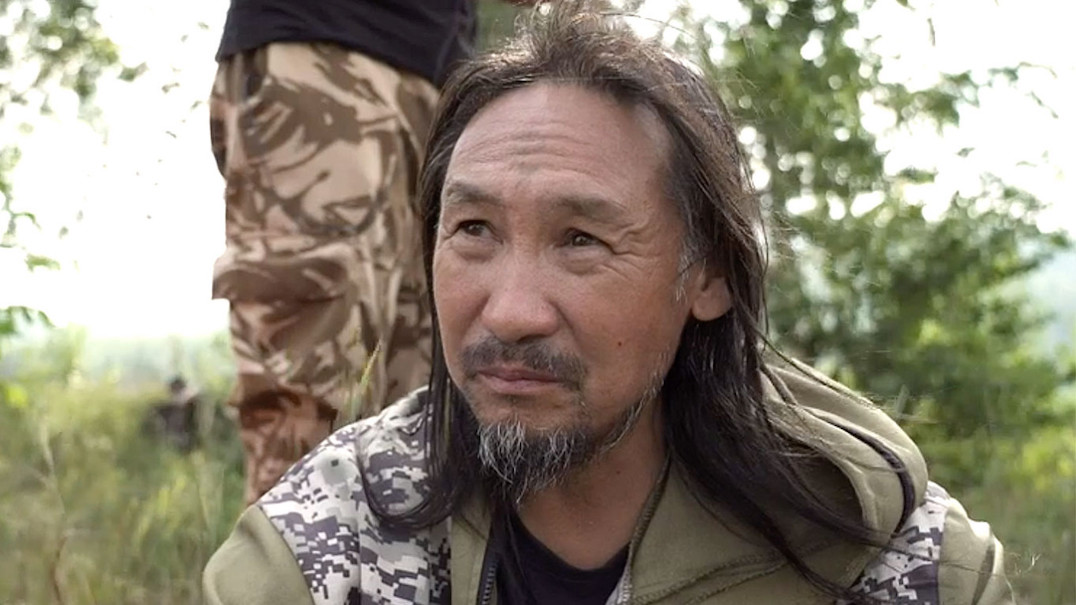
    Alexander Gabyshev, a self-styled shaman from Russia’s Far East, has been held in compulsory psychiatric treatment since 2019, after he set out on a cross-country trek to Moscow with the goal of peacefully expelling President Vladimir Putin from power and “restoring democracy” to Russia by performing a shamanic ritual on Red Square.

    On Monday, a court in Russia’s Far East ordered to transfer him from a neuropsychiatric dispensary to a general psychiatric hospital in Yakutsk, where he will undergo a “milder” form of treatment.

    Russia’s Memorial human rights organization has declared Gabyshev to be a political prisoner.

    The Free Yakutia Foundation, an anti-war movement in Gabyshev’s home republic of Sakha, has penned this op-ed on how Gabyshev’s message was able to resonate with so many ordinary Russians.

    Two years have passed since Alexander Gabyshev’s second placement for compulsory treatment in a psychiatric dispensary. The practice of using punitive psychiatry as a tool to silence dissidents has been known and loved in Russia since the persecution of Pyotr Chaadayev by the Okhranka, the Tsar’s security service, in the 19th century. 

    However, the focus of this discussion is not on historical examples, but rather on the phenomenon of the “Warrior Shaman” and its place in both Gabyshev’s native republic of Sakha and Russian politics.

    Alexander Prokopyevich Gabyshev, a janitor, welder, handyman, and graduate of the history department at Yakut State University, initially appeared to be an ordinary citizen who didn’t fit into the prevailing capitalist system. 

    But he, unlike so many others, had the courage to speak out against loneliness, disorder and injustice. 

    His campaign, which began in August 2018, initially had no specific objectives, although Gabyshev identified himself as a pilgrim and someone who embraced the beliefs of Indigenous peoples of the North. 

    
										 					A still from the BBC documentary "From Yakutia to Moscow: The Way of the Shaman against Putin"
    A still from the BBC documentary “From Yakutia to Moscow: The Way of the Shaman against Putin”

    In the summer of the following year, Gabyshev shifted his focus from missionary work to the political agenda, perhaps recognizing the demand for change in his interactions with others. 

    The shaman embarked on a cross-country trek and pledged to hold an Algys ceremony on Red Square, after which, he believed, Putin would resign voluntarily. Despite the seemingly archaic image he adopted, Gabyshev advocated for the establishment of democratic values, emphasizing the need for a balanced relationship between the government and the people:

    “Democracy must be without fear. Now people are afraid to speak, they are afraid that they will be fired, they will be deprived of their salaries… …There must be a balance between the government and the people. And the struggle for balance sometimes goes on, yes, by bloody methods, if the tyrannical state regimes do not allow them to balance their power in a democratic way. And Putin will defend statehood, which we will now try to balance with democracy.”

    Although Alexander Gabyshev’s campaign was short-lived, any news related to the “Warrior Shaman” inevitably garnered millions of views and thousands of supportive comments. Additionally, he amassed a sizable group of direct followers. 

    What caused this?

    The popularity of this unsuccessful and seemingly naive protest march can be attributed to the boldness and simplicity of Gabyshev’s image. One can draw parallels between his trek from Russia’s Far East to Moscow with Mahatma Gandhi’s “Salt March,” Lenin’s “walkers,” or even with the plot of the 1998 Russian tragicomedy starring Mikhail Evdokimov, “Why Don’t We Send… a Messenger?” 

    
										 					A still from the BBC documentary "From Yakutia to Moscow: The Way of the Shaman against Putin"
    A still from the BBC documentary “From Yakutia to Moscow: The Way of the Shaman against Putin”

    The shaman’s pilgrimage to Red Square is a peaceful and relatable expression of despair, representing an ordinary person’s final attempt to reach out to the authorities in Moscow. The homemade shaman’s tambourine becomes the voice of millions of Russians, and the smoke from an unlit ritual bonfire symbolizes the fire that those who haven’t heard the “Shaman Warrior’s” call will soon witness.

    It may be that the dictator’s superstitious nature and love for rituals and spiritualism played a role in the decisive and aggressive arrest of the shaman. Currently, Gabyshev remains under compulsory treatment, effectively making him a political prisoner. 

    In the eyes of the Kremlin, this former welder and hard worker is deemed more dangerous than Navalny and Yashin, as the rebellion of an ordinary person, which resonates with most Russians, is difficult to analyze and predict in terms of its potential threat to the existing constitutional order.

    Source

  • Seminar: The war’s impact on Indigenous peoples of Russia

    Russia’s military attack on Ukraine has significantly impacted the life of Indigenous Peoples in Russia. One of the implications of this situation is that some Indigenous representatives who have openly opposed Russia’s actions in Ukraine, have had to leave their native land for security reasons. For Indigenous peoples, the connection to their land is an integral part of their culture.  

    There are many Sámi activists who fled Russia after the start of the war in Ukraine. This event will address the impact of the war on relations between the Sámi on the Russian side of the border and Sámi on the Norwegian side of the border. What is the current situation of the Indigenous Peoples of the North, Siberia and the Far East after the Russian invasion of Ukraine?

    In this event we will meet representatives of the Sámi People of Kola Peninsula.

    Panel: Andrei Danilov, Aleksandr Slupachik, Andrei Zhvavyi, Valentina Sovkina, Dmitry Berezhkov. 

    Date: 15.07.2023

    Time: 14:00

    Place: Báldalávvues

  • Activist organizes concert in Yarmouth to benefit Ukrainian children
    Activist organizes concert in Yarmouth to benefit Ukrainian children

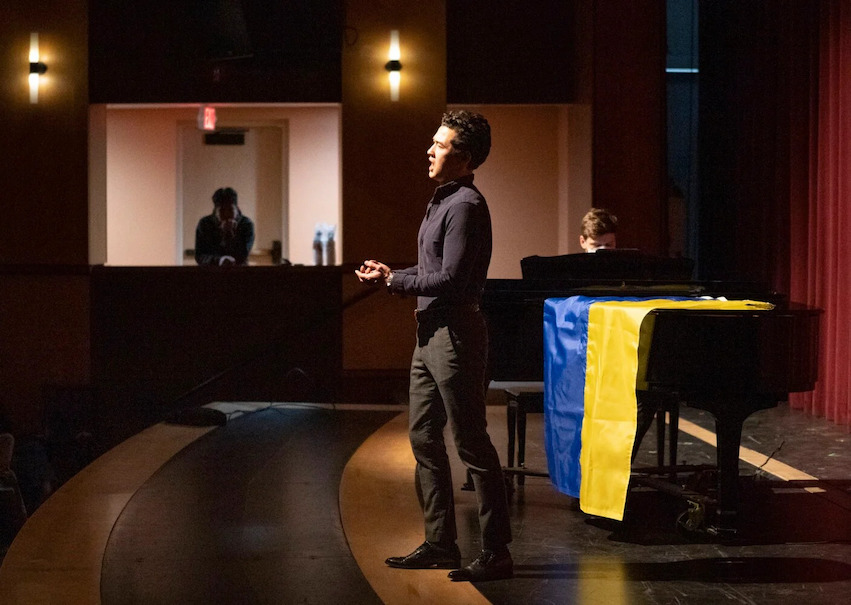
    Pavel Sulyandziga and a Yarmouth High School student have teamed up to present a benefit concert performed by his opera singer son, Pavel Sulyandziga Jr.

    Human rights activist Pavel Sulyandziga Sr. of Yarmouth has been fighting for the rights of his fellow Crimean Tartar people for years and empathizes with the people of Ukraine suffering through the Russian invasion.

    With the help of his son and a Yarmouth High School student, he is organizing a benefit concert for Ukrainian children. The concert, featuring his son, opera singer Pavel Sulyandziga Jr., will be held from 6 p.m. to 7 p.m. Sunday, June 11, at the Universalist Church in Yarmouth. Attendance is free but donations are encouraged. Sulyandziga Jr. also performed to benefit Ukraine last year at the church.

    “For me, it’s very sad and painful to see how Russia became an aggressor,” Sulyandziga Sr.  told The Forecaster with the help of interpreter Vera Solovyeva. “Families have been shattered by the war and separated.”

    Sulyandziga is chairperson of the Board of the International Development Fund of Indigenous Peoples of Russia, which “helps Indigenous people to protect their rights and in their efforts to get justice, life and dignity,” he said. The foundation was 10 years old in 2014 when Russia occupied Crimea, and the Russian government declared it a foreign agent in 2015, he said. In 2016, foundation workers were charged as criminals and forced to leave the country. Sulyandziga settled in Yarmouth, was granted asylum and registered the foundation as an NGO in the U.S. in 2018.

    As a former member of the Civic Chamber of the Russian Federation, he said he felt a particular duty to stand up against Russian wrongdoings in Ukraine.

    “The future of any country are children, and children are the most vulnerable part of society, so we must help them for the future of the nation,” Sulyandziga said. 

    When his son proposed a concert to raise funds for Ukrainian children, he supported the idea as a way to bring awareness to the plight of the people and families of Ukraine, he said. 

    Yarmouth High School freshman Katya Fromuth heard about the plan for a benefit concert and wanted to be involved in the “really great cause.” The plight of Ukrainians had been weighing on her.

    “Always seeing it on the news and hearing it on the radio, it makes you want to do something,” Fromuth said.

    She has been involved in political activism from a very young age, she said, and offered her volunteer services to Sulyandziga, who welcomed them.

    “I really want to appreciate Katya’s support in organizing the concert and event,” he said.

    Music is a beautiful way to appeal to empathy and humanity, Fromuth said.

    “Sometimes things are better sung than spoken,” she said, adding that the pain of what others have experienced often comes through more clearly in music than in conversation.

    “It can be easy to forget very important things that are happening in other parts of the world,” she said.

    The event will open with a speech from a representative of the Crimean Tartar Resource Center, the organization which the event will benefit. The center is working towards the de-occupation and reintegration of Crimea.

    Source

  • Mark Zdor: “I was threatened with arrest in RAIPON”
    Mark Zdor: “I was threatened with arrest in RAIPON”

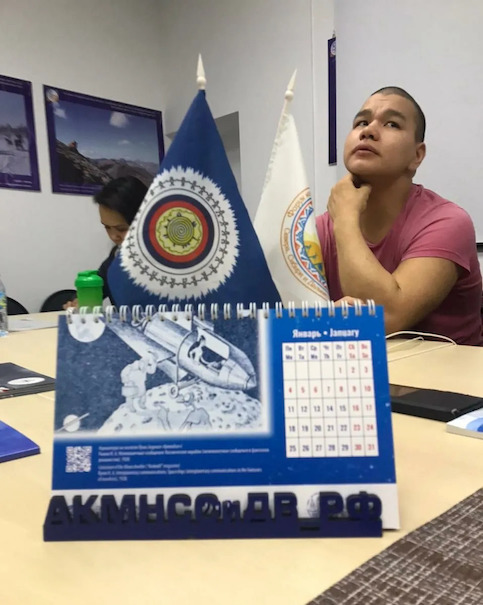
    Interview with youth activist of the indigenous peoples of the North of Russia Mark Zdor.

    We met with Mark Zdor in Berlin, in the building of the Bundestag (German Parliament), where we took part in parliamentary hearings on the problems of the indigenous peoples of Russia.

    A young guy, strong, downed – a representative of the Chukchi people turned out to be an interesting conversationalist. To my question – how did he end up in Berlin and why did he come, he replied: “it’s a long story.” I, in turn, explained that I have time and I am ready to listen if the story is interesting. Here’s what he said.

    Hello Mark. Nice to meet you. I did not expect at all that I would meet one of our northerners in Berlin. My name is Dmitry and I am the editor of the Russia of Indigenous Peoples website. We publish materials about the rights and problems of the indigenous peoples of the North, Siberia and the Far East, and of course it was very interesting to meet you in Germany . Who you are? Tell a few words about yourself.

    My name is Mark Zdor. I was born in the small village of Neshkan, on the shores of the Chukchi Sea. This is a Chukotka village of sea hunters and reindeer herders. I was brought up on the traditional values ​​of the Chukchi – take care of nature, respect elders, value freedom and equal rights for everyone.

    After finishing school, I continued my education. In 2014, I graduated from the Khabarovsk School as a plasterer-painter. In 2020, I graduated from the College of Physical Culture and Sports with a degree in physical education and sports teacher, wrestling coach and teacher.

    In 2020, I entered the Herzen University of St. Petersburg at the Institute of the Peoples of the North. Philology became my specialization. At the University, I also studied the culture of the peoples of the North of Russia. I dreamed of exploring the current state of the Chukchi language and the dynamics of its use. I also have some research experience. I wrote a research essay on the topic “National Sports of the Peoples of the North”. Despite the fact that I am currently in exile, I continue to study the cultural values ​​of my people. 

    Are you in exile? So you left Russia? Forever? How did it happen?

    It’s quite hard to figure it out, but in general, during the time when I was in college and then at the university, I got involved in social activities because I realized that no one but us, representatives of the indigenous peoples, can preserve our identity.

    In 2019, I joined the Association of Indigenous Peoples of the North, Siberia, and Far East of the Russian Federation (RAIPON) – you probably know about this organization.

    Yes, heard.

    In RAIPONe, I started working in a youth organization. We have put a lot of time and effort into preserving the culture of the indigenous peoples of the Russian Arctic. I dreamed of visiting all the Arctic regions of Russia in order to personally get acquainted with the culture of the indigenous peoples who live there. In those years, I was sure that we, at RAIPON, were working to protect the rights and preserve the identity of the indigenous peoples of Russia and the world. I worked there very actively, I think.

    In 2020, the Vice President of RAIPON, Veysalova Nina Glebovna, “recommended” us to vote for Putin’s amendments to the Russian Constitution. Many of my colleagues in social work, representatives of the youth of indigenous peoples, students were indignant at the fact that we were dictated what to vote for.

    We were told that this would do us good, but we all understood that this was only necessary so that Vladimir Putin would have the opportunity to be elected for another presidential term. After these events, I realized that RAIPON is a quasi-governmental organization and became distrustful of its leaders and their activities.

    Nina Glebovna personally threatened me with prison. As it turned out, the leadership of RAIPON and the Institute of the Peoples of the North have a close relationship. They discuss everything among themselves and report to the University about political activists – students from among the indigenous peoples. All my peers who criticized the Russian authorities were psychologically pressured by RAIPON leaders and threatened with expulsion, problems with employment, and even imprisonment.

    After the poisoning of Alexei Navalny in 2021, I finally came to the conclusion that political changes are needed in Russia. Like many tens of thousands of Russians, I went out to protest at the beginning of 2021. After the January rallies, I was called to the St. Petersburg branch of RAIPON because I posted a post about the rally on Instagram. Because of the persecution, many members of our youth organization were afraid to protest and speak out against political repression in Russia. At RAIPON, I was threatened with expulsion from the university, that they would make sure that no one would hire me, as well as with arrest and even prison. The leaders of RAIPON also forced me to return to the organization, tried in many ways to change my views. In addition, they tried to bribe me – they offered me paid work. Despite these threats, I eventually left RAIPON.

    But how did you end up abroad?

    In February 2022, immediately after the start of the war, I was detained in St. Petersburg at a rally “AGAINST THE WAR IN UKRAINE” and taken to the police station. A day later, a trial took place and I was fined.

    At the police station, they told me that we, the protesters, are enemies of the people, and Putin supports the actions of the police and they can do whatever they want with us. In the police station where I was, the policemen mocked us, did not let us drink. We also could not sleep, because. the cell of the police station was overcrowded. My friend brought me a package – food, water and clothes, but they didn’t let him in and they didn’t give me the package, and they didn’t let us see a lawyer from a human rights organization, where we managed to report our arrest. Some of the guys were beaten, they did not let an ambulance to them for a long time, which was eventually called only after 5 hours in the cage.

    After I was released from the police and I came to the university, they began to threaten me with expulsion and prison, and RAIPON representatives called and wrote to my relatives also with threats. After this arrest and before leaving Russia, the police came to my house several times. They checked what I was doing, even on weekends.

    A couple of days after the arrest, I also received a message from a person with the nickname “Criminalist”. She wrote to me on social networks with words of support, but I suspect that it was some kind of provocateur on the part of the security forces. As a result, I closed access for outsiders to my page. I think she was testing me for extremism. Later, I also learned that both the University and RAIPON sent a testimonial to the police department, where they described me in a negative way.

    And by mid-March, it became known that in connection with the Russian invasion of Ukraine, Russian legislation was sharply tightened and that arrests at rallies would lead to criminal cases. Therefore, I decided to leave Russia. I bought tickets for the next flight and flew to Georgia. At the Moscow airport, the border guards searched me and my personal belongings, but let me out of the country.

    Yes, but how did you end up in Germany?

    Since March 16, 2022, I have lived in Georgia for a whole year. At first he was afraid to return because of his anti-war position. But then, when the mobilization began, I realized that the opportunity to be mobilized for war was added to this. Therefore, I applied to the German Embassy in Georgia in order to obtain a humanitarian visa. I told my story in an interview, showed documents that I was arrested, about police supervision and others. As a result, I received a humanitarian visa and flew to Germany.

    Already when I was here, I received an invitation from the Bundestag to come to Berlin and tell my story.

    Thanks Mark for sharing. I hope that in the future you will have the opportunity to live in safety and study the culture and language of your people, as you originally planned, even while in Germany.

    03/30/2023, Berlin, Germany

    Source