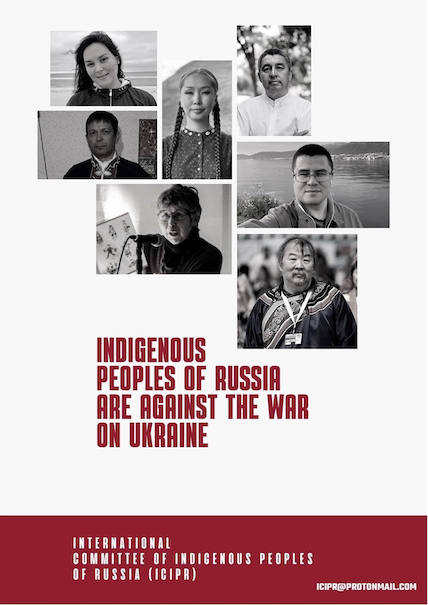
On September 21, President Putin announced a “partial mobilization” in the country. Nobody can be fooled by the word “partial” today. There have been already numerous evidences that summonses are being handed to thousands of future soldiers whom the Russian government has decided to throw into the furnace of war. Young people, middle-aged men and even those who are almost 50 years old, are massively taken away from work places, even at night, separated from relatives and friends in order to be sent to fight for Putin’s wealth. This way he and his gang could continue to rob Russia unhindered, frightening Russian citizens and peoples from neighboring countries.
Putin has been caught lying more than once. After the invasion of Ukraine began, he said that everything was going according to plan. But why do we need such an urgent and sudden mobilization then? The Ministry of Defense stated that the losses of the Russian army are small. But why do they need hundreds of thousands of soldiers more? The truth is that the Russian army is suffering huge losses, and you don’t hear about it on TV. That’s why Putin and his generals urgently needed a new “manpower”.
Today, many lackeys and propagandists tell you that it is everyone’s sacred duty to defend the fatherland and that Russians are happy to go to the front as volunteers. But this is also a lie. No one threatened Russia with war until the Russian army invaded Ukraine, and all those who really wanted to fight have long had the opportunity to go to the front as volunteers. Putin has begun forced mobilization in order to be able to send to death new hundreds of thousands of those who do not want to die voluntarily in the name of his in the name of his paranoid goals.
Everyone knows the horrible level of corruption in Russia. Those who have money, connections, influential relatives, will easily buy off military service. The poor will go to war, those who will not be able to give a bribe, buy a medical certificate, and urgently enter the university. We all know that indigenous minorities are one of the most disadvantaged groups in the country. Today, officials of the State Fishing Agency and hunting inspectors force our aborigines to pay bribes. Tomorrow, military enlistment offices will force the same people to pay bribes again.
In these conditions, the position of the so-called “leaders” of the associations of indigenous peoples of the North, Siberia and the Far East, who continue to praise Putin and his policy of destroying the population of Ukraine and sending more and more recruits to war, is especially shameful and vile.
We all want peace and a quiet life. We all want our hunters, fishermen, reindeer herders to stay alive and continue the traditions of their ancestors, and not perish in a foreign country at the behest of Putin. Therefore, we appeal to you, brothers! Sabotage the orders of your superiors. Burn military Ids. Throw out summons to the military. Don’t show up at recruiting stations. Surrender to the Ukrainian side as soon as you get to the front. This way you will save yourself for your families and your indigenous communities.
We also appeal to you, sisters! Do not let your husbands, brothers, fathers go to war. Spoil documents, do not answer calls from military commissariats. Do not believe the promises of the authorities and the military that they will return your loved ones alive. Do not believe that the authorities will pay money for the deaths and injuries of your relatives. They will cheat again, and you know it. This war unleashed by Putin and his clique is an unjust war. This war is not for Russia and its future, this war is for the continuation of the plundering of the citizens of Russia, its peoples. This war unleashed by Putin and his cabal is an unjust war. This war is not for Russia and its future, this war is for the continued plunder of the citizens of Russia, its peoples. This war is the killing of innocent people, citizens of Ukraine, women, children, old people.
Don’t participate in this war. This is not our war!
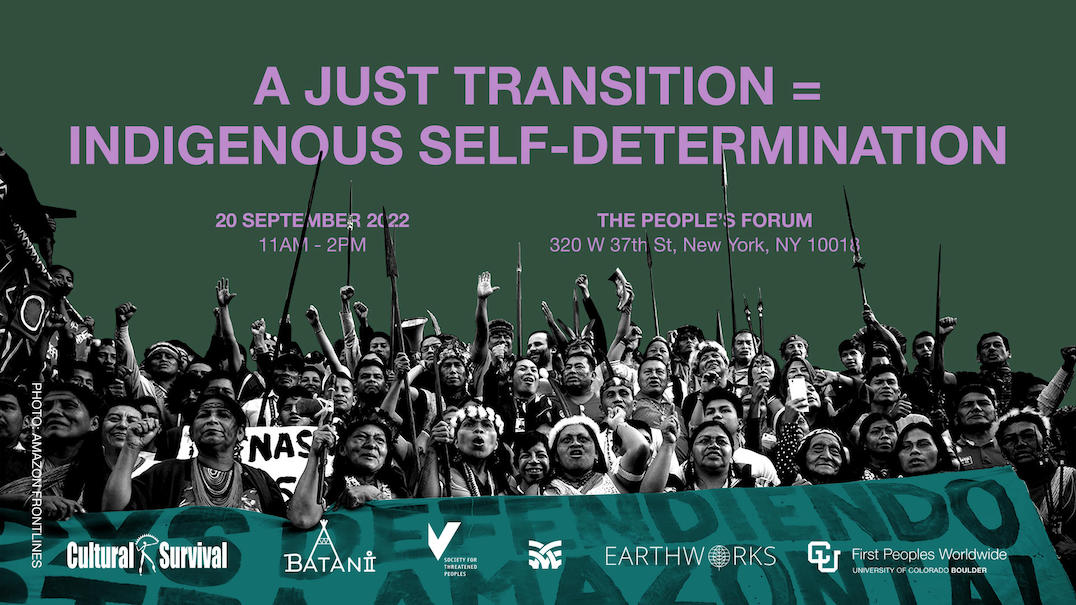
The People’s Forum 320 W 37th St, New York, NY 10018
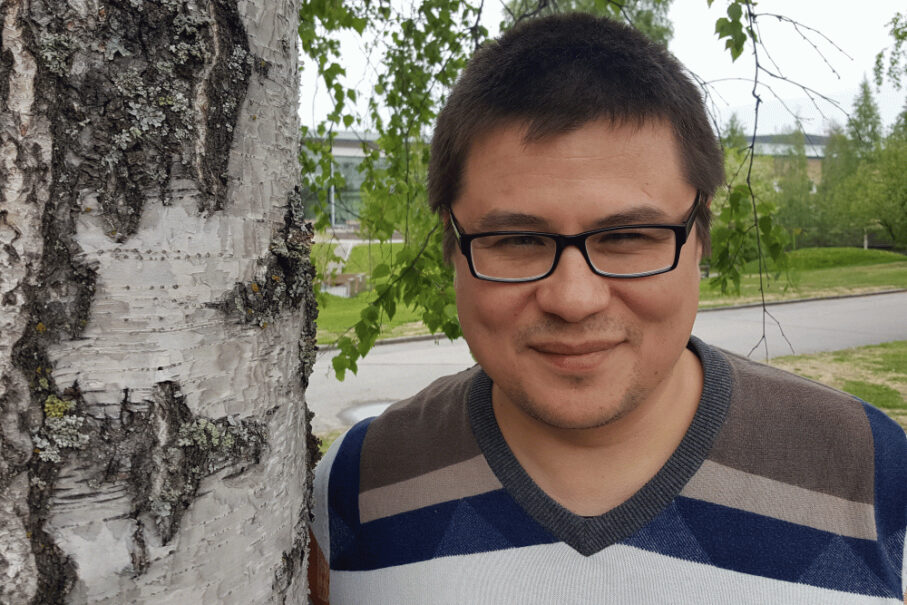
Galina Angarova (Buryat), Cultural Survival Executive Director
Pavel Sulyandziga (Udege) Chairman, Batani Foundation
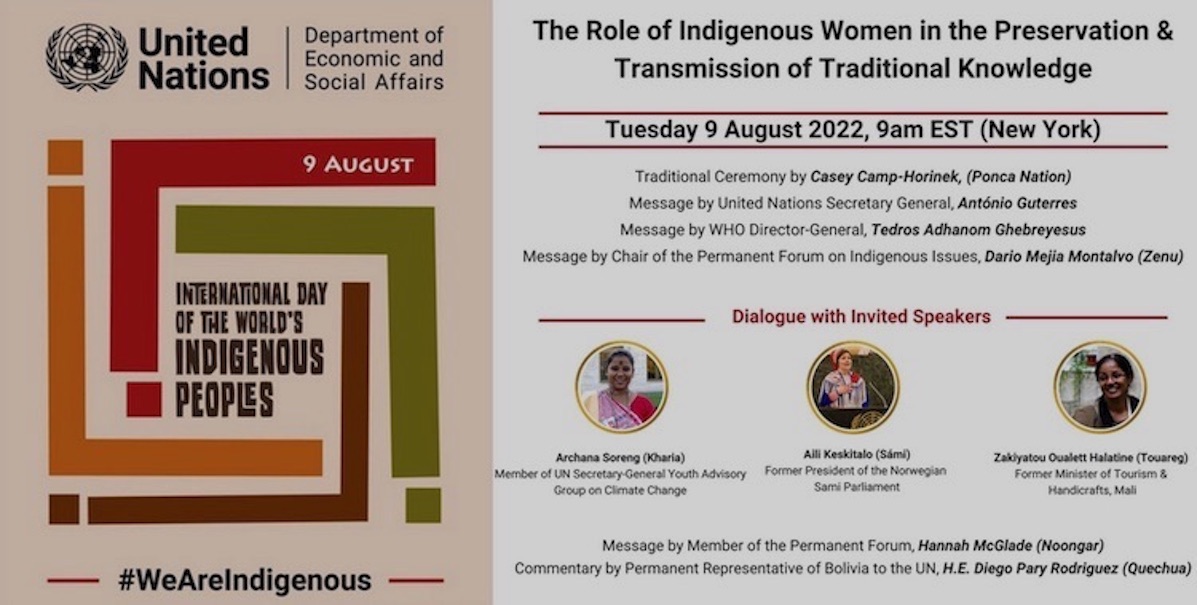
Event by: Cultural Survival, Batani Foundation, First Peoples Worldwide, Earthworks, Society for Threatened Peoples, A Growing Culture
Transition is inevitable. Justice is not. The push for a sustainable transition predominantly centers “green” technologies that continue to threaten the self-determination and sovereignty of Indigenous peoples worldwide. Instead, a just future depends on centering Indigenous-led, place-based climate solutions and supporting intersectional efforts to guarantee the rights of all people.
Join the Securing Indigenous Peoples’ Rights in the Green Economy (SIRGE) Coalition and A Growing Culture to learn about how Indigenous and peasant leaders are taking action to hold companies accountable to human rights commitments through the supply chain.
Performances by Pavel Sulyandziga Jr. (Udege)
Refreshments will be served.
THIS IS A HYBRID EVENT: In-person (space is limited) and virtual.
Translation into Spanish will be available via zoom.
Co Sponsors: Cultural Survival, Batani Foundation, First Peoples Worldwide, Earthworks, Society for Threatened Peoples, A Growing Culture Date: September 20, 2022 Time: 11:00 am-2:00 pm EST Location: The People’s Forum 320 W 37th St, New York, NY 10018 also virtually acessible via zoom.
Presentation for the OSCE Expert Meeting “Addressing Hate Crime against Indigenous Peoples” by Dmitry Berezhkov.
The “Hate Crime” topic regarding indigenous peoples is still relevant for Russia. It is a great challenge that has roots in colonial history and the colonial nowadays of the ultimate nature of the Russian Empire, then the Soviet Union and today’s Russia, which has similar origins to the colonial suffering of other indigenous peoples around the world. So I will not touch today on the history of the issue in Russia as it is very similar to the history of other indigenous peoples whose lands were colonized by other nations.
The topic “Hate Crime” was very relevant for Russia in 2000 when we received every year messages about killings and beatings of indigenous students by skinheads in Russian capitals, Moscow and Sant Petersburg. That was dozens of killings, many of which were not reported as “hated crimes” because, for police, it was more comfortable to consider them domestic crimes.
Russian skinhead
It has to be said that it was not directed against indigenous peoples but against every person whom Russian far-right radicals consider “others”. Primarily against people with Asian appearance as persons from the Caucasus could fight back roughly.
And Russian authorities at those times demonstrated evident efforts to fight against skinheads. Police arrested some of their leaders; authorities tried to control football fans’ organizations, one of the primary sources of skinheads activity. But the main milestone of reducing skinheads activity became 2014 when president Putin was able to trick the situation and refocus the hatred of the Russian far-right radicals against Ukraine, the US and NATO after the annexation of Crimea.
At the same time, domestic intolerance and xenophobia continue to be one the main features of indigenous peoples’ living, especially in urban and industrialized areas.
In a short presentation, I will not concentrate on this topic but need to mention the problem of keeping indigenous children in boarding schools. Formally these schools are organized for children from every family. Still, in practice, in remote villages of the Russian Arctic, Siberia and the Far East where indigenous peoples live, mainly children from indigenous families live in such boarding schools.
Boarding school for Sami children in Lovozero village. Murmansk Region. The second half of the 20th century.
Besides the problem of assimilation, losing the native languages and traditional culture, the challenge of domestic intolerance against indigenous children by personnel of such boarding schools is still actual for many Russian regions. We were reported that indigenous children were beaten by boarding school personnel in Novy Port village (Yamal) in 2019. In another boarding school (Beloyarsk village, Yamal) in 2019, the director organized an illegal hotel for migrant workers who lived just in neighboring rooms with children. In 2021 in the boarding school in the village Polunochnoe (Sverdlovsk region), indigenous children who adapted to traditional food did not like the unusual for them boarding school cuisine. But when one of the personnel supported by indigenous parents tried to raise this issue in the media, the boarding school fired the person and wrote a statement against her to the police.
A punished boy at the boarding school in the Novy Port village (Yamal), 2019. According to the school cameras, the boy stood for at least 3 hours (from 10:30 p.m. to 1:30 a.m.)
In some cases, local informants provide us with information that the municipal administration specially put indigenous children not in usual schools but in boarding schools to keep state finance from Moscow for the municipal budget. In other cases, we were reported that boarding school personnel didn’t fight against bullying but participated in it.
These examples show that domestic intolerance regarding indigenous peoples is still a problem for Russia until nowadays.
At the same time, I want to highlight another aspect of xenophobia closely connected with the rights to lands, resources and self-determination. Today these continue to be the hottest challenge for the Russian indigenous peoples’ development. As you know, Russia is a world producer of natural resources. Yet, Russian businesses closely connected with authorities through corrupted links try to use any opportunities to press out indigenous communities from their traditional lands.
I will give you an example. Some years ago, in my homeland region Kamchatka, the speaker of the regional parliament, Boris Nevzorov, implemented the legislative act that had to exclude South Kamchatka from the federal list of indigenous traditional lands. We have such a list of territories in Russia, and only indigenous peoples who live in these territories have some rights to traditional fishing, hunting and other traditional livelihoods. At the same time, a lot of indigenous traditional lands where indigenous peoples continue to live were not included in this list.
Boris Nevzorov
So Boris Nevzorov prepared the rationale for this law. In this document, he noted that only a small percentage of indigenous peoples live in these territories – less than 5 percent of the total population. He based on the history that during the Soviet times, the South of Kamchatka as most comfortable for living area was intensively industrialized by authorities (so he put the historical colonization as a justification for future one). There were also many other unnatural arguments, including that indigenous peoples’ traditional fishing threatened national security as the South Kamchatka is a base for the Russian Far East nuclear submarines fleet, and American forces could use the indigenous peoples to raise separatism in Kamchatka. This is a nonsense for us or any sane person, but this is a reality of Putin’s Russia.
But the reason why Nevzorov tried to exclude these lands from the federal list of indigenous territories was straightforward. While he is a Russian official and represented legislative authorities, he, at the same time, was an owner of the biggest Kamckatka fishing company, “Ustkamchatryba,” and tried to exclude indigenous communities as competitors for access to fishing resources. It must be noted that Boris Nevzorov is officially one of the reachest Russian state officials.
After he failed to lobby this legislation in Moscow, which we tried to block with all efforts, he started an information campaign in local media. In this TV show, journalists asked ordinary Kamchatka residents what they think about the law, according to which only indigenous persons in Kamchatka have the right to fish free without a license. Of course, this is a tiny amount of fish per year – about 50 kilos, but for the poor Kamchatka population, even such an amount is substantial.
The question was formulated like this: “Indigenous peoples in Kamchatka have the right to fish salmon without licenses while others who live in Kamchatka for many years or maybe their whole life have no such right. Do you think it’s fair?” I will not explain how chauvinistic further discussion this question followed by.
And this is a trick used by business and state officials regularly in Russia to continue to control indigenous lands and resources.
I would be able to give you many other examples of intolerance, xenophobia and chauvinism towards indigenous peoples in Russia. It is dangerous when such cases continue to happen in any state. It is very dangerous when the state does not fight against xenophobia. But it is extremely dangerous when the state canalizes xenophobia in a politically or economically beneficial way for state powers.
Now Putin canalizes the energy of the Russian nationalists against Ukraine. What target will be next? We don’t know.
A “Donetsk People’s Republic” soldier with a Russian passport, taken prisoner by the Ukrainian military during the war in Ukraine. Shyrokyno village, June 2022.
I think international institutions like OSCE have to rethink their approaches to democratic discussion with totalitarian states like Russia regarding human rights, whether it is indigenous peoples’ rights, hate crimes or any other human rights.
As the war in Ukraine drags on, Arctic states need to find more permanent avenues for collaboration in the region.
The Arctic was supposed to be exceptional — an area of the globe substantially removed from the pressures of great power politics. Russia and the U.S., despite their military and security interests there, found ways to cooperate regardless of troubles elsewhere. The Arctic Council in 2021 celebrated its 25th anniversary as a successful forum for cooperation on economic and environmental issues among the eight states with territory above the Arctic Circle.
Then came the Russian invasion of Ukraine earlier this year, which dealt a long-term blow to regional harmony.
It has been six months since the work of the Arctic Council was put on hold by the U.S. and other members besides Russia. The most important venue for pan-Arctic cooperation — and thus a central element of Arctic cooperation itself — ceased to function for the first time. As the Ukraine conflict shows few signs of winding up, it is time to take stock of where we are and what the future paths for Arctic relations may be.
The pause initiated on March 3, 2022 by the seven so called “A-7” or “Arctic 7” states was by its terms supposed to be temporary, with participation in Arctic Council activities hopefully to be resumed pending improved circumstances. When conditions didn’t improve, on June 8 these states announced a limited resumption of work on council projects that do not involve Russia’s participation. While such projects account for a substantial amount of work, the step was awkward given that Russia holds the council’s two-year rotating chairmanship and was leading the council’s efforts.
The invasion of Ukraine had a deep impact on the U.S. and Western countries in particular, and it could not be ignored in the Arctic. It brought war to the heart of Europe, and led many countries including Arctic Council member states to provide arms to Ukraine that are being used against Russian soldiers. In the Arctic, Russia became widely seen as a not just a theoretical but an active threat, with the result that Finland and Sweden took the extraordinary step of applying for NATO membership. As a result, NATO will increase its northern (and thus Arctic) presence, and all Arctic nations besides Russia will be NATO members — a disquieting development for Russia. The council — and other Arctic institutions and processes — had muddled through Russia’s attack on Crimea, but this was more serious.
What has become clear is that the degradation in Arctic relations will be with us for the long term. Where does that leave us?
A boat passes icebergs at Disko Bay near Ilulissat, Greenland on September 16, 2021. (Hannibal Hanschke / Reuters File Photo)
Multilateral Arctic cooperation is more necessary than ever. The latest science informs us that the Arctic is warming four times faster than the rest of the globe (not just two to three times faster as thought until quite recently), and seven times faster in some areas. Circumpolar science conducted in the Arctic is vital for addressing climate change worldwide.
The Arctic Council has made a tremendous contribution on a wide range of environmental and economic issues, and its programs need to be continued and strengthened. It has taken years for the council to develop into an effective organization, and its collapse needs to be avoided because Arctic residents and stakeholders have come to depend on it. Rebuilding the institution could be time consuming and difficult.
Yet, working with Russia in the Arctic Council isn’t appropriate or feasible at the moment. The council isn’t a regulatory body that produces rules for governance the way the International Maritime Organization does for shipping or the International Civil Aviation Organization does for air traffic. It is a forum that achieves its objectives on the basis of discussions and mutual accommodation. Governments at odds over Ukraine can’t be expected to make progress on environmental rules where trust is needed, or to jointly promote business opportunities.
Indigenous groups have insisted that Arctic collaborations must continue despite the war in Ukraine, to find ways to improve health conditions, promote adaptation to a changing environment and improve infrastructure and living standards. They point out, with considerable justification, that the needs of their communities have little to do with the crisis in Ukraine or geopolitical rivalries.
It is important to bear in mind that aspects of Arctic multilateral cooperation not involving Russia remain robust and effective. There are strong economic and science links among the other Arctic states, as well with non-Arctic states active in the region, that in no way depend on Russia. These are ongoing and are not necessarily impeded by the Arctic Council being sidelined or by lack of access to Russian territory or support.
And yet, in the long term, there is no meaningful pan-Arctic cooperation without Russia. It makes up about half the Arctic, and is a country not only of considerable size but also influence and capability. Hence, it is necessary to keep in mind and indeed hope for the eventual reintegration of Russia into systems of Arctic cooperation, including the Arctic Council.
With all this in mind, what are the next steps that the U.S. and allied countries should take?
The A-7 countries moving ahead with Arctic Council on projects not involving Russia made good sense, but doesn’t deal with the more fundamental question of the status of the Arctic Council itself. Should the council, even in the midst of the Russian chairmanship, be taken over by the other members and operated without Russia?
I believe this should be avoided. The basic concept of the council at its creation is that it was a body comprised of eight states with equal status, and that all decisions would be taken by consensus of the eight. This was a fundamental aspect of the 1996 Ottawa Declaration. As the council is a forum and not an international organization as a legal matter, there is no breach of international law if the A-7 decide to ignore the consensus rule and in effect jettison Russia. But that would be inconsistent with the declaration and the rules of procedure of the council, and Russia is likely to object strenuously. The council would face difficult procedural problems. The work of the council’s subsidiary bodies are supposed to be endorsed by the Senior Arctic Officials and by ministers who would meet in May of next year. However, Russia is slated to host the next ministerial, and it isn’t clear how or when a ministerial without Russia could be convened, or how Norway, as the incoming chair, would have its proposed work program agreed by ministers.
Thus, if the Arctic Council is operated without regard to Russia during the Russian chairmanship, or if the other countries host their own ministerial or begin a new Norwegian chairmanship without Russian concurrence, it becomes more likely that Russia would resist returning to the Council in the future. Russia has already withdrawn from the Council of the Baltic Sea States and the Council of Europe, and so as has been suggested elsewhere, “the danger is real.”
A possible way to avoid this problem is for the A-7 and Indigenous groups to agree to interim measures under which they would continue Arctic cooperation, both Arctic Council projects not involving Russia and other forms of cooperation that they wish to undertake as a group, without formally doing so under the banner of the council. They could, at least as an initial step, agree to follow the procedures of the council as appropriate and continue to receive support from the Arctic Council’s secretariat located in Tromsø, Norway.
Tromsø, Norway downtown, with the Tromsøysundet Bridge and Arctic Cathedral in the background. (Krestia DeGeorge)
In pursuing any course of action, there needs to be active consultation with the Indigenous groups who would normally wield considerable influence within the Arctic Council. That said, the solution is unfortunately not as simple as inviting all the Permanent Participants, as these groups are known within the Council, to join in a collaboration with the A-7 states, as one of them, the Russian Association of Indigenous Peoples of the North (or RAIPON), has taken a formal position supporting Russia’s Ukraine invasion. Including RAIPON would likely not be acceptable to the A-7.
Beyond the diplomacy that takes place in the Arctic Council, the A-7 and their allies need to pay increased attention to Russia’s military buildup in the Arctic. Contact between their coast guards and Russia’s remains important, along with attempts to establish and implement protocols that reduce the risk of accidental conflict on the sea and in the air.
In addition, the stoppage within the council presents non-Arctic states with an opportunity to work more closely with the Arctic states. This will be true for the A-7 states, which can increase their collaboration with actors such as the EU, the UK, France, Germany, Japan, South Korea on economic, scientific and security matters. But in parallel we can expect that Russia will reach out to China and India, to involve them even further in Arctic affairs.
It turns out that Arctic exceptionalism was a mirage. Nevertheless, while we can hope that the Arctic Council will regain its footing in future years, as the Ukraine crisis continues, the U.S. and other Arctic countries should search for other ways to promote Arctic cooperation.
Both projects are desperately needed given our rapid progress towards capitalist-driven climate catastrophe. Although there is interest in creating new economic systems, Canada is failing to recognize the transformational potential of Indigenous-led conservation economies.
These economies have immense reconciliatory potential and need to be respectfully supported and engaged with in order to create new shared and equitable economic systems.
Environmental management is not just ecological. All social and economic drivers require respect for earth, water and animals in order to halt degradation and enhance environmental and human health.
Canada’s commitments
In September 2015, Canada along with every other United Nations Member States adopted the 2030 Agenda for Sustainable Development. Seventeen action categories were identified with the purpose of “leaving no one behind” and with the goal of bringing everyone in Canada up to a level of economic stability connected to overall environmental health.
Alongside this announcement was a recognition of Indigenous Protected and Conserved Areas (IPCA). They have been dubbed “territories of life” functioning as ecosystem networks in traditional territories. They are Indigenous-led and represent a long-term commitment to conservation that elevates Indigenous rights and responsibilities.
These IPCAs have also become generative sites for Indigenous economies, with the potential to influence real change in economic development practices.
The processes and activities which contribute to Indigenous-led conservation can be referred to as environmental stewardship practices. Indigenous people generally take a holistic approach to the stewardship and management of their territories which has resulted in harmony with the land and sustained biodiversity conservation.
Understanding how stewardship produces values beyond monetary ones, can create vital learning opportunities for alternatives to conventional development.
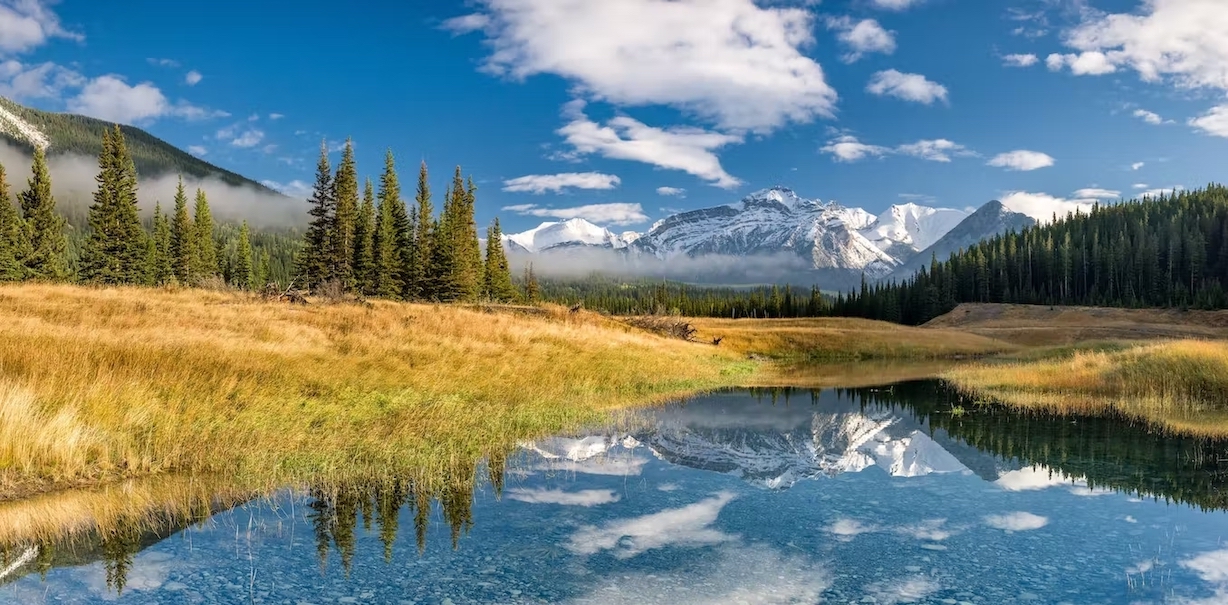
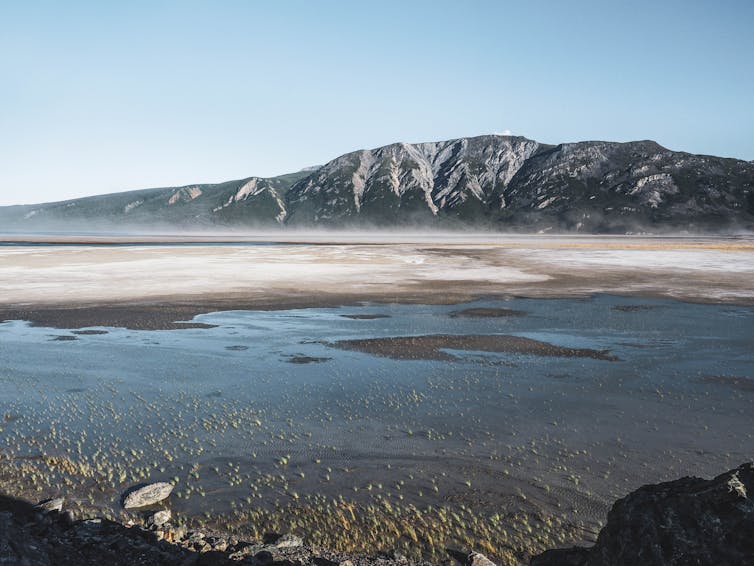
A photo of Kluane Lake in Yukon. (Alenka Skvarc/Unsplash)
New enterprises and environmental management
Guardians and Watchmen enterprises are two forms of Indigenous environmental stewardship. In both cases, cultural values are respected and utilized to create new enterprises and environmental management systems.
In Kitasoo Xai’Xais on the central coast in British Colombia, community leadership has created a robust tourism program through the Spirit Bear Lodge and Coastal Stewardship Network. There, community members are employed to steward their traditional territories, becoming guides for tourists and sharing their knowledge and experiences within their unique coastal region.
Amidst louder calls for Indigenous Peoples’ free, prior and informed consent — which means Indigenous people need to give or withhold consent to a project that may affect them or their territories — on land-intensive development proposals, decolonial movements like #LandBack and various projects to diversify our understanding of economies have taken root.
A recent article by geographers Lindsay Naylor and Nathan Thayer investigates how power operates when considering decolonial and anti-racist solutions as a necessary evolution of diversifying our economies.
In the article they explore how the diverse economies framework “neglects the theft and occupation of land that unfolded over the previous centuries of colonialism, which fundamentally changed people’s relationships to the land.”
In settler-led economic development systems, conservation is considered an external feature to be managed by capital investment projects and philanthropic activities. They propose flipping the script and paying close attention to the voices and actions of Indigenous Peoples who can offer some much-needed guidance.
The authors of a recently published Yellowhead Institute paper, Cash Back, write:
“The multiplicity of Indigenous economies is not a future prospect: it is already here … At their core, what makes them Indigenous economies is that they do not exploit that which they depend upon to live, including people. And they protect a world that is not prepared to value people’s time, homelands and harvests solely in cash.”
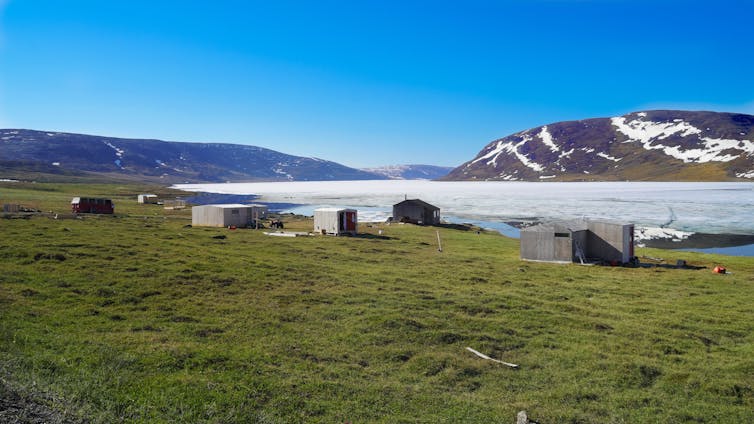
A hunting and fishing camp in Deception Bay, Nunavik. (Damon On Road)
Moving forward
New conservation-based economic developments in the blue economy, the project finance for permanence — which gives permanent and full funding to conservation areas — and regional conservation finance actions are excellent examples of how Indigenous knowledge and voices are beginning to influence the way national development policies are informed.
These plans and programs involve diverse perspectives on how to pursue economic development which can be thought of as “parallel rows,” knowledge systems stemming from distinct settler and Indigenous knowledge systems.
This parallel row idea comes from the Two Row Wampum treaty which represents the peaceful and respectful coexistence of two distinct nations.
The brilliance of this term lies in its ability to propose a joint system where both Indigenous and settler perspectives are self-directed and complementary in collaboration without having to be integrated together. A resurgence of Indigenous autonomy and culture is a key feature of this strategy.
We may all learn from Indigenous Peoples’ continuous collective efforts to shift away from settler-based models of accumulation and toward maintaining and developing healthy economies of abundance.
The Biden administration announced Friday it will nominate an ambassador-at-large for the Arctic, raising the profile of American policymaking for the region.
Why it matters: The move comes at a time of increased militarization in the far north, with NATO members squaring off against Russia, and at a time of rapid climate change that is making the Arctic more accessible.
The big picture: U.S. Arctic policy is currently handled by a coordinator within the State Department. The White House is seeking to elevate such a role to a full ambassadorship, pending confirmation from the Senate.
In recent years, Russia has moved to establish multiple military bases in its Arctic territory, while NATO members have conducted drills and worked to counter the Russian threat.
With the region’s temperatures increasing three times faster than the rest of the world, melting sea ice is opening the Arctic Ocean up to trade and military patrols.
Context: Until recently, the Arctic was a region characterized by cooperation, rather than competition.
That dynamic began changing prior to Russia’s invasion of Ukraine, and the war led Arctic countries to suspend their participation in the Arctic Council.
On August 9, 2022, the International Day of the World’s Indigenous Peoples, Indigenous leaders will launch a new site—www.sirgecoalition.org—as part of the official public announcement of a new coalition to Secure Indigenous People’s Rights in a Green Economy (SIRGE Coalition).
The minerals necessary for renewable energy minerals, such as nickel, lithium, cobalt, and copper are critical to the development of a green, low-carbon economy. As demand for these transition minerals is skyrocketing, increased mining threatens Indigenous rights and territories where there is not a comprehensive assessment of risks and harms to Indigenous Peoples, and complete participation of Indigenous Peoples who are impacted.
In order to solve the growing climate emergency, a true Just Transition to a low carbon economy requires governments and companies involved in the new green economy to observe and implement the rights of Indigenous Peoples enshrined in the United Nations Declaration on the Rights of Indigenous Peoples, including the right to Free, Prior and Informed Consent.
Cultural Survival, First Peoples Worldwide, Batani Foundation, Earthworks, and the Society for Threatened Peoples have launched the SIRGE Coalition as a platform to champion a Just Transition to a low-carbon economy. SIRGE Coalition is calling upon government, corporate, and financial decision-makers to avoid the mistakes and harms of past resource development by protecting the rights and self-determination of Indigenous Peoples around the globe, many of whom live on lands rich in transition minerals.
A few of many examples of Indigenous Peoples currently experiencing harms and threats from unconsented development of transition minerals include:
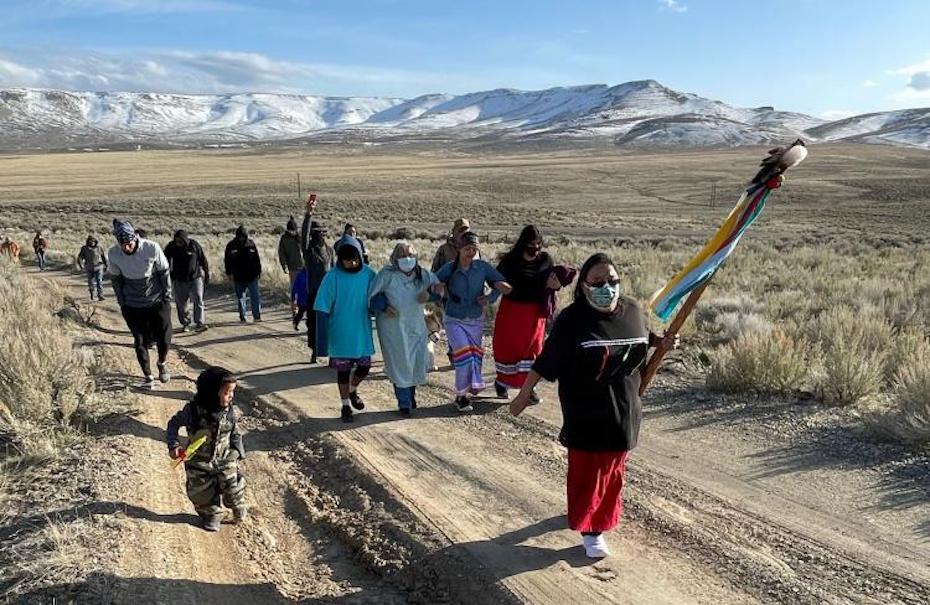
Peehee Mu’huh, or Thacker Pass, sits at the southern edge of the McDermitt Caldera in Humboldt County, Nevada. Lithium Americas is attempting to develop a lithium mine on these lands, which are sacred to Shoshone and Paiute Peoples.
In Guatemala, members of the Indigenous Q’eqchi’ community peacefully blockaded the Fenix Nickel Mine to protest the lack of consultations and Free, Prior, and Informed Consent for the mine, which has polluted their traditional fishing grounds in Lake Izabal.
In Russia, Indigenous communities on the Taimyr Peninsula suffered food insecurity after a fuel spill in 2020 from a subsidiary of Nornickel—a mining firm that supplies some 20 per cent of the world’s Class I nickel needed for electric vehicle batteries—polluted local waterways. Despite pressure from companies in the supply chain, Nornickel has failed to respond to requests from Indigenous communities for adequate compensation and restoration of the fragile Arctic environment.
Indigenous territories contain significant concentrations of untapped heavy metal reserves around the world. In the United States, a study by MSCI estimated that 97 per cent of nickel, 89 per cent of copper, 79 per cent of lithium, and 68 per cent of cobalt reserves and resources are located within 35 miles of Native American reservations. A 2020 study found that mining potentially influences 50 million square kilometres of Earth’s land surface, with 8 per cent coinciding with Protected Areas, 7 per cent with Key Biodiversity Areas, and 16 per cent with Remaining Wilderness.
About the SIRGE Coalition
The SIRGE Coalition’s primary goal is to elevate Indigenous leadership through the creation of a broad coalition and the promotion of constructive dialogue. In accordance with the United Nations Declaration on the Rights of Indigenous Peoples (UNDRIP), the coalition will uphold all rights of Indigenous Peoples, including their cultures, spiritual traditions, histories, and especially their rights to determine their own priorities as to their lands, territories, and resources. Indigenous leadership is essential as Indigenous Peoples conserve about 80 per cent of the planet’s remaining biodiversity.
The SIRGE Coalition is staffed by an Executive Committee made up of representatives from each organization and is governed by an Indigenous Steering Committee made up of two representatives of Indigenous Peoples from each of the seven socio-cultural regions across the globe along with a global chairperson and the chairperson of the Executive Committee, chosen from Indigenous members.
SIRGE Coalition is calling for full implementation of the UNDRIP, including the right to Free, Prior and Informed Consent, in all endeavours related to the extraction, mining, production, consumption, sale and recycling of transition and rare earth minerals around the world.
Serving on a corporate board is a good gig – and Indigenous people are missing
Mary Smith had a plan: She was going to serve as a member of a corporate board. She already had the resume. Smith is an attorney and she had worked as the chief executive officer for the U.S. Indian Health Service, a $6 billion-a-year-operation.
“I think for most people, you’re not going to get a call out of the blue,” she said. “You have to put yourself out there so that people know that you want to be on a corporate board because there are recruiters that recruit for corporate boards. But, the vast majority of board seats are still filled through networking.”
Smith’s planning was deliberate. She “very intentionally treated it like a full-time job.” That included learning about corporate governance and board responsibilities, she developed a “board bio” which she says is different from a resume because it highlights attributes that boards are looking for (such as experience with regulatory agencies.) She also hired coaches in order to sharpen her pitch.
“I really wanted to try to get on a board and I didn’t want to look back and say, ‘Oh, I wish I had done X, Y or Z. ‘ If I had done that, I would’ve made it so.”
Smith has made a place for herself at a table where few Indigenous people have historically been invited.
There are some 4,000 companies traded on Wall Street through the New York Stock Exchange or NASDAQ. Each of these companies have professional board members who are responsible for corporate governance. The number of American Indians and Alaska Natives represented on those boards is far less than one-tenth of one percent.
Smith, a citizen of the Cherokee Nation, now serves on the board for PTC Therapeutics, Inc., a publicly-traded global biopharmaceutical company that focuses on “ the discovery, development and commercialization of clinically differentiated medicines that provide benefits to patients with rare disorders.”
She is paid a board fee of $30,659, according to the company’s report with the Securities and Exchange Commission, on top of that she is awarded both options and stocks that depend on the success of the company and could be worth hundreds of thousands of dollars.
Smith says there is more to serving on a board than showing up to four meetings a year. “That sounds like an easy gig, but, no, it’s actually a lot of work,” she said. There are documents that must be reviewed, a duty of care and loyalty, one poor decision could result in liability.
“So, yes, you have to be very thoughtful and exercise your fiduciary duties to the corporation.”
According to the search firm Spencer Stuart and its annual report index the total average compensation for a board seat is $312,279. “This average reflects actual director compensation, including the voluntary, and usually temporary, pay cuts some boards took during the height of the pandemic crisis. More than three-quarters of boards provide stock grants to directors in addition to a fee.
Serving on a corporate board is a good gig. And the number of Indigenous people who hold board seats is too small to register; far less than one-tenth of 1 percent.
There are a few prominent Indigenous board members. Cherie Brandt serves on the board of TD Bank in Toronto. She is both Mohawk from Mohawks of the Bay of Quinte and Ojibway from Wiikwemkoong Unceded Indian Reserve. She was appointed last August. Kathy Hannan, Ho Chunk, serves on Otis Elevator and Annaly Capital Management.
There are also a number of Indigenous people serving on regional bank boards, utility companies, across the energy sector.
There are some 4,000 companies traded on Wall Street through the New York Stock Exchange or NASDAQ. Each of these companies have professional board members who are responsible for corporate governance. The number of American Indians and Alaska Natives represented on those boards is far less than one-tenth of one percent. (Photo by Mark Trahant, ICT.)
Across the board the data shows movement. The 2021 U.S. Spencer Stuart Board Index shows that white directors fell slightly in 2021, yet still account for eight of every 10 board members, and six of the 10 are white men. (Spencer Stuart is a firm that conducts corporate searches.)
The index also found that directors from historically underrepresented groups accounted for 72 percent of all new directors at S&P 500 companies, up from 59 percent in 2020. Female representation increased to 30 percent of all S&P 500 directors.
“Despite the record number of new directors from historically underrepresented groups, the overall representation of some demographic groups on S&P 500 boards falls short of their representation in the U.S. population,” Spencer Stuart reported. “For example, although 42 percent of the U.S. population identifies as African American, Hispanic, Asian, American Indian/Native Alaskan or multiracial, those groups make up only 21 percent of S&P 500 directors.”
The 6th edition of the Missing Pieces Report: The Board Diversity Census by the accounting firm Deloitte and the Alliance for Board Diversity is a multiyear study that found that public companies are making slow progress appointing more diverse boards. The goal of the Alliance is to have women and minorities make up 40 percent of all corporate board seats, up from 17.5 percent in 2021.
And the thing is, the Alliance for Board Diversity says based on the skill set of new board members, “women and minority board members currently are more likely than White men to bring experience with corporate sustainability and socially responsible investing, government, sales and marketing, and technology in the workplace to their boards.”
In other words: if the new framework is sustainability, especially Environment, Social, Governance, or ESG, then people of color who are appointed to board members are more likely to be prepared for the task ahead.
Native Americans are largely absent from corporate leadership.
The numbers are striking. According to Deloitte, less than one-tenth of one percent of all corporate board members are in the “other” category. There are so few Indigenous people in corporate boardrooms that there is not even a measurement. (The Spencer Stuart Board Index simply reports less than one percent for American Indian and Alaska Native representation.)
There are a couple of initiatives trying to change that. The first comes from the National Association of Securities Dealers Automated Quotations, or NASDAQ, a computerized system for trading stock. In August of 2021 a Board Diversity Rule was established that requires companies to use a standard template for board representation and “have or explain why they do not have at least two diverse directors.”
And in California a 2020 law requires companies headquartered in that state to have one to three board members who self-identify as a member of an “underrepresented community,” which includes Asian, Black, Latino, Native American, and Pacific Islander individuals, as well as those who are gay, lesbian, bisexual or transgender. The law allowed the Secretary of State to fine companies who did not comply. Then in May of 2022 a Los Angeles court struck down the law as unconstitutional and its application is on hold until the appeal process is complete.
But companies are acting anyway. Four years ago nearly one-third of public company boards in California were composed of all men. According to the most recent report from the California Partners Project, today fewer than 2 percent are. This year two-thirds of California public companies have three or more women directors—six times as many as in 2018.
Assemblymember James C. Ramos of California is the first California Native American serving in the state’s legislature. (Photo courtesy of Assemblymember Ramos)
“I think it’s very important to have representation, especially from the Native American community,” said Assemblyman James Ramos, D-San Bernardino. Ramos is a citizen of the Serrano/Cahuilla tribe, and is the first California Indian to be elected to the California State Assembly. “It serves two different folds, one to make sure that representation of not only California’s first people, but that the nation’s first people has a voice in driving the economics of our community, of our state, and of our nation.”
Ramos said it’s also aspirational, demonstrating opportunity.
“It definitely is right to make sure that Native American people are included in the overall discussion,” Ramos said. “When you’re putting statistics and data together, we hear it all the time: Latino, population, right? Statistics and data. African American, statistics and data. And yet we’re talking about people of color and diversity and not even mention Native American people or even California Indian people in general.”
There have been a significant number of Native Americans serving on philanthropic boards.
Sherry Salway Black, Oglala Lakota, has served on a number of such boards and she said she heard the narrative often that only one or two Native Americans served on private foundation boards. So she did a “quick and dirty” survey and found at least 28 Native people serving on 13 private foundations, and nine Native people on the boards of seven community foundations.
Sherry Salway Black
One area where there is a lot of Native board action is for Community Development Financial Institutions that are mission driven and focused on community building and access to capital. There are dozens of such lending institutions and it’s been especially important in the agriculture sector.
Carla Fredericks, Mandan, Hidatsa and Arikara, is chief executive officer of The Christensen Fund, a $300 million foundation. She said it’s important to be intentional about how board members are appointed.
“This is long overdue,” she said. “Even as we’ve tried to get additional board members for our board, we are certainly aware that while there’s incredible leadership experience in Indian Country, and there’s not a lot of board experience that people have. So it’s really important to build that.”
Carla Fredericks
Fredericks said it can be a self-perpetuating problem if boards require previous experience but don’t explore translatable experiences.
“We took a broader lens to looking at candidates,” Fredericks said. “I also think that we had a really intentional lens to recruit Indigenous people to the board. And that’s been a practice that’s been in place before I even got here. We’ve had Indigenous people on and off the board, Winona LaDuke, Rick Williams, others, throughout our history.”
Part of that means reshaping the debate about leadership.
“Many corporations now are adopting leadership structures that may be called something very fancy, but might have really strong roots in indigenous leadership,” she said. It’s the idea that there is a way to think about organizations and values that have not been previously considered.
“You kind of have to peel back the onion really, and try to understand, it’s not just who’s on the board, but who’s really engaged? And in what way, and what committee are they in charge of?” She said that’s all a part of the board governance piece and what will take for people to successfully lead and transform organizations.
ICT has been building a list of Indigenous representations on corporate boards, government-sponsored enterprises, university boards, and major nonprofits. The idea here is that there is a deep talent pool already available. When members of Congress, for example, retire or even lose an election, they are often sought after as corporate board members. That same process is not the same for tribal leaders who have been managing multimillion dollar enterprises, especially large tribes such as the Navajo Nation or the Cherokee Nation.
One part of that equation is how boards recruit new members. The report Missing Pieces, a 2021 census compiled by the Massachusetts Institute of Technology Sloan School of Management, said there is an immediate impact after placing women and minorities into key positions, such as on the nominating committee.
“When they have a woman or minority as their nominating or governance chair, boards are not immediately more likely to have higher percentages of women or minorities,” the report said. “After two years, these boards are more likely to have higher percentages of women or minorities.”
Mary Smith, the Cherokee Nation citizen on the PTC Therapeutics board, said there is a need to expand the network beyond former chief executives into other areas of experience, such as tribal leadership.
“I would love to see more Native Americans on boards. And I hope that some people would start to say, ‘yeah, I could do that.’ And then try to put themselves out there to be on the radar for people being on boards. Because I think people in the Native community have a lot to contribute to corporate boards.”
SIRGE Coalition Launches Website August 9 to Help Secure Indigenous People’s Rights in a Green Economy
First Peoples Worldwide is among several organizations to provide leadership to a new coalition to Secure Indigenous People’s Rights in a Green Economy (SIRGE Coalition). To commemorate the International Day of the World’s Indigenous Peoples, the SIRGE Coalition will launch its website www.sirgecoalition.org on August 9.
The transition minerals necessary for new and renewable energy development, such as nickel, lithium, cobalt, and copper are found on Indigneous land throughout the globe. With demand for these minerals skyrocketing, “increased mining threatens Indigenous rights and territories where there is not a comprehensive assessment of risks and harms to Indigenous Peoples, and complete participation of Indigenous Peoples who are impacted,” the coalition said.
“We must center Indigenous Peoples’ and human rights as well as true, regenerative practices as we transition to the new green economy,” said Galina Angarova, Executive Director of Cultural Survival. “A meaningful, intentional, and truly Just Transition will require a set of solutions including improving existing standards, reforming old mining laws, mandating circular economy practices, setting standards and meeting targets for minerals’ reuse and recycling, reducing demand and accepting de-growth as a concept and a pathway, and most importantly, centering human rights and the right to the Free, Prior and Informed Consent in all decision-making.”
To promote constructive dialogue, SIRGE Coalition works with corporations, finance and government decision-makers to forward Indigenous rights in accordance with the United Nations Declaration on the Rights of Indigenous Peoples and to “uphold all rights of Indigenous Peoples, including their cultures, spiritual traditions, histories, and especially their rights to determine their own priorities as to their lands, territories, and resources.”
“Partnership with Indigenous Peoples is integral to climate-resilient development,” said Kate R. Finn, Executive Director of First Peoples Worldwide. “The SIRGE Coalition provides pathways to concrete action necessary to protect Indigenous Peoples’ rights and reduce material loss for companies in the rising demand for renewable energy resources.”
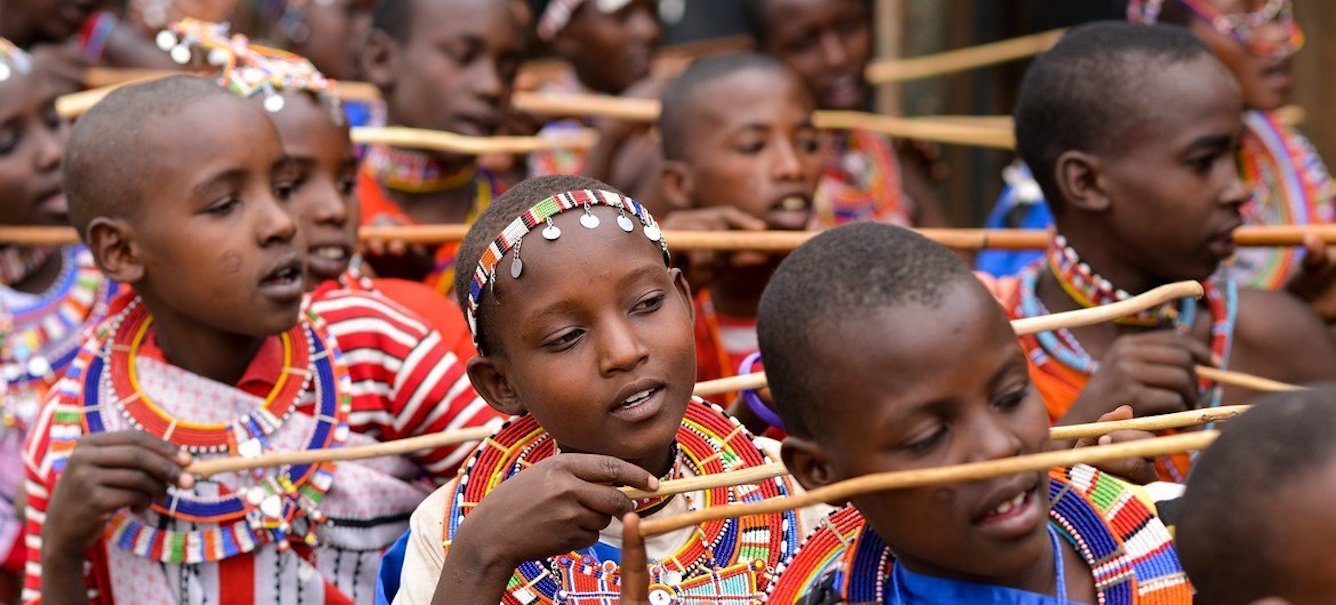
An independent UN human rights expert on Monday hailed a decision by the African Court on Human and People’s Rights, to award reparations to the Ogiek indigenous peoples, for harm that they suffered due to “injustices and discrimination.”
The historic ruling follows a landmark judgment delivered by the Court on 26 May 2017, finding that the Government of Kenya had violated the right to life, property, natural resources, development, religion and culture of the Ogiek, under the African Charter on Human and Peoples’ Rights.
‘Important step’
“This judgment and award of reparations marks another important step in the struggle of the Ogiek for recognition and protection of their rights to ancestral land in the Mau Forest, and implementation of the 2017 judgment of the African Court,” said Francisco Calí Tzay, UN Special Rapporteur on the rights of indigenous peoples.
The Court ordered the Government of Kenya to pay compensation of 57,850,000 Kenya Shillings (approximately $488,000), for material prejudice for loss of property and natural resources, and a further 100,000,000 Shillings for moral prejudice suffered by Ogiek people, “due to violations of the right to non-discrimination, religion, culture and development”, according to a statement issued by the UN human rights office, OHCHR.
In addition, the Court ordered non-monetary reparations, including the restitution of Ogiek ancestral lands and full recognition of the Ogiek as indigenous peoples.
The Court also requires the Kenyan Government to undertake delimitation, demarcation, and titling, to protect Ogiek rights to property revolving around occupation, use and enjoyment of the Mau Forest and its resources.
Furthermore, the court ordered Kenya to take necessary legislative, administrative or other measures to recognise, respect and protect the right of the Ogiek to be consulted with regard to development, conservation or investment projects in their ancestral lands.
They must be granted the right to give or withhold their free and informed consent to these projects to ensure minimal damage to their survival, the ruling said.
Expert testimony
The independent UN rights expert Mr. Calí Tzay, provided expert testimony to the Court in the landmark case, based on the mandate’s long-standing engagement in the promotion and protection of the rights of the Ogiek.
“I welcome this unprecedented ruling for reparations and acknowledge that the decision sends a strong signal for the protection of the land and cultural rights of the Ogiek in Kenya, and for indigenous peoples’ rights in Africa and around the world,” he said.
The UN expert urged the Government of Kenya to respect the Court’s decision and proceed to implement this judgement and the 2017 ruling by the court without delay.