Ukraine’s parliament appealed to the international community to support the right to self-determination of the indigenous peoples of the Russian Federation. The corresponding resolution No. 8105 was supported by 322 people’s deputies.
The appeal emphasizes that, implementing its aggressive imperialist policy, Russia has been committing genocide against enslaved peoples for centuries, ignores the principle of equality and self-determination of peoples, and grossly violates the rights of indigenous peoples and citizens belonging to national minorities.
It is noted that even while waging a war of aggression against Ukraine, the Russian authorities are committing genocide against the peoples of the Russian Federation, in particular using mobilization for this purpose.
The Verkhovna Rada expresses its support for the inalienable right of the peoples of the Russian Federation to self-determination in accordance with the UN Charter, generally recognized norms and principles of international law.
The Parliament calls on the international community to take all necessary measures to stop the Kremlin regime’s persecution of the leaders and members of the national liberation movements of the peoples of the Russian Federation; cessation of the practice of deportation and internal displacement of Russian citizens with the aim of distorting the ethnic composition of the regions of the Russian Federation; indisputably guaranteeing the citizens of the Russian Federation the right to free expression of views, opinions, participation in peaceful assemblies, freedom of association, freedom of conscience and religion, as well as ensuring the free development of traditions and cultural identity of the peoples of Russia.
In addition, the parliament calls for the strengthening of all-round support for Ukraine for its victory in the Russian-Ukrainian war with the subsequent de-imperialization of the Russian Federation and the decolonization of the peoples annexed and kept within it.
In addition, the Verkhovna Rada adopted a statement in connection with the criminal decisions of the leadership of the Russian Federation regarding the attempt to annex the temporarily occupied territories of Donetsk, Luhansk, Zaporizhzhia and Kherson oblasts of Ukraine with a call to the world community.
The corresponding resolution No. 8091 was supported by 315 parliamentarians.
According to the text of the statement, the Verkhovna Rada addresses the United Nations, the European Union and NATO, the parliaments and governments of all countries of the world, international organizations, and all people of good will with a number of demands. In particular, the parliament calls to condemn the pseudo-referendums held by the Russian Federation with the aim of annexing the temporarily occupied territories of Ukraine,
to increase the sanctions pressure on Russia and Russian officials,
to recognize the Russian Federation as a state sponsor of terrorism,
to introduce sanctions provided for a state sponsor of terrorism, including
a full embargo on trade in energy carriers with state and private companies affiliated with the Russian Federation, and
disconnection from the SWIFT system of all Russian financial institutions.
Also, it calls to support the aspirations of the Ukrainian people for Ukraine to become a member of the European Union and NATO as soon as possible.
At COP26, the United Nations climate conference in 2021, 22 philanthropies and governments pledged $1.7 billion to support Indigenous and community forest tenure as a way to address climate change, but a recent annual report reveals that only 7% of the funds disbursed in the pledge’s first year went directly to Indigenous and community organizations.
In response to an overall trend in which little climate-related aid goes directly to these organizations, they have banded together to develop funding mechanisms to which big donors can contribute. These organizations then control the distribution of money to smaller organizations, allowing more control over which priorities are funded.
In support of these efforts, the U.S.-based Climate and Land Use Alliance, which is a collective of several private foundations, is working with a broader group of philanthropic climate donors to develop “a ‘plumbing’ system for this finance” through the Forests, People, Climate Collaborative.
Indigenous leaders say more money overall is needed to protect forests and help to mitigate the effects of climate change, but the 2021 pledge has opened the door to finding ways to involve Indigenous and community organizations in how funds are spent.
Protecting forests by investing in Indigenous peoples and local communities, or IPLCs, is increasingly seen as one of the most effective ways to mitigate climate change and halt the global loss of biodiversity. The trouble is that a lot of the funding flow doesn’t reach the IPLC-led organizations that can tackle these issues, says Lindsey Allen, executive director of the Climate and Land Use Alliance (CLUA).
“Right now there’s incredible dissonance between what the evidence shows works for protecting tropical forests and supporting communities, and where the majority of funding flows,” Allen said in an email to Mongabay. “This has to change. It is impossible to end deforestation without a much larger portion of funding reaching organizations in tropical forest countries, and especially Indigenous and community organizations.”
In response to this disconnect, IPLC organizations are banding together to develop funding mechanisms to which big donors can contribute. In support of these efforts, U.S.-based CLUA, which itself is a collective of several private foundations, is working with a broader group of philanthropic climate donors to develop what Allen calls “a ‘plumbing’ system for this finance.” The goal is to move funds more effectively to places where they can have the most impact.
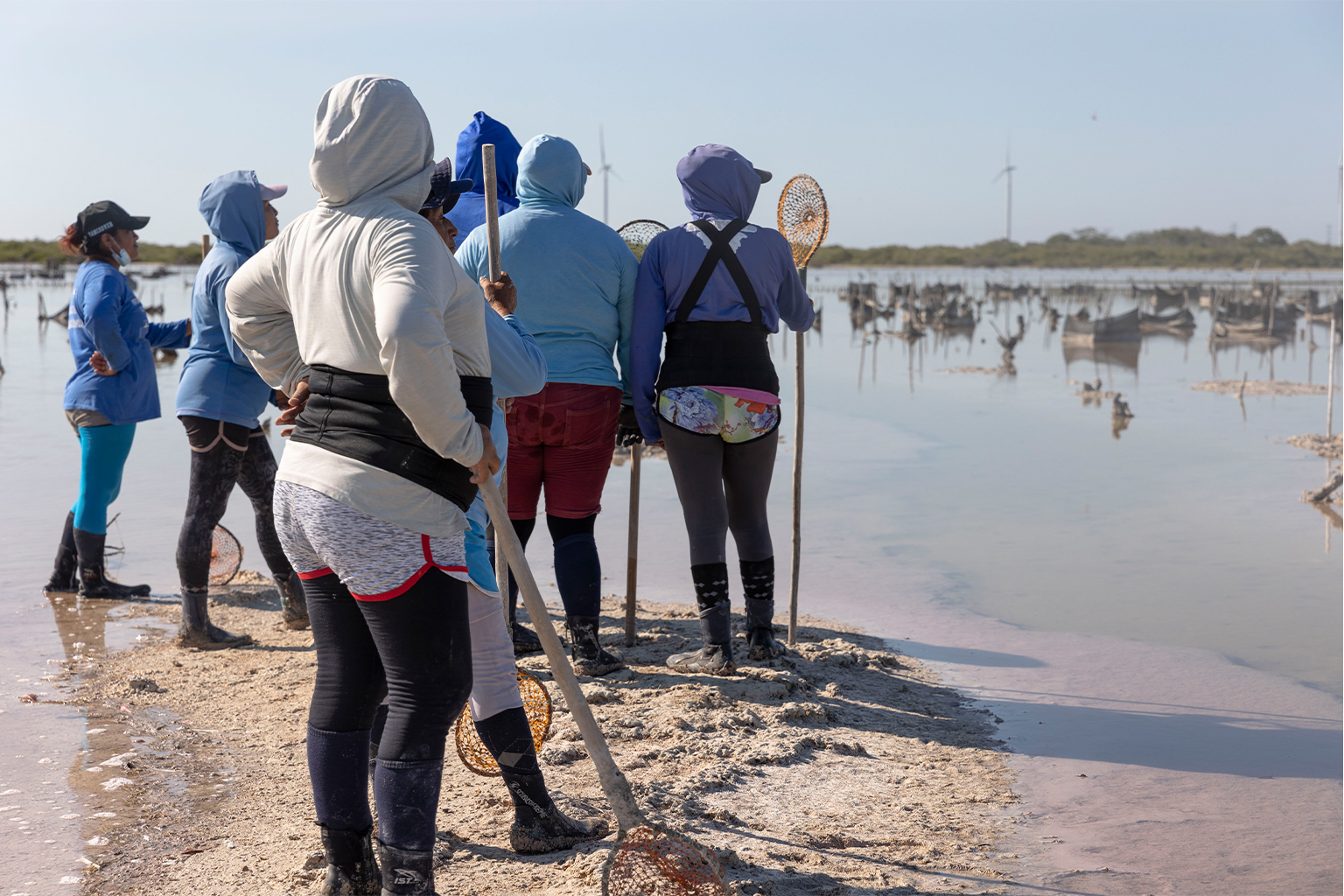
Several Chelemeras, a group of local women who are restoring mangroves in Mexico, look out on the nursery before submerging themselves in the lagoon. Image by Caitlin Cooper for Mongabay.
Scientific research has brought the important role that IPLCs play in managing forests into sharp focus. Traditional lands hold 36% of remaining intact forests, which contain vast amounts of carbon critical to meeting global climate goals. But in many places, IPLC rights aren’t legally recognized. These organizations also face a number of hurdles blocking the path of financing from donors’ endowments. IPLC organizations often can’t comply with monitoring and reporting requirements, and the funding they receive may not be flexible enough to be tailored to on-the-ground priorities.
What’s more, IPLC organizations are often small and too numerous for donors to interact with directly. That can make communication difficult, said Levi Sucre Romero, an Indigenous Bribri leader from Costa Rica, in a recorded text message to Mongabay.
“We realized that it is difficult [or] impossible to work with everyone or talk to everyone at the same time,” said Sucre, also the co-president of the Global Alliance of Territorial Communities. GATC represents traditional communities in 24 countries covering 60% of Earth’s tropical forests.
Funding has begun to flow toward climate projects, especially since the announcement of a $1.7 billion commitment from governments and private funders announced at the 2021 U.N. climate conference. But IPLC leaders and Indigenous rights advocates have raised concerns that only 7% of the $321 million delivered in the pledge’s first year went straight to IPLC groups.
Sucre said projects aimed at restoring forests, thereby securing the carbon they contain and the biodiversity they support, do need more money. The Rights and Resources Initiative figures it will cost $10 billion to formalize IPLC claims by 2030 to limit the rise in global temperatures. But, Sucre said, the 2021 pledge has opened the door to new conversations around funding and helped IPLCs understand what has been blocking access to that money.
On Mount Mantalingahan in the Philippines, where local communities harvest resin from almaciga (Agathis philippinensis) trees, the challenging access to the mountain and the restriction imposed by both the government and Indigenous communities contribute to the landscape’s conservation. Image by Keith Anthony Fabro for Mongabay.
One response from the global IPLC community has been to create a set of geographically focused funds that act as clearinghouses for donor funds, distributing large grants in smaller tranches to local organizations. IPLC-led funds, including the Mesoamerican Territorial Fund in Central America, the Nusantara Fund in Indonesia, and the Podáali Fund in Brazil, are built around the Shandia platform, which centers on IPLC control of how the money intended to address climate change and land degradation is spent.
IPLC leadership around these issues has spurred donors to create complementary systems that link directly with these IPLC-designed mechanisms. CLUA, for example, is working with 13 private philanthropies on the Forests, People, Climate Collaborative to bring more money to IPLCs and to funnel as much as possible through these IPLC-governed mechanisms.
“We believe that most often, [territorial funds] understand, can access, and are best placed to support the landscape of local organizations in ways multi-million-dollar funders can’t,” Allen said.
The 13 private donors involved have committed a combined $780 million toward climate projects in tropical forest countries, specifically in the Amazon, the Congo Basin and Indonesia. They hope to raise a total of $1.2 billion over the next five years. Allen said the group plans to utilize existing territorial funds and help create new ones where necessary.
Forests, People, Climate will also work to lower the hurdles that IPLC groups face. Allen said IPLC groups often struggle with donor requirements around reporting on the progress of funded projects, which diverts energy and resources away from the actual work that will benefit climate mitigation.
“We’ve heard the Global Alliance of Territorial Communities describe it best when they ask for ‘results-based reporting’ rather than ‘receipts-based reporting,’” she said. “To put it another way: would funders rather use the limited hours of a frontline Indigenous leader to pull together a community response against illegal mining invasions, or to pull together her expense reports?”
Bambang Supriyanto (left), the director-general of the social forestry program at Indonesia’s Ministry of Environment and Forestry, handed over the decrees that recognize customary forests in Papua to representatives of Indigenous communities in Jayapura, Papua, October 2022. Image by Asrida Elisabeth/Mongabay.
Still, accountability is essential, Allen added, and reporting and other administrative tasks may be cases in which IPLC organizations could choose to work with intermediaries such as international NGOs, development banks and consulting groups.
They “each play different roles in this ecosystem and the question is: who is best positioned to deploy funding for what?” she said. Forests, People, Climate aims to help determine when working with an intermediary will benefit the project on the ground.
Sucre said he’s heartened by the changing course of the conversation because it now centers on how best to support IPLCs. The Forests, People, Climate Collaborative was announced Nov. 7 during the U.N. climate conference in Sharm el-Sheikh, Egypt. Sucre said the GATC will continue to work with the CLUA and the funders to work out a governance structure at the U.N. Biodiversity Conference beginning Dec. 7 in Montreal.
The environmental NGO Rainforest Foundation Norway (RFN) has reported on the dearth of IPLC support, noting in a 2021 report that less than 1% of climate-related aid goes directly to these groups. RFN has also worked as an intermediary with IPLCs in places like Indonesia.
Torbjørn Gjefsen, policy team leader at RFN and the lead author of the 2021 report, welcomed such steps to re-channel funding. (RFN receives funding from the Ballmer Group, which is also among the 13 funders of Forests, People, Climate.)
“There is growing philanthropic interest in funding efforts to protect nature and safeguard rights, which is both welcome and needed,” Gjefsen said in an email. “But it is important that this growth is coordinated and informed by the experience and insights of those that have provided funding for this over time, to make sure it reaches the places it is needed the most and where it will have the greatest effect.
“This is something the ‘Forest, People, Climate’ initiative can contribute to,” he added.
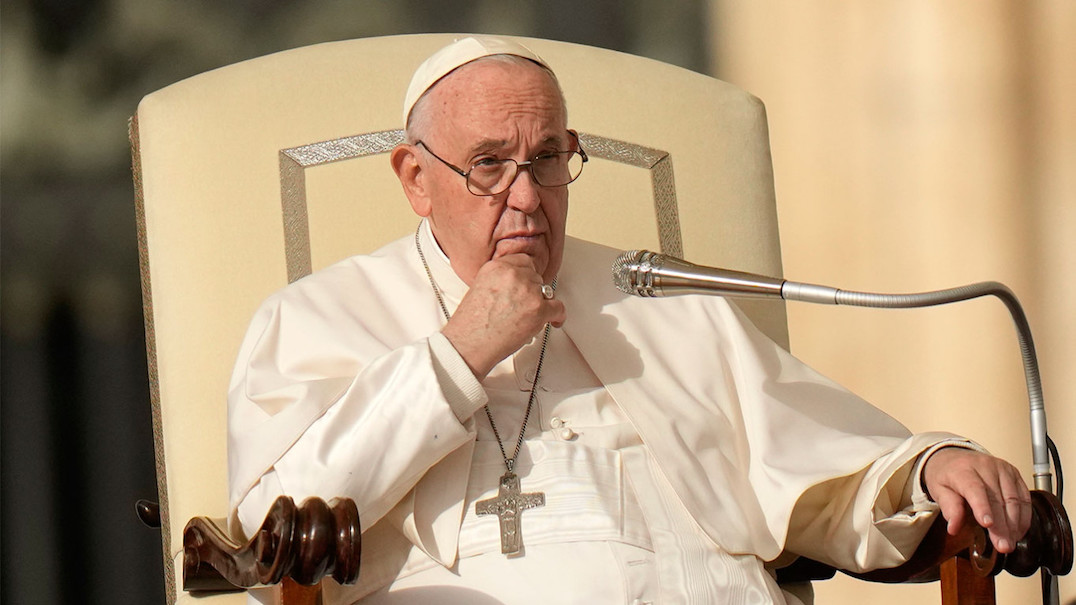
In an interview with America Magazine published on Monday, Pope Francis off-handedly disparaged Russia’s Buryat and Chechen ethnic minorities, characterizing them as the “cruelest” soldiers in the Russian military.
By saying this, Pope Francis — whether on purpose or by accident — repeated one of the best-known stereotypes in the canon of Russian propaganda, namely that of the innate nobility of Russian soldiers and officers who strive to protect the vulnerable and fight for what is right, while non-ethnic Russian soldiers are marauders and murderers.
This deeply problematic trope’s main characteristic is the casual way it is used, not only by pro-Kremlin activists and propagandists, but by Russian opposition politicians too. Even some Ukrainian news editors are guilty of using it — and inevitably see their readership spike with every headline about “militant Buryats.”
Unlike English, the Russian language makes a clear distinction between Russian citizens (российские/rossiyskie) and ethnic Russians (русские/russkie). The latter are the torch bearers of “the Russian tradition,” romanticized by the Pope and with whom all the stereotypes associated with Russia are associated: vodka, balalaikas, and banyas; they read Tolstoy, Dostoyevsky and Chekhov, and they are proud of their poetic language and the significance of their culture.
Ethnic minorities in Russia have a completely different status, however, usually unable to learn their native language as schoolchildren and then regularly denied housing and prestigious jobs as adults. They’ll also regularly be searched and subjected to document checks on the streets and in the metro simply due to their surnames or their appearance.
Chechens experience this day-to-day racism more than any other group in Russian society, the legacy of two wars fought between Moscow and Chechnya following the collapse of the Soviet Union that left many ethnic Russians believing that Chechens have a natural inclination to violence.
And yet despite being frequently treated as second-class citizens in Russia, members of Russia’s ethnic minorities have served in Ukraine in huge numbers, with Buryatia, Dagestan and Kalmykia among the most “mobilized” of Russia’s regions. Russia may well be a multiethnic country, but it’s also one in which racial discrimination thrives.
When Pope Francis made his comments about Chechens and Buryats, he did several things. First, he handed Russian propaganda an easy win, allowing it to denounce the West for its obvious racism. Despite representing a country that is itself highly xenophobic (if not in words, then in deeds), Russian Foreign Ministry spokesperson Maria Zakharova immediately took to social media to express her indignation at the Pope’s words. The Pope’s comments managed to make Zakharova appear reasonable, even though her job involves spouting nonsense on a daily basis.
Second, the Pope’s comments have global reach and were read around the world. If the stereotype of Buryat and Chechen cruelty was previously confined to the Russian-speaking world, now the rest of the planet has been made aware of it. Of course, many Buryats and Chechens live outside Russia in multiple diasporas around the world.
Third, despite preaching Christian values and being a moral authority for tens of millions of people, Pope Francis indulged an entire segment of Russian society with extreme nationalist and even overtly racist views, casually reinforcing racist stereotypes about two entire ethnic groups, and in doing so, setting the stage for intra-religious strife, given that Chechens are Muslims and Buryats Buddhists.
What could have motivated Pope Francis to make these hurtful comments? It’s impossible to say for sure, but there are a few likely scenarios. The first is that the Pope has no serious interest in either Russia or Ukraine and therefore blindly accepts what he sees in news headlines just as any other person might.
Reporting from Ukraine has been plagued by inaccuracies and outright falsehoods about the behavior of Russian ethnic minority soldiers. One particularly egregious example was a recurring story that attributed the massacre in the town of Bucha to Buryats in the Russian military.
Since then, the Free Buryatia Foundation has published a full investigation into these claims and comprehensively refuted all stories alleging that there were Buryats in Bucha, establishing instead that the paratroopers stationed in the town came from the western Russian city of Pskov.
While the untruths about there having been a Buryat presence in Bucha are the most notable example of racist slander against Russia’s ethnic minorities, there are innumerable others. All this, despite the fact that there is absolutely no evidence more war crimes have been committed by Buryat or Chechen soldiers in Ukraine than ethnically Russian soldiers.
One final possibility is that the Pope deliberately spouted Russian propaganda in a poorly conceived attempt to avoid offending Russians as a whole — and President Vladimir Putin in particular — and thus risk a further rhetorical escalation that might dissuade the Kremlin from sitting down for peace talks with the Ukrainian government.
The real question the Pope’s comments have raised, however, is whose behavior should actually be considered “the cruelest” here — that of Chechens and Buryats or that of Pope Francis and Vladimir Putin.
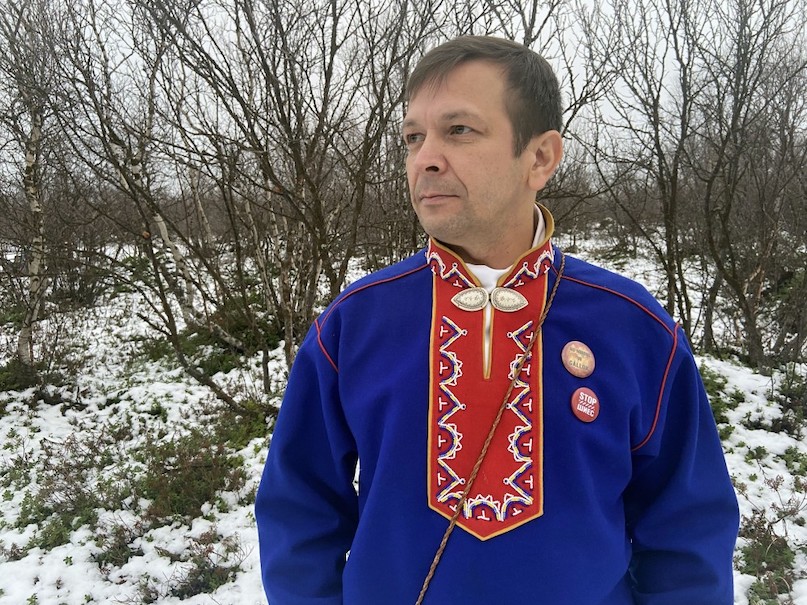
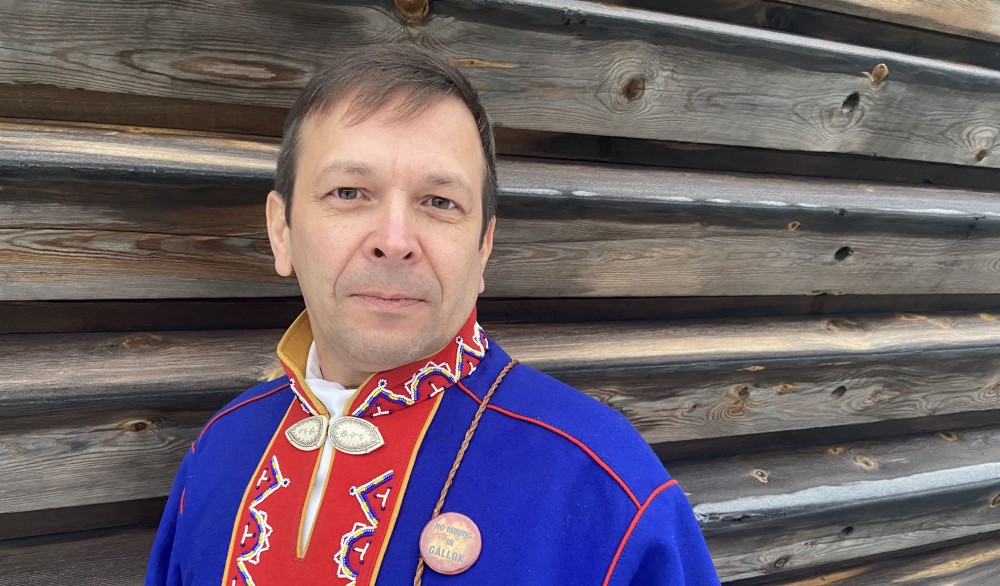
“I’m pleased to be on this side of the border. To be free and not persecuted. To speak the truth openly and not be afraid.” Andrey Danilov promises to continue defending the rights of the indigenous peoples.
“The consequences [of the war] hit hard on indigenous communities,” Andrei Danilov tells.
Speaking with the Barents Observer in Neiden, a traditional cross-road for different Sámi groups in the borderland between Norway, Russia and Finland, Danilov expresses deep concern for how the war of aggression impacts native people on the Kola Peninsula and across Siberia and the Far East.
“It is no secret that these are the most depressive regions of Russia with poverty, unemployment, and lawlessness by the state.”
Soldiers fighting for Moscow in Ukraine include men from many of the indigenous groups of the Russian north. Including the Sámi on the Kola Peninsula.
Andrei says only a few were mobilized from Lovozero, the main Sámi settlement on the Kola Peninsula.
“But there are few people living in the town, so a few young men still bring the percentage of the population high.”
“The number of deaths from indigenous peoples of the North is huge,” he notes.
There are no accurate figures for the number of indigenous peoples’ fighters sent to the battlefields. Such information is classified. Social media posts from remote Arctic communities, however, show photos and videos of young men recruited into the Army by promises of pay-checks much higher than they could dream of earning in their home villages.
To escape poverty, many have no other choice than to sign a contract. Or join the military as volunteers, a term fuelled by war propaganda from state-controlled media airing all but Russia’s big losses of lives in Ukraine.
Additionally, many were forced into the war as Vladimir Putin called for a partial mobilization on September 21.
Andrei Danilov notes how the Ukraine war is not only dividing the Sámi people inside Russia but also across borders in northernmost Europe.
“Some of the Sámi support Putin’s actions. One of the Kola Sámi organizations even signed an appeal in support of the war in Ukraine,” Danilov tells.
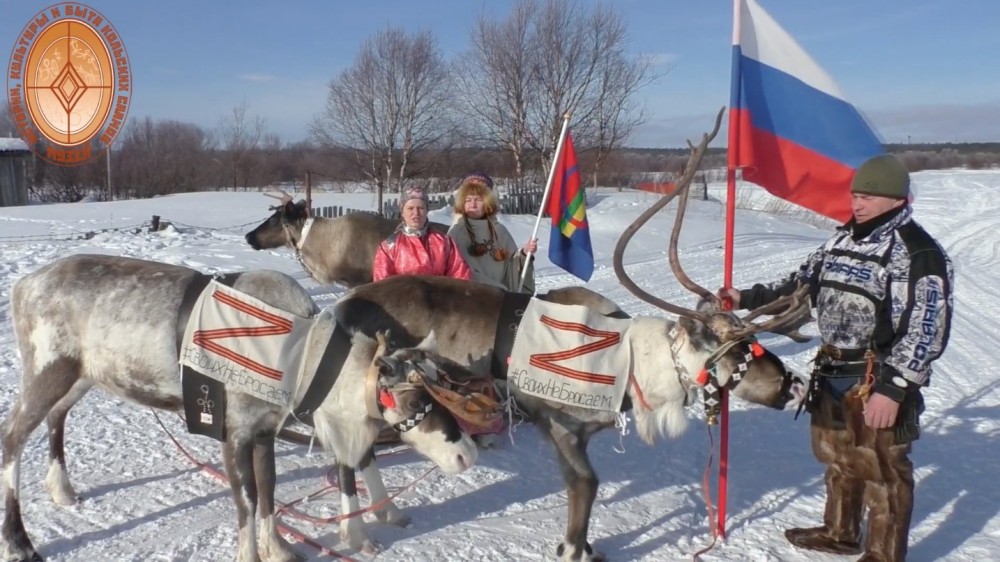
Sámi Ivan Matrekhi, former head of the Association of Sámi in Murmansk Oblast (OOSMO), was outspoken and pictured with a “Z” symbol.
With Kremlin’s “Z” on two reindeer, the Sami in Lovozero staged a pro-army, pro-Putin message.
As a consequence, the Sámi Council decided to temporarily suspend official meetings with the Russian side.
The Council was set up to represent all Sámi in the four countries; Russia, Finland, Norway and Sweden. Today, only the three Nordic countries’ representatives are meeting.
“The cooperation that lasted 30 years is suspended. So we see that the war has a very strong impact on the Sámi,” Andrei Danilov explains.
Danilov was born in Lovozero, but lived in the mining town of Olenegorsk, an hour’s drive south of Murmansk until he decided to flee to Norway in February.
“I left Russia, but did not leave my historical homeland Sapmi. Now, I’m an asylum seeker.”
When Andrei’s ancestors were herding reindeer up here inside the Arctic Circle, state borders didn’t exist. They could freely move from east to west, from inland to coast. Fishing, hunting, farming, and herding.
Norway, Russia border was agreed upon in 1826. Norway was at the time part of Sweden. Finland, also previously ruled by Stockholm, became a Grand Duchy under Russia in 1809.
Real trouble for reindeer migration and the Sámi nomads came in the 1920s after the revolution and with Stalin’s closure of borders to the West.
Throughout Stalin’s terror regime, and the following Cold War, the Sámi groups on the Kola Peninsula had little, if any, contact with brothers and sisters in the three Nordic countries.
Andrei is now witnessing a second Iron Curtain dividing Europe’s Arctic indigenous peoples.
“Some of the Sámi support Putin’s actions. This one of the Kola Sámi organizations even signed an appeal in support of the war in Ukraine,” Danilov tells. Photo: Thomas Nilsen
“We continue to communicate. There is internet and social networks where the Saami are active.”
“I really hope that cooperation will resume and we again will be able to attend joint events throughout Sampi,” Andrei Danilov says and ends by quoting a phrase from the famous Sámi movie about the 1852 riot in Kautokeino:
“We must speak and try to understand, even when there is no hope.”
“Indigenous peoples are vital actors in climate solutions. Responses to the climate crisis should be based on partnership with Indigenous peoples as stewards of nature and protectors of our biodiversity. We must stop the criminalization of Indigenous peoples and respect their collective and individual rights.”
Joan Carling, Global Director, Indigenous Peoples Rights International
The climate crisis is one of the most critical and complex issues our planet and its people face. Indigenous peoples are at the forefront of environmental protection and addressing this crisis, managing over 20% of the Earth’s land surface and 80% of its biodiversity. Drawing upon thousands of years of expertise in environmental stewardship, Indigenous peoples are vital leaders in the fight to protect our planet. They are also among the first groups to experience the direct consequences of climate change, despite having contributed very little to its causes. Ensuring the effective participation of Indigenous peoples in climate actions has been detailed in numerous international agreements, including the Paris Agreement.
Unfortunately, some projects enacted with the aim of mitigating climate change and achieving the Sustainable Development Goals (SDGs) are threatening the rights of Indigenous peoples, including their collective rights to land, territories, and resources; food; water; free, prior, and informed consent (FPIC); and cultural traditions and customs. This includes wind, hydropower, biofuel, geothermal, forest and biodiversity conservation projects, as well as mining of transition minerals, such as cobalt, lithium, copper, manganese, nickel and zinc, needed to produce renewable energy technologies – from wind turbines to solar panels to electric vehicles.
In addition, as they take legitimate action to defend their lands, territories and resources and protect their fundamental rights from harms associated with business and state projects, including those with intended benefits for the climate, Indigenous peoples face retaliation from state and non-state actors.
Solutions to the global climate crisis need to be consistent with the respect and protection of human rights to be sustainable. Disregarding the rights of Indigenous peoples in the race to a decarbonized economy by 2050 will result in numerous human rights violations and will continue to fuel opposition, conflict, and result in delays to projects and achieving our global climate and SDG targets.
This briefing, co-published with Indigenous Peoples Rights International, explores how climate actions which do not center human rights have been harmful to Indigenous peoples, as well as the scale of attacks Indigenous defenders face when protecting their lands, territories, natural resources, and communities from such projects. It also provides examples of Indigenous resistance to harmful climate actions in Kenya, the Philippines, Russia, Peru, Nepal, Indonesia and Norway, as well as related legal decisions upholding the rights of Indigenous communities.
Key findings:
● Between January 2015 and August 2022, we tracked 883 attacks on Indigenous human rights defenders, including killings, threats, arbitrary detention, and strategic lawsuits against public participation (SLAPPs).
● Although Indigenous peoples comprise approximately one in 17 (6%) of the world’s population, nearly one in five (20%) attacks globally since 2015 have been against Indigenous human rights defenders.
● Nearly all (95%) of attacks against Indigenous defenders between January 2015 – August 2022 were on climate, land, and environmental defenders, compared with just two-thirds (63%) for non-Indigenous defenders. This data helps show how Indigenous peoples play an outsized role in the protection of land, water, and forests and the disproportionate risks they face.
● Between January 2015 – August 2022, 75% of attacks against Indigenous defenders occurred in Latin America, followed by Asia-Pacific with 18% of attacks. The highest numbers of attacks against IHRDs occurred in Honduras, Peru, Mexico, Guatemala, Brazil, the Philippines, and Colombia.
● During the same period, killings represented 29% of attacks on Indigenous defenders, compared with 16% for non-Indigenous defenders.
● At least 134 attacks out of the 883 attacks we recorded against Indigenous defenders related to renewable energy projects, including hydropower, wind, and solar.
● We tracked 495 allegations of human rights abuses related to transition minerals between 2010-2021. Between 2010-2021, 148 attacks against defenders related to the mining of transition minerals; one-third of these attacks were against Indigenous defenders.
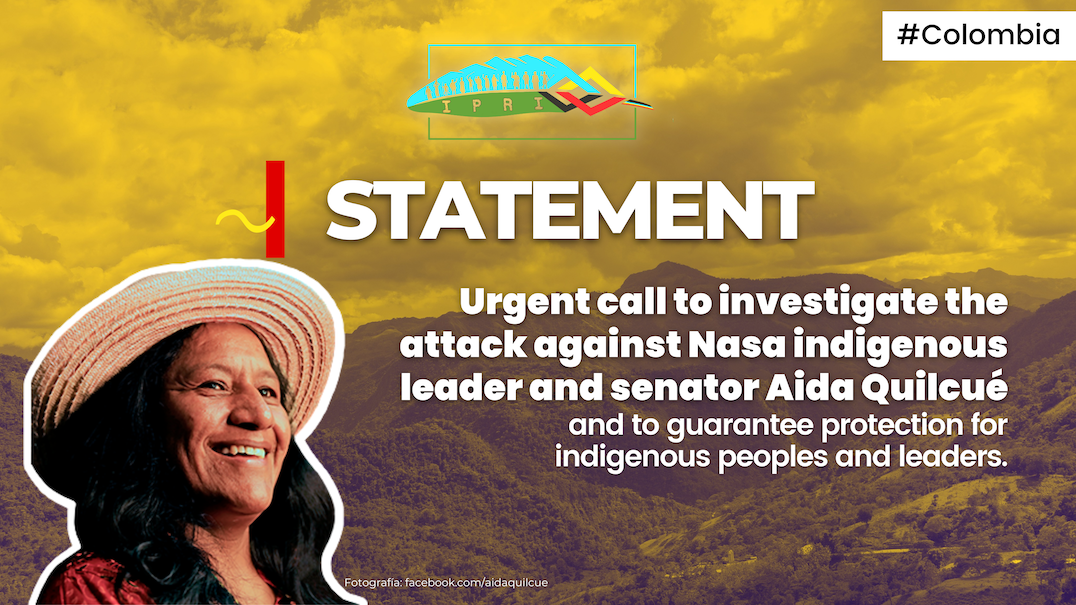
The Indigenous Peoples Rights International (IPRI), a global initiative for the protection of the rights of indigenous peoples and against criminalization, strongly condemns the attack against the senator and Nasa indigenous leader Aida Quilcué and expresses our deep concern about the continued attacks against indigenous peoples in Colombia.
On October 29, 2022, in the sector of Guadualejo – Puerto Valencia, Tierradentro – Cauca, Colombia, our fellow defender Aida Quilcué suffered an attack against the vehicle in which she was traveling that put her physical and psychological integrity and that of her companions at high risk. This incident occurred in the same week in which the indigenous leader Yermy Chocué Camayo of the Chimborazo, Morales reservation, also in Cauca, was murdered.
Mrs. Aida Quilcué is an indigenous woman of the Nasa people with a 30-year trajectory in the defense of human and territorial rights of the peoples, she has been a key leader in the peace-building processes in the region and the vindication of the right to a dignified life for indigenous peoples. The attack against her constitutes an act of terror and intimidation for the indigenous peoples of Colombia and demonstrates the high risk faced by indigenous leaders, who play key roles in the physical and cultural survival of their communities.
Regrettably, these events occur at crucial moments in Colombia’s political life when its peoples have struggled tirelessly to find peace. According to INDEPAZ, during the year 2022, 32 indigenous defenders have been killed in a context of threats, attacks, and stigmatization.
IPRI joins the voices of rejection expressed by indigenous organizations and other institutions for this violent act and we urge the Colombian State and the judicial bodies of the State to:
Promote with due diligence the relevant investigations to clarify the attack against Aida Quilcué, identify those responsibly, and bring them to justice.
Deepen efforts to guarantee respect for and protection of the rights of indigenous peoples, establishing preventive measures with cultural relevance for the threatened peoples.
We express our unconditional solidarity with our sister Aida Quilcué and with all leaders at risk. We call on national and international human rights organizations to remain vigilant to the struggle of indigenous peoples in Colombia. We support the initiatives aimed at sowing integral peace in the indigenous territories, which will only be possible if truth, justice, and integral reparation are guaranteed.
Sincerely,
Mónica Chuji Gualinga
Deputy Director for Latin America and the Caribbean of Indigenous Peoples Rights International.
U.S. Sen. Lisa Murkowski on Saturday provided some details about the two asylum seekers who traveled from the Russian Far East to Alaska’s St. Lawrence Island earlier this month to avoid being conscripted into the nation’s military. The two men are Indigenous Siberians, and they said Putin’s government is targeting ethnic minorities in rural areas, like themselves, to fight in Ukraine.
They were “so much in fear of their own government that they risked their lives and took a 15-foot skiff across those open waters. That says a lot,” she said. “It is clear that Putin is focused on a military conquest at the expense of his own people. He’s got one hand on Ukraine, and he’s got the other on the Arctic. So we have to be eyes-wide-open on the Arctic.”
Murkowski raised the topic of the asylum seekers during the forum for U.S. Senate candidates during the Alaska Federation of Natives convention. She talked about them while highlighting the importance of security in the Arctic region.
In an interview later in the day, Murkowski said she had spent about 45 minutes with the two Russians in Anchorage, where they had been sent after arriving at Gambell, a village on St. Lawrence Island. She spoke with them through and interpreter. Then two have since been taken to the Lower 48.
Murkowski said the two are from a coastal community in the general area of Provideniya, a city in Chukotka, the peninsula closest to Alaska.
Provideniya is about 230 miles west of Nome. Indigenous groups in Chukotka include the Chukchi and the Inuit.
The men’s exact identities and locations were being kept confidential for the men’s safety, she said.
“They shared with me that Putin has been targeting rural communities that are minority populations, that are Indigenous populations,” Murkowski said.
That account is consistent with other reports from Russia, she said.
Elsewhere in that country, there have been reports of Tatars, Buryats and Tuvans being targeted for conscription.
Russia’s war in Ukraine is on its 211th day. As the number of fatalities wrought by Russia’s invasion escalates, Russian imperialism and colonial drive are further emphasized, both in Ukraine and Russia. The unlawful encroachment on the sovereign nation of Ukraine, acts of violence, and destabilization of the region are all efforts at new colonization. An overwhelming number of Russian soldiers killed in Ukraine come from Russia’s impoverished “ethnic republics”, which are also home to Indigenous Peoples, already devastated by economic instability, and beset by discriminatory official policies and social norms alike. The war has also put immense pressure on Russian civil society, making disagreement with Russia’s actions and anti-war sentiment and action chargeable, leading to a tremendous increase in censorship, criminal prosecutions, and enforcement of new restrictive laws.
The Russian State and local governments are increasingly reluctant to release information on the numbers of service people killed, much less on the ethnic identities of the deceased; nevertheless, independent news sites such as Vazhnie istorii (IStories) and MediaZona have conducted in-depth investigations into the numbers. Through analysis of thousands of publications, these studies reveal the number of fatalities to be significantly higher than the Russian government has put forth. Furthermore, one of MediaZona’s main conclusions was that “most of the dead soldiers are very young people from poor regions.” While “poor regions” does not necessarily denote areas where Indigenous communities live, Russian imperial politics have instituted, and continue to foster, poorer socioeconomic circumstances in areas where the majority of Russia’s Indigenous Peoples reside.
Military censorship has made it incredibly difficult to find reliable data and to form an accurate understanding of the numbers and demographics of Russian military personnel killed in Ukraine. The exact count of Russian soldiers killed is not known and estimates vary widely. The Russian Ministry of Defense has only released official data on losses twice: March 2 (498 dead) and March 25 (1,351). The General Staff of the Armed Forces of Ukraine reports Russia’s military death toll is around 35,000. An analysis of publications from regional media and social networks conducted by MediaZona, in collaboration with the BBC and a team of volunteers, confirms 6,219 deaths as of September 23. IStories’ investigation, which is updated daily, has verified 6,083 names of the deceased. MediaZona and IStories both emphasize that these numbers solely reflect data their teams have been able to verify through open sources rather than actual losses. In early June, the military prosecutor’s office in the Kaliningrad region demanded that the Pskov-based media site 60.ru take down their lists of deceased soldiers. This started a mass removal of lists from other regional media outlets. The Kaliningrad court’s decision, which stated that this information divulges State secrets and weakens morality, has become a norm throughout regions of Russia though individual obituaries continue to be published by regional media and social media public networks. As a consequence of the war, Russia’s mortality rate of young people has increased by approximately 20%. IStories’ investigative reports show that citizens of Saint Petersburg and Moscow, where over 12% of Russia’s entire population live, are hardly present among the fatalities. In contrast, in less heavily populated regions of the country, the mortality rate of young men has simply skyrocketed.
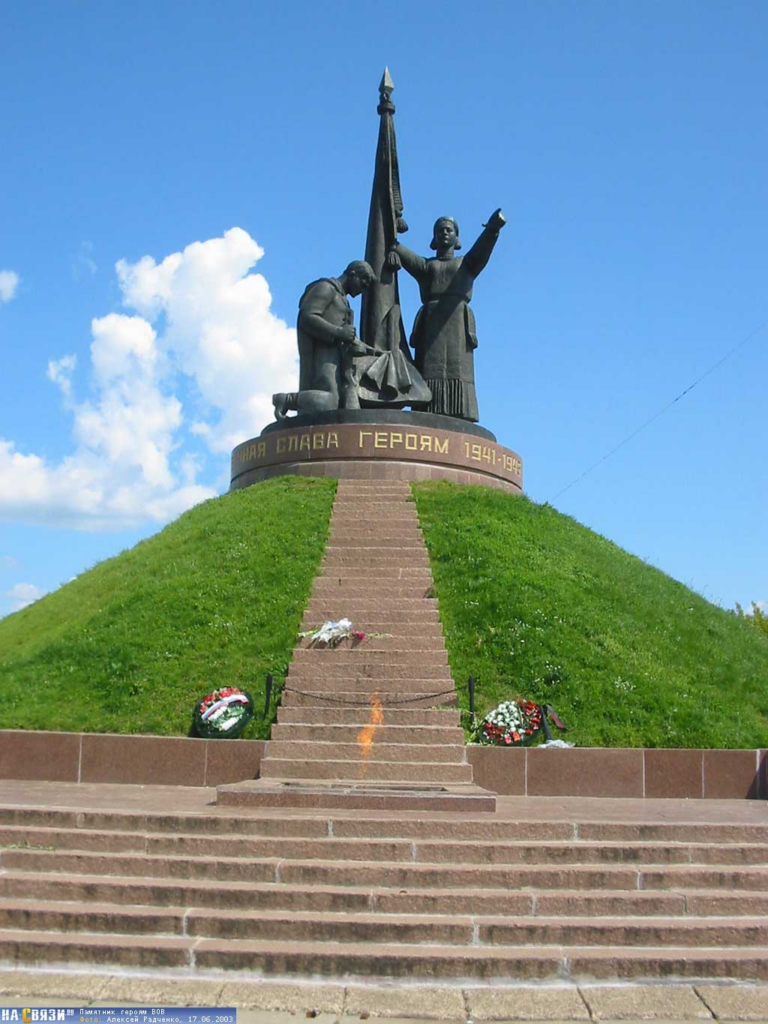
Monument to military glory in Victory Park in the city of Cheboksary, Chuvashia. By Aleksei Radchenko.
The “ethnic republics” most impacted by this current situation include, but are not limited to, Dagestan, Buryatia, Chechnya, Bashkortostan, and Altai. The Republics of Dagestan and Buryatia rank first and second, respectively, among these regions. The number of deaths of people from Dagestan has increased by 130% during the war; in Buryatia, 110% (according to the Telegram channel “Demography fell”, in the first three months of the war, confirmed deaths of military personnel from Buryatia increased the mortality rate of Buryat men ages 18–45 by 70% and mortality rate of young men under 30 by 270%). In Buryatia, there is at least one funeral of a soldier daily. The disproportionate number of dead soldiers who come from these regions exemplifies contemporary Russian colonialism––ethnic republics are overwhelmingly economically depressed though often sites of lucrative, intensive extractive industries; unemployment is high, particularly in villages, making military enlistment one of the only ways for young men to earn money; and ubiquitous patriotic propaganda, alongside a history of conditioning and institutionalizing ethnic Russian primacy, instills incredibly complicated feelings of loyalty to nation(s).
In March 2022, military registration and enlistment offices began to actively recruit contractors for a “special operation” without specifics (the war in Ukraine is called the “special operation” in Russia). Most of these aggressive recruitments unfolded in Russia’s economically depressed regions. Although varying among regions, in Dagestan offered salaries for enlisting in the “special operation” began at 177,000 rubles ($2,800 USD) for the rank of private, and went up to 215,000 rubles ($3,401 USD) for the rank of ensign. These numbers are astronomical when considering that the average salary in Dagestan is slightly more than 32,000 rubles ($506 USD). In 2020, Buryatia ranked 81st with regard to quality of life out of 85 regions in Russia and a 2022 RIA Novosti (Russian state-owned news agency) study based on data from the Ministries of Health and Finance, the Central Bank, and other open data sources found that out of these same 85 regions, Buryatia was 69th in terms of the population percentage living below the poverty line (19.9%). The regions with highest population percentages living below the poverty line in 2022 were the Republics of Tuva, Ingushetia, and Altai––notably also “ethnic republics” with Indigenous populations.
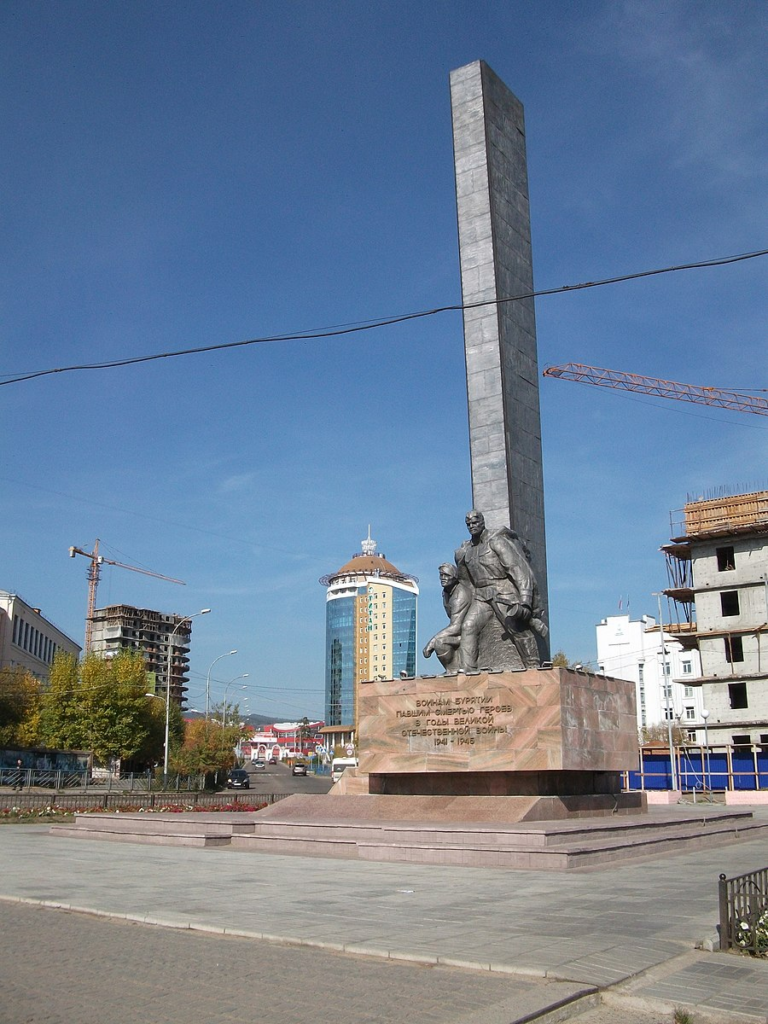
Monument dedicated to the soldiers of Buryatia who fell while on the fronts of WWII located in Komsomolskaya Square in the city of Ulan-Ude, Buryatia. By Sakri.
In addition to financial incentives, military service is often seen as an important, respectable social elevator and an ideological civil position across Russia, and especially in these areas. For example, in Buryatia the city of Kyakhta is known as a “military city” where the 37th Independ Guards Motor Rifle Brigade is based, in which at least four thousand people serve, and where “almost every boy dreams of a military career”. While such military cities exist, it is often smaller villages that supply the army with people and, consequently, bear the greatest losses. Lack of employment opportunities are often felt throughout Russia’s ethnic republic, pushing general migration outflows to increase, but these strains are even more acute in villages. Inculcation of patriotism, which is a key part of recruitment for Russia’s war on Ukraine, is increasingly rooted in World War II. Monuments to the victories of the USSR during World War II (called the “Great Patriotic War” in Russia) are everywhere in Russia––from large cities to small villages like that of Selenduma (Selenginski district, Buryatia).
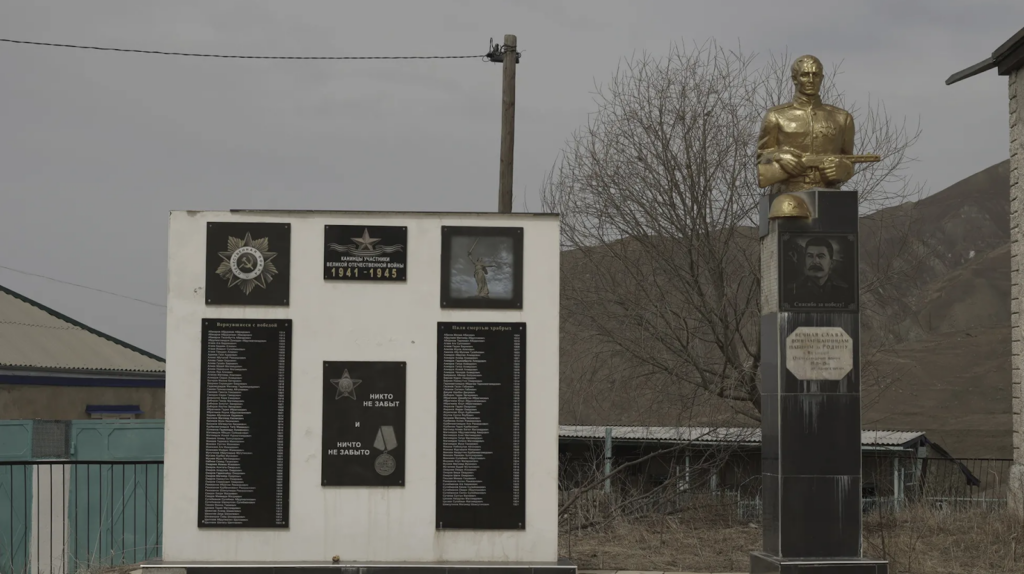
Monument to those who died in the Great Patriotic War located in the village of Kani, Chechnya. The inscription under Stalin’s portrait reads: “Thank you for the victory!” By Vladimir Sevrinovsky.
During World War II, 386 Selenduma residents went to the front where almost half died. In their honor, a victory monument was erected in the village with all the names of the deceased. Today, the village of Selenduma has a population of 2,700 and the head of the rural administration’s reports that twenty three residents left for Ukraine means that every twentieth man (aged 15–44) is gone. The village of Kani (Kulinskii region, Dagestan)––once an extensive community––is now populated by around thirty families. In Kani there is the quintessential monument to those who died in World War II. So far, twenty men from the village have left for the war.
As elsewhere in Russia, the war has split societies, including Indigenous communities. Attitudes about the war are complicated and vary across and within regions. Ethnic republics are generally split over their loyalty to Putin and Russia and stance on the war. On the one hand, public demonstrations of support for the Russian invasion are frequent, but they are, time and again, met with resistance. There are Indigenous people who support the war and believe it to be righteous, protecting not only Russia, but their own communities. On March 1, 2022 the Russian Association for Indigenous Peoples of the North (RAIPON) issued a statement and public letter in support of the invasion of Ukraine, thereby backing the killing of civilians, women, children, Indigenous Peoples, and soldiers living in Ukraine. There are also Indigenous people who openly condemn the war, in particular mothers whose children have been sent to war. On March 11, the International Committee of Indigenous Peoples of Russia––comprised of “representatives of Indigenous Peoples living outside of Russia against [their] will”––released a statement of solidarity with the people of Ukraine in which they condemned RAIPON’s open endorsement of the war.
These feelings reflect convoluted attitudes and identities throughout the country. Opposing the “special operation” is dangerous. Anti-war initiatives taken on by civil society are increasingly met with severe, suppressive measures by the State, therefore, even if individuals oppose the war, vocalizing anti-war sentiment can result in fines, detention, harassment, intimidation, other forms of violence, and the already prevalent practice in Russia––arrests and imprisonment.
Prior to the invasion of Ukraine, Russian authorities had actively started using propaganda to preemptively justify a “special military operation” in Donbas. In the beginning of the war, Russian schools were given instructions for how to teach lessons about the war on Ukraine and similar recommendations were given to some Russian universities. The Ministry of Education sent elementary schools materials on how to lead lessons on “Anti-Russian sanctions”, “Heroes of our time”, and how to mitigate “fake news.”
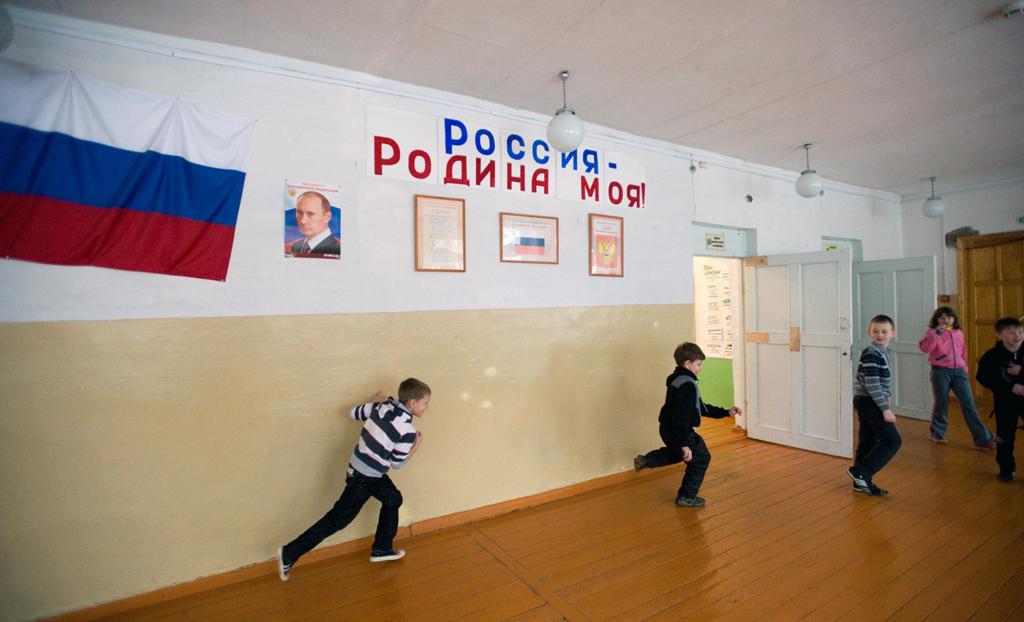
Children at school. The flag of the Russian Federation and a portrait of President Vladimir Putin hang on a wall with text reading “Russia — my motherland!” By Sergei Brovko / Kommersant.
Independent news and media sites in Russia have been blocked, state-operated news cannot publish or broadcast information that discredits the Russian government and its actions, and access to other media sources have been greatly restricted. In mid-March, Meta, the parent company of Facebook and Instagram, was banned in Russia due to allegations of extremist activities. The ban resulted in the blocking of Facebook, Instagram, Twitter, and a slew of other websites (social media, news, civil society, government domains). Thus, having applications for these banned networking services downloaded on one’s phone is a punishable offense. In March, “public dissemination of deliberately false information about the Armed Forces of the Russian Federation”, “public actions discrediting the use of the Armed Forces, including calls for unauthorized public events,” and “calls for sanctions against Russia” were codified under amendments to the Criminal Code, which has made speaking out against the war a criminally liable act with punishment ranging from fines of thousands of rubles to imprisonment. According to data gathered by OVD-Info, an independent human rights media project, there have been 16,334 detentions for taking anti-war positions or related to anti-war protests since February 24, 2022 (this includes “preventive” detentions authorities practice using face recognition software). At the end of June, OVD-Info knew of 2,457 administrative cases filed against individuals for “discrediting” the army of the Russian Federation. Not only is pro-war propaganda infused into all aspects of Russian life and imperial ideology and nationalism institutionalized, non-compliance with them is exceedingly risky.
Nevertheless, there are Russians who, despite the risks, openly oppose the war. For many ethnic groups, the war on Ukraine is immensely evocative of Russia’s imperial conquest of their own traditional territories and historical and contemporary Russification policies. Ruslan Gabbasov, head of the Bashkir National Political Center, says that lingucide and ethnocide has been occurring and “[t]oday, genocide has been added to this both towards the Ukrainian people and towards the peoples of Russia, whose representatives are sent to far for slaughter”. This is not the first time in recent history in which the Russian State, in an all-too-familiar colonial practice, has recruited and sent contractors from ethnic republics to fight in imperialist-driven wars. Alexandra Garmazhaprova, a Buryat journalist and president of the Free Buryatia Foundation, which seeks to expose and dismantle racism and xenophobia in Russia and demystify information about the war, wrote in 2015 about the participation of Buryat soldiers in the war in southeastern Ukraine.
Not only are Indigenous ethnic minorities disproportionately dying in the State’s wars, they’re also deliberately used as the faces of wars, which often functions to distance war from a broader ethnic Russian public. The “national question”, which in the Soviet context described the two distinct modes in which nationhood and nationality were institutionalized, today manifests as paradoxical and concurrent State-upheld images of multinationality and ethnic Russian primacy. This question has taken on additional meaning in the context of the war on Ukraine. Preexisting anti-war and decolonial movements in Russia and diasporic communities and nascent ones, such as the Free Buryatia Foundation, are coming together to create a more united and collaborative movement. Members of Indigenous ethnic groups, such as Gabbasov and Garmazhaprova, are part of a larger phenomenon of anti-war national movements in which people of non-Russian ethnicity in Russia are simultaneously realizing a new sense of collective identity and a need to further distance themselves from Kremlin objectives in the name of the “Russian world.”
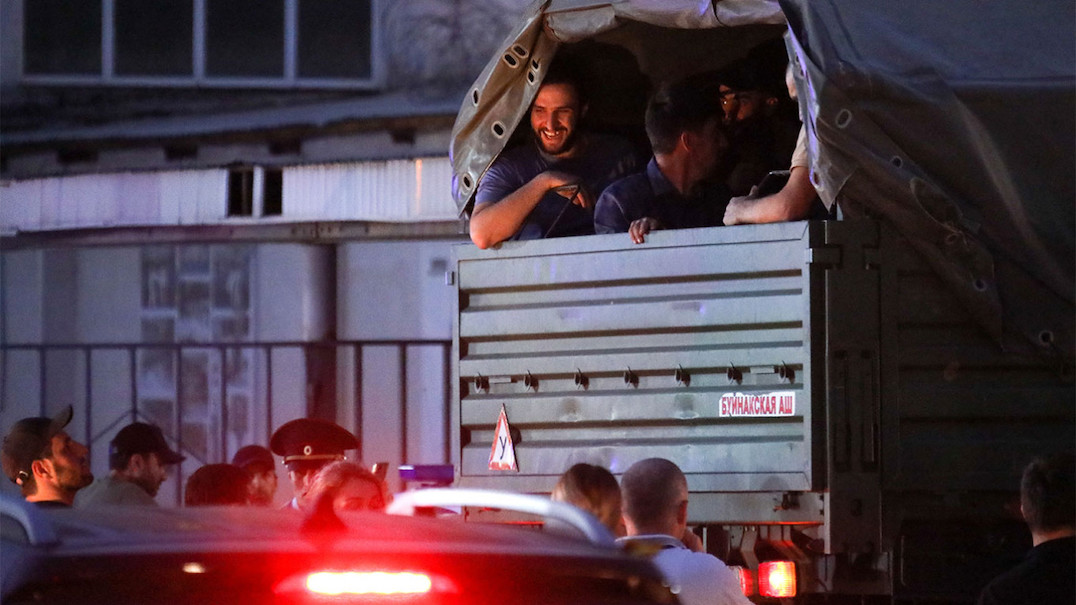
On Wednesday, September 21, 2022, following severe setbacks in Russia’s invasion of Ukraine, President Putin announced an immediate “partial mobilization” of Russian citizens, which means citizens on reserve (men who have served their mandatory conscription terms or have deferred service) will be called up and those with past military experience will be conscripted. This is Russia’s first draft since the Second World War. Defense Minister Sergei Shoigu announced that Russia plans to call up 300,000 reservists. Since then, thousands of people have been arrested at anti-mobilization protests across the country, one-way tickets from Russia to Turkey and other countries that do not require entry visas for Russian citizens have sold out, and questions about who will escape the draft and who will be forced to fight become even more pressing. People in the “ethnic republics” already know what the probable answers to these questions are. The social media accounts of anti-war campaigns and organizations are brimming with information on how to potentially avoid the draft and anecdotal evidence submitted by individuals witnessing men receiving draft notices and being collected from their homes in the middle of the night and from universities and colleges. Military registration employees and enlistment officers are allowed to deliver summons to people’s places of residence and at their place of employment since, by law, employers are obligated to help military commissariats.
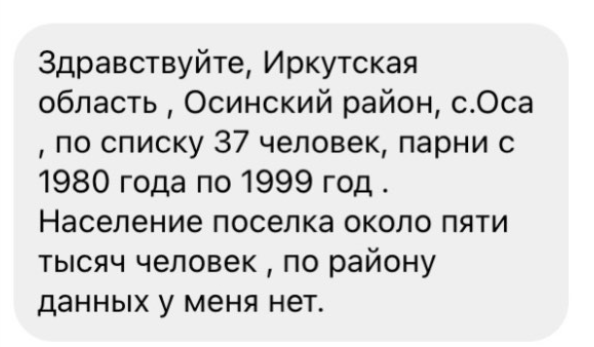
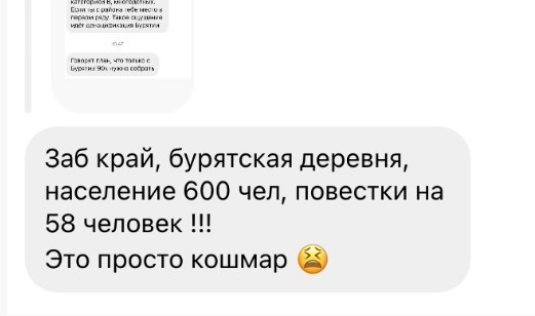
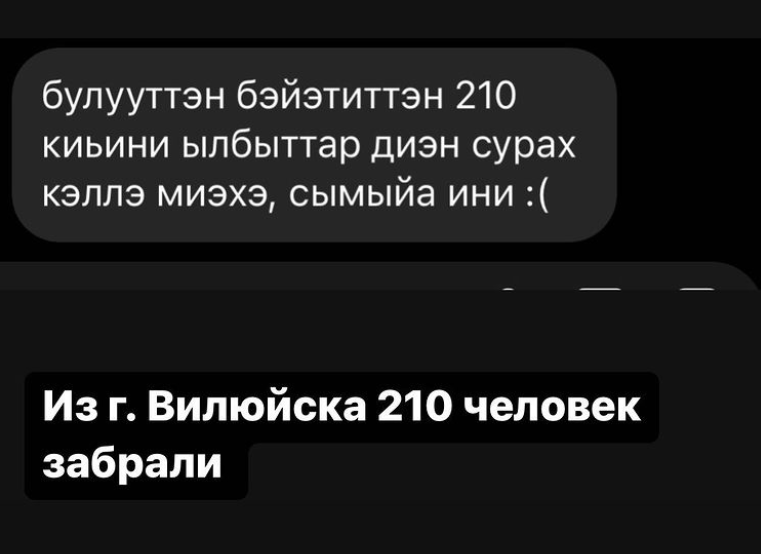
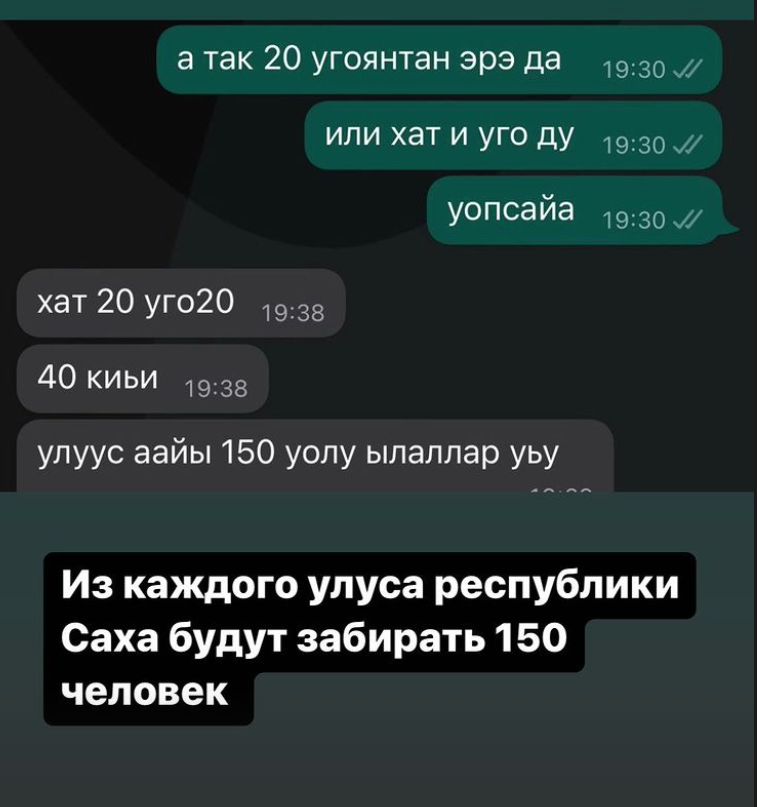
Messages sent to Victoria Maladaeva, vice president of the Free Buryatia Foundation, and shared on her IG page. Text reads “Hello, Irkutsk region, Osinsky district, Osa village, according to the list 37 people [will be drafted], young men [born] from 1980 to 1999. The village population is about five thousand, I have no data on the region.”“Zabaikal region, Buryat village, population 660 people, summons for 58 people! This is just a nightmare”“I got news that 210 people were taken from the Verkhnevilyuysky district [Sakha Republic], this must be a joke.”“They will take 150 people from each district of the Sakha Republic.”
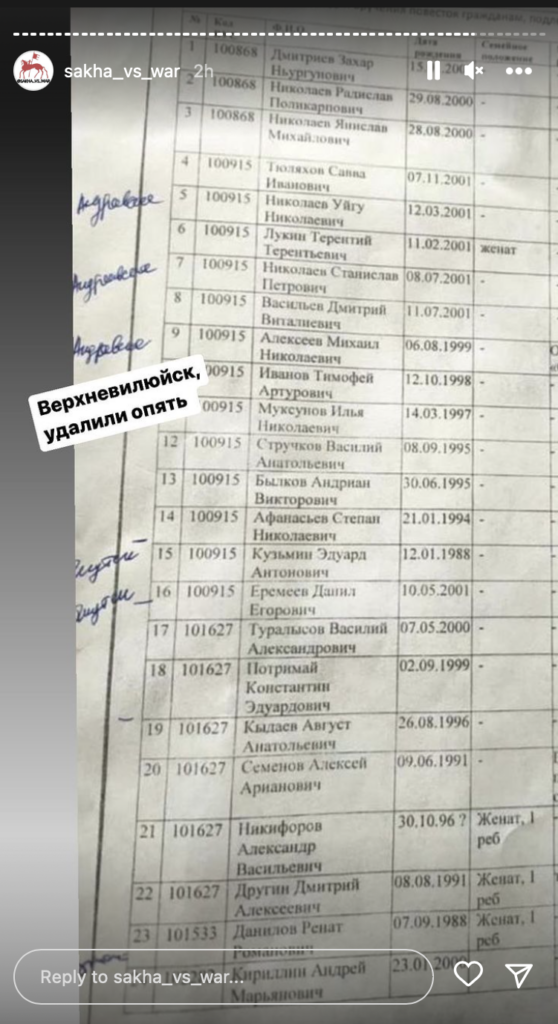
Additionally, lists of names of people who will potentially be drafted are circulating, with the hopes that the individuals listed can evade conscription.
Shared on the sakha_vs_war Instagram page. List of men to be conscripted from the Verkhnevilyuysky district (Sakha Republic) Third column contains names, fourth column birth dates, fifth column contains information about spouse and children.
Though the exact numbers of draftees from “ethnic republics” is unknown, significant numbers are already being rounded up. Since much of the information about the “partial” mobilization is coming from various anonymous and nonsystematic sources and organizations do not have the time to thoroughly vet or process it, the Free Buryatia Foundation created a Google Form to help gather analytics, which are “more important now than ever [as] we need to understand how many people have been mobilized”. Video and anecdotal evidence from across Russia demonstrates large drafts taking place even in small villages and towns. Footage from the Sakha Republic appeared to show dozens of men being collected at the soccer stadium and loaded on buses headed to recruitment centers. These direct messages, photographs, videos, and documents suggest that the proposed summoning of 300,000 men will in fact be higher. Failure to appear at the military enlistment office after being subpoenaed results in a warning or administrative fine from 500 to 3 thousand rubles, according to Article 21.5 of the Administrative Code. However, new legislation hurriedly passed by the State Duma on Tuesday, September 20 sets new, harsher penalties for those who attempt to evade service, surrender, or refuse to fight. Individuals with wealth or connections might be spared from military service or potentially have the means to flee the country which underscores how men from largely impoverished regions are more likely to be fighting in the war.
Support for the war voiced by Indigenous-majority republican leadership, cultural organizations, and individuals is categorically and significantly ironic as it goes against the interest of the country as a whole, and of Indigenous Peoples specifically. Russia’s war on Ukraine is a colonial effort on two fronts, committing a double genocide as it continues its unlawful invasion and violent destablization of Ukraine while using Russia’s Indigenous Peoples as cannon fodder.
Anti-war movements in Russia immediately appeared at the onset of Russia’s invasion of Ukraine. Notably, these initiatives were and are by and large driven by preexisting feminist organizations (The Social Democratic Alternative, Eighth Initiative Group, Eve’s Ribs, the Agasshin Project, and the Feminist Translocalities Project to name a few) and Indigenous and ethnic minority groups founded in direct response to the war. While currently there is no sole, centralized movement uniting the country’s numerous Indigenous Peoples and ethnic minorities, the appearance of various anti-war organizations, media accounts, and content, and action points to a rather unprecedented impetus of collaboration and solidarity focused on condemnation of the Russia state’s actions.
Further unparalleled is the overt and widespread presence of anti-colonialist and anti-imperialist sentiment as activists and laypeople alike criticize Russia’s attack on Ukraine and probe into the federation’s enduring issues of coloniality in quotidian life (racism, discrimination, xenophobia, and the violence they encourage). The invasion of Ukraine is not new or covert; rather, it represents the next steps in a long and ongoing history of Russian colonial understanding of a sovereign Ukrainian nation and distinct Ukrainian culture as a threat needing mitigation. These anti-war, staunchly anti-colonialist, and Indigenous-led initiatives are small in number but increasingly outsized in influence. From the use of native languages in anti-war campaigns to overt castigation of Russian chauvinism, these initiatives point to resistance to both the ongoing war and colonial policy. Their importance cannot be overemphasized since their efforts contribute to a better understanding of, and subsequently, better capacity for dismantling Russian coloniality.
Russia’s claims that it is fighting “neo-Nazis” in Ukraine is a blatant distortion of history, and the irony of this claim is far from lost on many Indigenous Peoples of Russia who grew up in a society steeped in Russian colonialism and who witness growing ethnic Russian nationalism (often abetted by right-wing and neo-Nazi sentiment) on societal and institutional levels (e.g., ethnic Russian nationalism enshrined in the federal constitution since 2020).
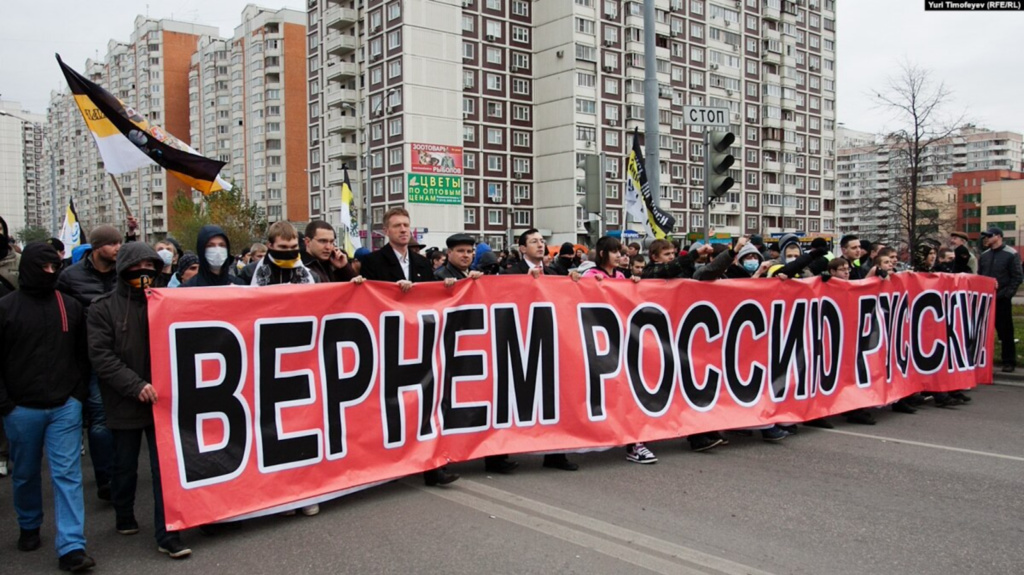
Russian ultranationalist march in the “Russia March” in Moscow on Nov 4, 2011. The banner they carry reads “Return Russia to [ethnic] Russians”. Yuri Timofeyev for RFE/RL.
Anti-war movements like the Free Buryatia Foundation––the first anti-war initiative started in response to Russia’s invasion of Ukraine and on behalf of an ethnic group––emphasize this paradox and use the current conflict to advocate for a reckoning with historic racism and imperialism within Russia’s own borders. The objective of The Free Buryatia Foundation (Buryats Against the War) is twofold––to fight against the war on Ukraine and to “solve the problem of racism and xenophobia in Russia”. Founder and president of the fund, Alexandra Garmazhapova, says such an organization was needed for a number of reasons: the disproportionate number of Buryat soldiers dying in the war, the overrepresentation in media of Buryats as the main perpetrators of violence, and the latent systemic factors that usher Buryats into military service.
“Our region has been the leader in losses since the very beginning of the war, and it was important for us to declare that we are Buryats, and we are against the war. We consider the war with Ukraine xenophobic, because if Russia had a tolerant society, the idea of ‘denazification’ of Ukraine…would not find support among Russians. The Indigenous Peoples of Russia have been and are being subjected to ‘denazification’, which in reality is complete Russification. We understand what it’s like to have your language and culture banned… Residents of ethnic republics who go to Moscow and St. Petersburg face xenophobia and racism… But at the same time, military personnel from [the ethnic republics] are sent to Ukraine to protect the ‘Russian world’,” Garmazhapova said in an interview in July.
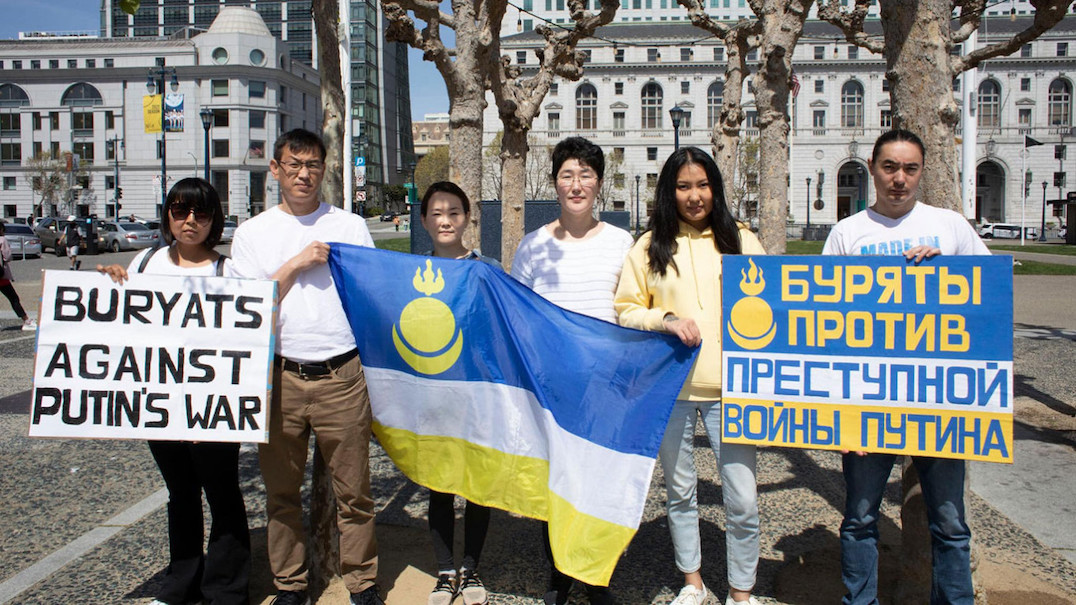
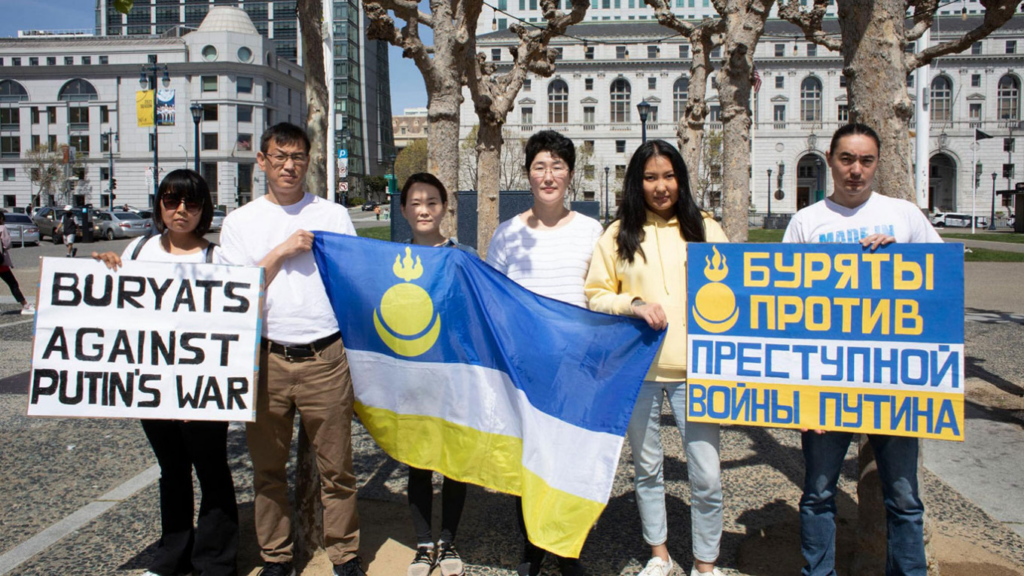
Activists at a rally against the war in Ukraine in San Francisco holding signs that read “Buryats against Putin’s [criminal] war” and the flag of Buryatia. Courtesy of Alexandra Garmazhapova’s Facebook page.
The Free Buryatia Foundation tracks statistics on losses during the war, provides legal advice to help military personnel terminate their contracts, shares credible information to combat propaganda and misinformation, and strives to prevent Russian servicemen from going to Ukraine. The organization is very active on social media sites and regularly collaborates with specialists, activists, and other anti-war initiatives on live-streamed discussions, data collection and sharing, and crowdsourcing.
Most of the Free Buryatia Foundation’s team resides outside the Russian Federation, which shields them from Russia’s growing restrictive legislation, namely “fake news” laws, which criminalize the dissemination of false information about the Russian army and is used by the state to censor, detain, and imprison those who oppose the war. For that reason, there are no large-scale Indigenous-led anti-war organizations or groups based in Russia. Disparate groups and media accounts exist though they tend to maintain anonymity and much of their activism work is shared or takes place on Instagram (only accessible with use of a VPN) and Telegram. These include, but are not limited to the Sakha Pacifist Association, New Tuva Movement, and Asians of Russia (which existed prior to the war but shifted its focus to information about the war and protests), which share information specific to their respective regions in addition to sharing information among each other.
Indigenous individuals are actively engaged in anti-war actions though they are targeted by the Russian Federal Security Service and the Center for Combating Extremism (unit in the Ministry of Internal Affairs). The social media pages for various groups often crowdsource funding these activists need for legal aid. While the groups are not organized or affiliated, through their sharing of each other’s posts and through collaborations, they’re forming a kind of network––one that is able to exist under the current Russian state. Through posts on social media are seemingly low-impact, these groups are harnessing social media as a tool to disseminate information restricted by the state and state-run media and building networks on platforms that are relatively accessible.
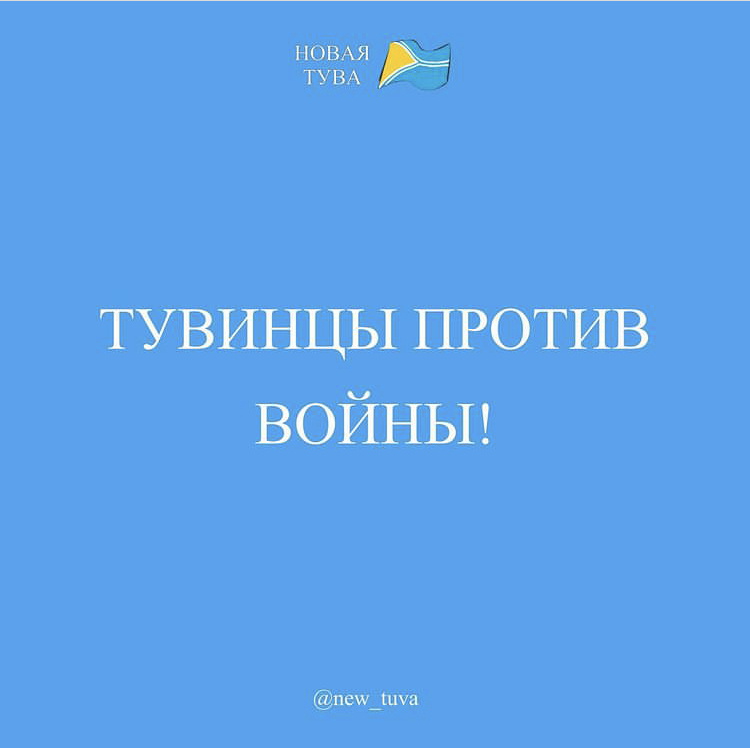
There is no single position towards the war among Russia’s different Indigenous groups. These groups are often asked how individuals, who carry out demonstrations with signs saying “Tuvinians against the war”, or nameless admins, by using names such as Sakha Pacifist Association or New Tuva Movement, are able to speak for an entire people group. “These action[s] raise the rebellious spirit of the people. [They’re] very important demonstrations and actions for the entire people, as well as a message to the whole world,” wrote sakha_vs_war. The evocation of one’s nationality or cultural background is yet another tool for appealing to the public. The state and regional governments also utilize this tool in their co-opting of national cultures broadly, and of organizations such as the Russian Association of Indigenous Peoples of the North (RAIPON) and the Buddhist Traditional Sangha Center of Russia specifically, in support of hostilities against Ukraine. Identity, language, and culture are effective tools for anti-war movements in this particular case as initiatives consistently underline the imperial nature of this current war.
Given Russia’s history and continuing legacy of colonial language policy inherited from the Russian and Soviet empires (which systematically afforded/s primacy to the Russian language at the expense of native languages), anti-war slogans in Indigenous languages are part of reclamatory cultural education which is, at its core, anti-war as it is a struggle against colonialism. The struggle around national languages in Russia is inextricably tied to state-sanctioned xenophobia and Russian supremacy. State language policy has become increasingly restrictive on native language education as Putin proclaimed in 2017 that Russian “the natural spiritual framework of the country” and that “everyone should know it”. Then, in 2018 three amendments were made to Law No. 273 “On Education in the Russian Federation,” which made Russian language learning compulsory at the expense of native languages. National or republican sovereignty movements of non-Russian, and overwhelmingly Indigenous, ethnic groups are thus intimately intertwined with language and cultural sovereignty, making language and culture significant areas the state and its security forces carefully scrutinize. Therefore, with this context, struggles for regional authority or autonomy and the anti-war struggle are innately linked.
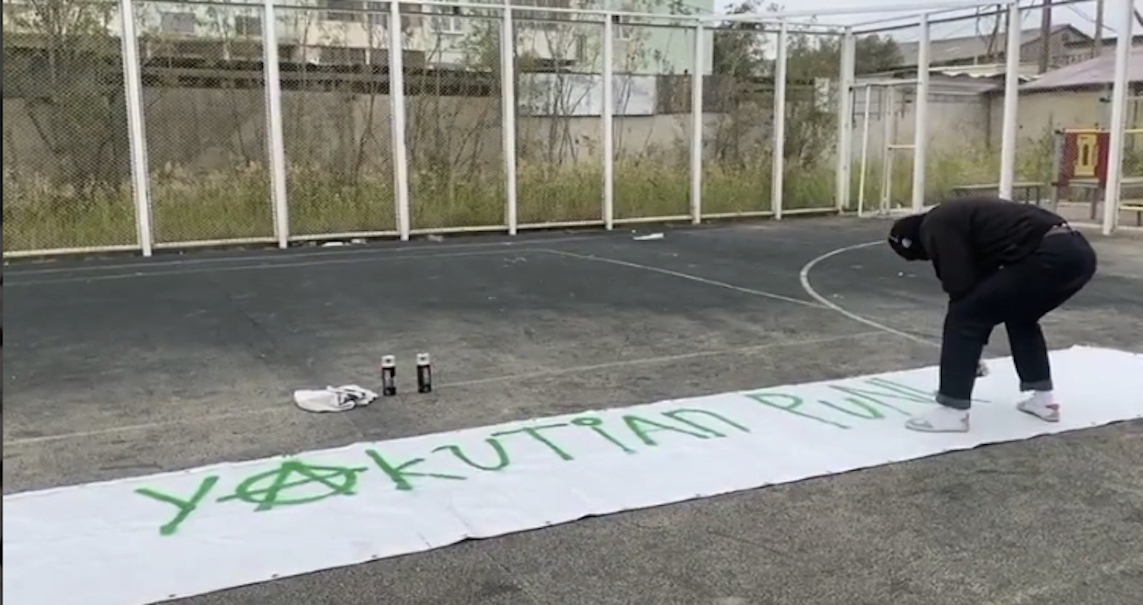
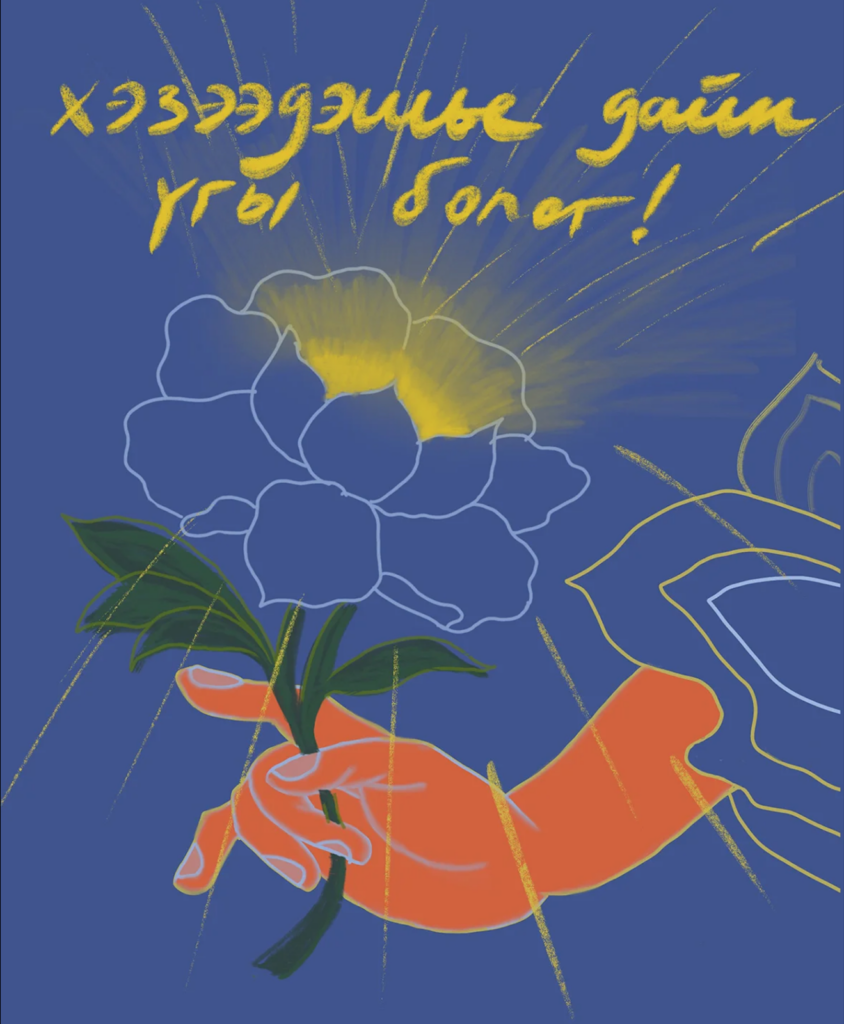
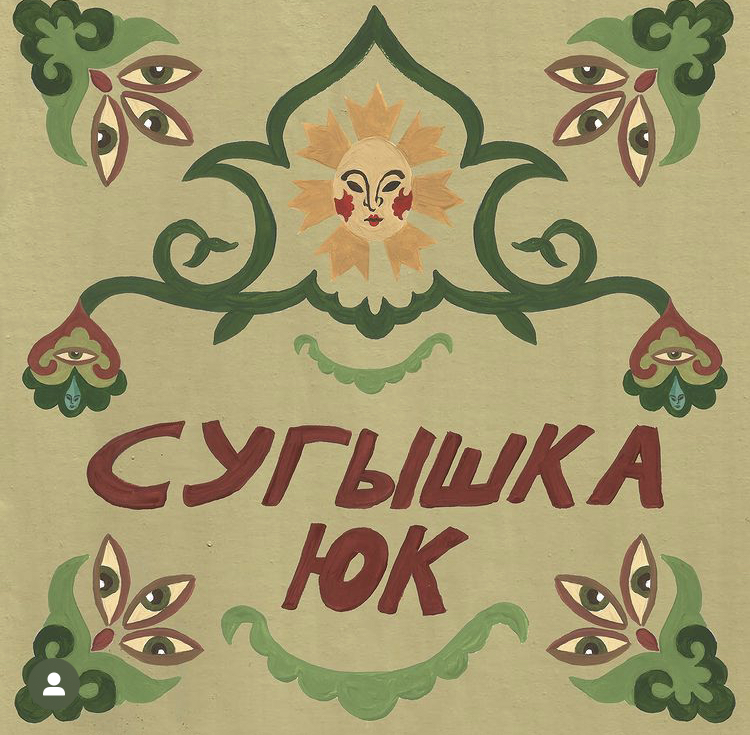
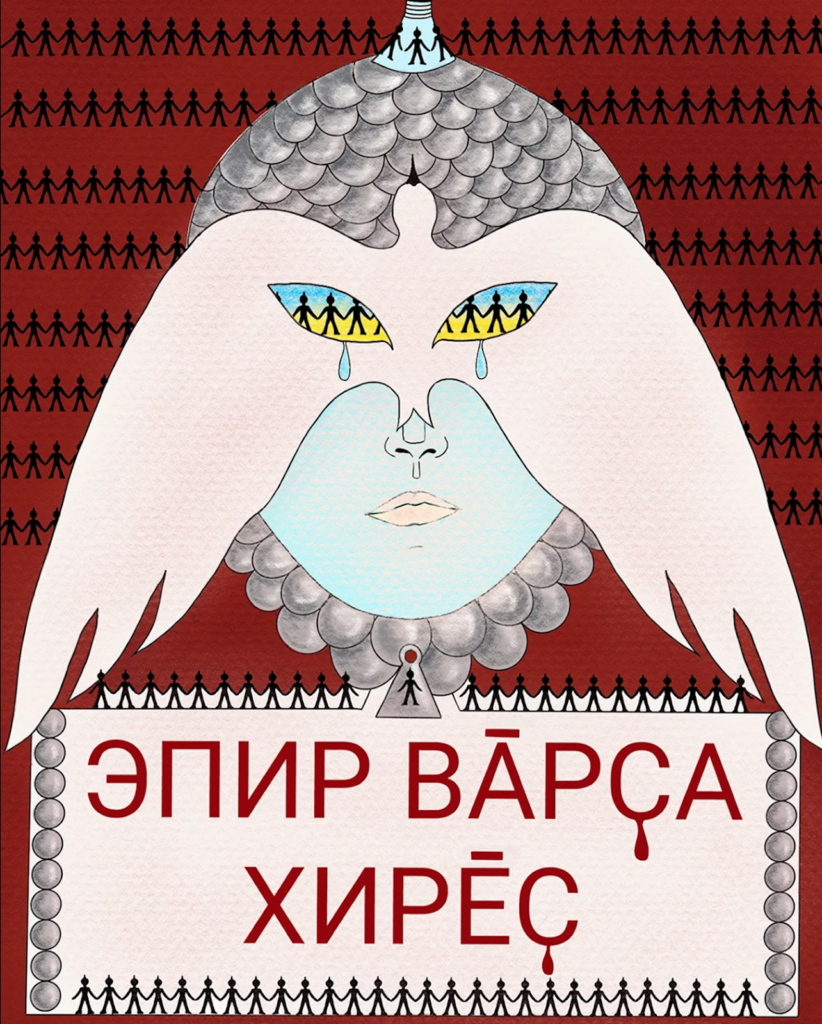
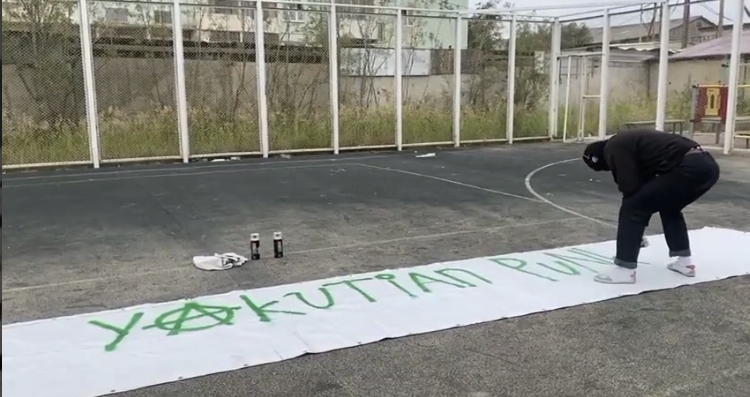
For many activists, printing and disseminating anti-war messages in Indigenous languages is not only symbolic of the resistance against the colonial Russian state, but also a rallying call to compatriots who might support the war or who do not openly oppose it. The Agasshin Project published a series of anti-war posters in Indigenous/national languages created by speakers of the languages (Buryat, Kalmyk, Udmurt, Chuvash) since anti-war activities in Indigenous languages “can be instruments of resistance to both the current war and colonial politics”. Aikhal Ammosov, a Sakha musician and activist, has been tried twice and is awaiting a third trial for his anti-war picketing and performances in Sakha, Russian, and English. Ammosov was first fined for “hooliganism”, then for “discrediting the Russian armed forces”, and he currently awaits trial and could possibly face up to three years in prison for his most recent art performance involving a banner reading “Yakutian Punk Against WAR”.
Video still posted on Ammosov’s Instagram account in which he spraypaints a banner with the text “Yakutian punk against war.”
Following Russia’s February 24, 2022 invasion of Ukraine, activists around the world began publishing texts about colonialism, racism, and violence in Russia with fervor. Though these activists and groups are far from monolithic and cater to regional, historical, and culturally specific needs, these ideas spread and grow horizontally across the sphere of Russian influence, allowing for grassroots collaboration, collectivization, and support to grow.
Just hours after Russian President Vladimir Putin announced a partial mobilization for the war in Ukraine last week, a family in Russia’s majority-Buddhist republic of Kalmykia gathered to decide how to protect its four draft-eligible men.
“We thought my uncle would be drafted first and decided he would go to Kazakhstan… He left the next day,” the youngest man in the family from Kalmykia’s capital Elista told The Moscow Times.
Assured that his family was relatively safe, the man — a local activist who requested anonymity to speak freely — started helping conscription-age men to avoid “becoming cannon fodder” by fleeing abroad. But then his father received draft papers.
“I wasn’t able to convince my father to leave… I am going to the draft office tomorrow to bid farewell,” the activist wrote on social media Thursday.
“He is 47. He avoided the Chechen war, but not this one.”
Evidence from regional activists who spoke to The Moscow Times suggests that, almost a week into Russia’s mobilization drive, a disproportionate amount of the men being drafted come from Russia’s ethnic minorities.
Many of the ethnic republics that appear to have seen large numbers of men receiving draft papers — including the North Caucasus republic of Dagestan and Siberian republic of Buryatia — have already suffered heavy losses in the war in Ukraine.
“In Elista, they are planning to take 332 people, which is quite a lot for a city with a population of no more than 150,000,” local Kalmyk activist Daavr Dordzhin told The Moscow Times.
In the Siberian republic of Buryatia, one of Russia’s poorest regions, thousands of men — including recently discharged soldiers and those who initially refused to be sent to Ukraine — have apparently received call-up papers.
“All the young men we were able to save and bring back home are now being invited to go back into that meat grinder,” said Alexandra Garmazhapova, co-founder of the anti-war Free Buryatia Foundation that helps conscientious objectors.
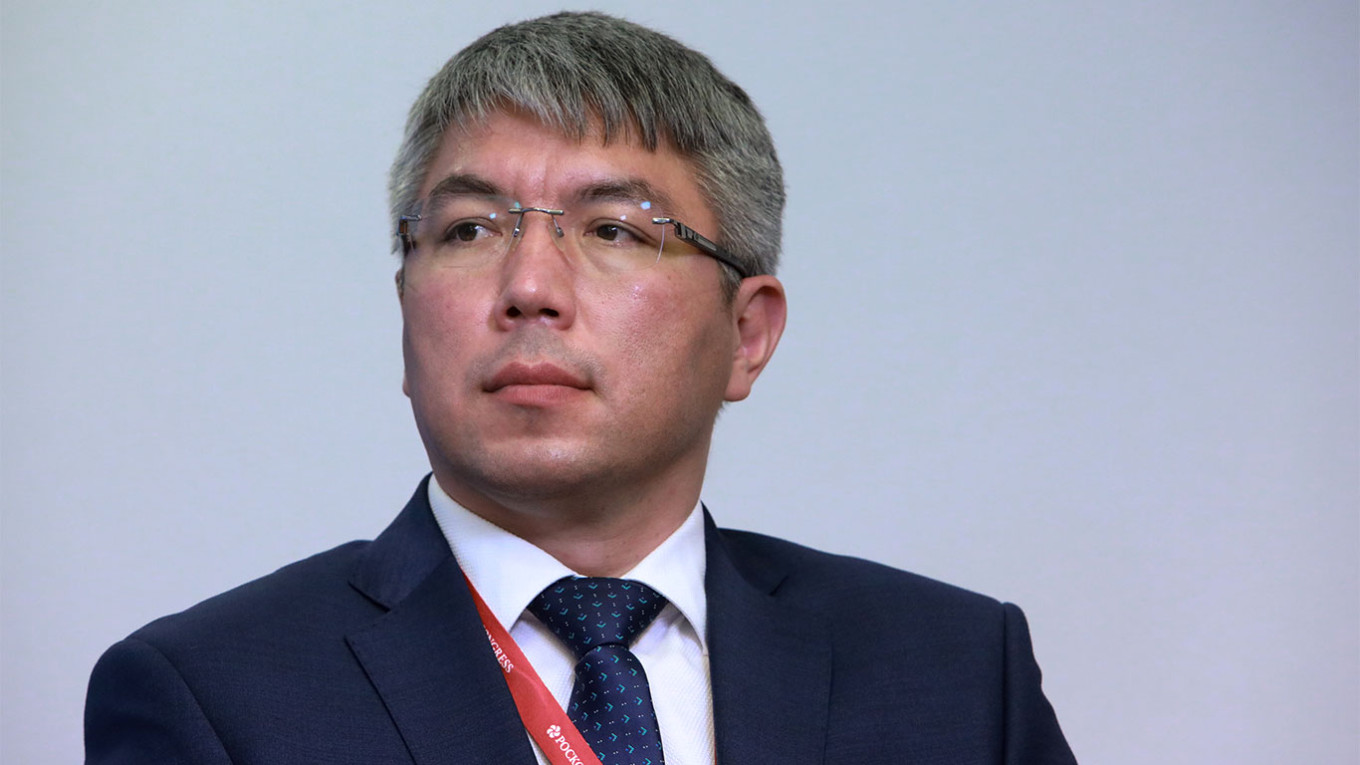
The governor of Buryatia, Aleksei Tsydenov. Pavel Volkov / Roscongress Photobank
There are no official figures for the numbers of men mobilized in each Russian region, and The Moscow Times was unable to confirm numbers given by activists.
In Bashkortostan, an oil-rich Muslim-majority republic in central Russia, fathers of four and men over 40 years old are among those to have received draft papers, according to Bashkir opposition activist Ruslan Gabbasov
“I don’t know the exact numbers of people drafted, but they are sending out draft papers left, right and center,” he told The Moscow Times.
And in Crimea, which Russia annexed from Ukraine in 2014, the peninsula’s indigenous Crimean Tatars have apparently been hit particularly hard.
“Eighty percent of the draft papers for mobilization in Crimea were sent out to Crimean Tatars (Crimean Tatars make up less than 20% of the population of Crimea),” journalist and activist Osman Pashaev wrote in a post on Facebook last week.
Many activists have suggested mobilizing more men from ethnic minorities far from Moscow and St. Petersburg is a way for the Kremlin to reduce the draft’s impact on major cities, where the chances of opposition protests are higher.
But many of these regions — which are generally poorer and more fertile recruiting grounds for the Russian army that can provide a stable salary and act as a social lift — also have a higher-than-average number of military veterans.
“A mobilization that focuses on recent veterans will… disproportionately affect regions where there are more military units,” military analyst Rob Lee tweeted last week.
Perhaps because of the outsize impact of the draft on their communities, ethnic minorities have played a prominent role in anti-mobilization protests — often led by women — in recent days, with videos emerging of demonstrators blocking roads, scuffling with police and calling for peace.
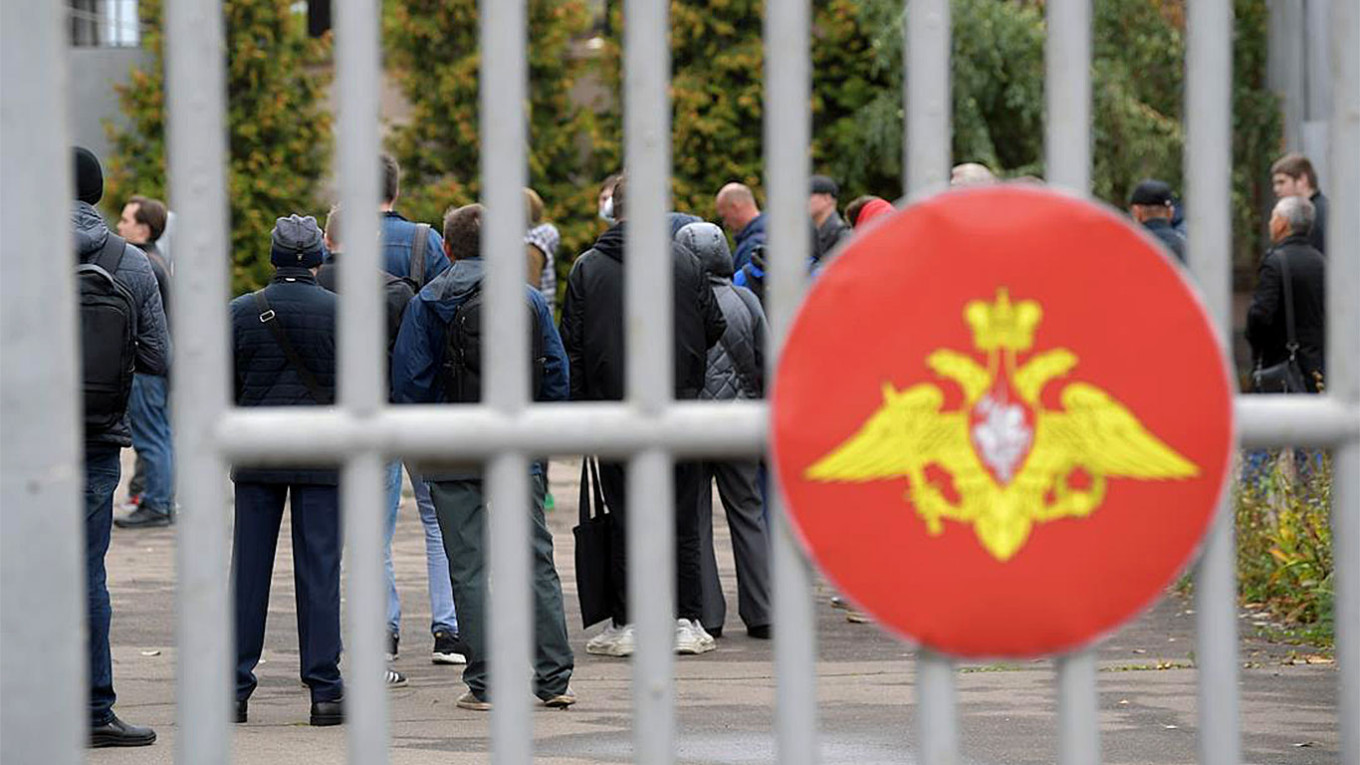
A military enlistment office in Russia. Dmitry Lebedev / Kommersant
The ethnic republics of Dagestan, Kabardino-Balkaria and the Arctic republic of Sakha all saw significant protests over the weekend.
Demonstrators in Yakutsk, the capital of mineral-rich Sakha, organized traditional dances at a protest Saturday and were seen chanting “No to war!” and “No to genocide!” — a reference to the fact that mobilizing men from small ethnic minority communities will likely cause their population numbers to plummet.
And in Dagestan, protesters in the town of Khasavyurt blocked a key highway Sunday. Police fired in the air in an attempt to despers the rallies, according to videos from the scene.
Over 10 times more people were detained at anti-mobilization protests Sunday in Dagestan’s Makhachkala than in Moscow, according to protest monitoring group OVD-Info.
Like in most Russian regions, the mobilization drive in ethnic republics appears to be particularly intense in poorer, rural areas, activists said.
In the Caucasus republic of North Ossetia, “draft papers are distributed mostly in villages,” one local activist who requested anonymity told The Moscow Times.
And a similar tactic is used in Bashkortostan.
“They are taking ordinary boys from the districts and villages,” one eyewitness from Bashkortostan said in a message sent to the Free Buryatia Foundation that the group subsequently shared online.
Many activists blamed regional leaders keen to impress the Kremlin for the speed of mobilization in areas with large ethnic minority communities.
“The over-eagerness of the head of Buryatia, Aleksei Tsydenov, plays an important role,” activist Garmazhapova told The Moscow Times.
“If Vladimir Putin told him to do a pole dance, he would do it. And just as easily he will send young men from Buryatia to war… He doesn’t see them as people, he sees them as a means to achieve his [political] goals,” she said.