Author: Viktor

  • Once-in-a-lifetime opportunity

    Once-in-a-lifetime opportunity

    The International Energy Agency (IEA), together with the International Monetary Fund (IMF), proposed a sustainable recovery plan to world governments. There will be no better time to move the economy into a green direction, experts say. Representatives of the Russian Socio-Ecological Union,  who’ve launched an initiative to collect proposals for a green recovery from the crisis, agree with them.​

    Since the signs of the economic crisis began to manifest, the International Energy Agency (IEA) has repeatedly called on governments to make the recovery as sustainable and green as possible. That is, to emerge from the global recession through cleaner and safer energy systems. In recent months, energy economists have also joined in searching a way to recover from the pandemic.

    A remarkable tandem, the International Energy Agency (IEA) and the International Monetary Fund (IMF) have released the  Sustainable Recovery Plan. As the developers of the document say, they are driven by the “sense of urgency of the moment”.  “Governments have a once-in-a-lifetime opportunity to reboot their economies: they can turn 2020 into a year, when the world starts to win both climate change and coronavirus,” says Fatih Birol, head of the International Energy Agency.

    The Sustainable Recovery Plan offers governments a three-year roadmap in the energy sector to stimulate economic growth, create millions of jobs and reduce global emissions. The energy policy transformation in response to the economic shock caused by the Covid-19 crisis should accelerate the introduction of modern, reliable and clean energy technologies and infrastructure changes, the plan says.

    “Together with the IMF, we have reviewed all possible energy strategies and focus on those that will meet three objectives: stimulate economic growth, create jobs and avoid a recovery in greenhouse gas emissions. And we put forward three proposals: first, to improve energy efficiency, especially in the construction sector; second, to promote the use of renewable energy sources; and third, to modernise and digitize electricity networks,” explains Fatih Birol.

    The Sustainable Recovery Plan is based on detailed assessments of more than 30 specific energy policy measures in three categories: electricity (including renewable energy), expansion and strengthening of electricity networks, development of electric vehicles and charging infrastructure, energy efficiency measures in buildings, industry and transport, and a separate category for “new technologies,” such as energy storage systems and hydrogen. The measures in the plan will require a global investment of $1 trillion. One third of the funding is expected to come from governments and the rest from private sources.

    According to the IEA and IMF Plan, global economic growth would be, on average, 1.1 per cent per year higher than without green recovery measures. At the same time, about 9 million jobs will be created and retained annually, and by the end of 2023, emissions will be 4.5 Gt lower than at present. Implementation of the plan will also contribute to achieving the UN’s sustainable development goals: improving air quality by 5%; providing access to clean energy for 420 million people and electricity for 270 million.

    The global energy sector will also become more resilient, which will make countries more prepared for future crises. If the Plan is implemented, 2019 will be the last peak in global emissions, enabling the global community to meet long-term climate targets and the Paris Agreement.

    In their document, the IEA and IMF highlight key aspects of the current situation that make it unique: “Compared to 2009, we have at least three main advantages. First, the cost of clean energy technology is now much lower. Secondly, this year’s emission reduction is very steep. And thirdly, many governments around the world are taking environmental climate issues much more seriously today than they were a decade ago. So we hope that governments will pass the test this time,” says Fatih Birol.

    “Even if we forget about the climate and environment, the implementation of the strategy presented by the IEA and IMF creates jobs and helps to lift the economy,” write the developers of Sustainable Recover. 

    During the IEA Ministerial Summit in early July, leaders from four-fifths of the world’s energy consumption were invited to discuss ways to accelerate the clean energy transition and a recovery plan. According to experts, Europe has already developed a very strong incentive package for renewable energy. Canada and Japan have also taken steps in this direction.

    Civil society representatives have also stressed the need for green recovery strategies. The Russian Social and Ecological Union (RSEU) together with non-governmental organizations of the world within the framework of the Just Recovery initiative addressed politicians, economists, governments and banks demanding that they use only environmentally friendly and socially responsible ways out of the crisis. Recently, Greenpeace Russia and the RSoEU have jointly launched a platform to put together proposals for a green recovery.
    Source

  • THE WORLD NEEDS SOLIDARITY. YOUR CONTRIBUTION COUNTS.

    THE WORLD NEEDS SOLIDARITY. YOUR CONTRIBUTION COUNTS.

    The United Nations is marking its 75th anniversary at a time of great challenge, including the worst global health crisis in its history. Will it bring the world closer together? Or will it lead to greater divides and mistrust? Your views can make a difference.

    Covid-19 is a stark reminder of the need for cooperation across borders, sectors and generations. The UN Secretary-General, Antonio Guterres, has said:“Everything we do during and after this crisis must be with a strong focus on building more equal, inclusive and sustainable economies and societies that are more resilient in the face of pandemics, climate change and the many other global challenges we face.”

    Your responses to this survey will inform global priorities now and going forward.

  • Ceremonies for Sk’alich’elh-tenaut

    Ceremonies for Sk’alich’elh-tenaut

    The Lhaqtemish people of Lummi Nation have lived in a reciprocal relationship with Xw’ullemy (the Salish Sea bioregion) since time immemorial. They are people of the sea whose culture, sacred sites, and life ways are tied to their territorial waters, and to the orca whales and salmon who share those waters. 

    The Lummi term for “orca” is “qwe’lhol’mechen,” which loosely translates into “our relations under the waves.”  Lummi teachings hold orca whales are simply people in whale regalia, and that Lummi people and the resident orcas are bound by ties of intermarriage, society, and spirit. Lummi and qwe’lhol’mechen cultures mirror each other in many ways: we both rely on Chinook salmon; our teachings and rituals are passed down through the generations; and our families are tight.

    Another way in which Lummi and qwe’lhol’mechen experiences are similar is the trauma of colonization and child abduction.  Many Lummi children were stolen from their families and placed into boarding schools where they were forced to hide their language, culture, and spirituality. Our qwe’lhol’mechen also went through a  time when their children were stolen.

    50 years ago, a young qwe’lhol’mechen was violently taken from her family in the Salish Sea. She was stolen from her mother, from her resident orca relations, and from her Lummi relations. She was captured by men and sold to the Miami Seaquarium. Her captors called her “Tokitae;” the Miami Seaquarium gave her the stage name “Lolita.”  Her Lummi name is Sk’aliCh’elh-tenaut.

    She has been held in a tiny concrete tank for 50 years and made to perform daily for her food. For decades, many people and organizations have fought to free her, but have been unsuccessful in their attempts. Now, however, two Lummi women are invoking their unique legal rights as Indigenous people, as well as their cultural, spiritual, and kinship rights, to bring Sk’aliCh’elh-tenaut home to her Salish Sea family. Squil-le-he-le (Raynell Morris) and Tah-Mahs (Ellie Kinley) are backed by the expertise of the Earth Law Center and the Whale Sanctuary Project.

    Bringing Sk’aliCh’elh-tenaut home will help heal her, her family, the Lummi people, and the Salish Sea. This act of healing will resonate with other acts of healing throughout the world, wherever Indigenous people are working to save the lands and waters they call home. This is not simply practical or legal work, it is spiritual work.  For this reason, we are holding an international, collective ceremony for Sk’aliCh’elh-tenaut.

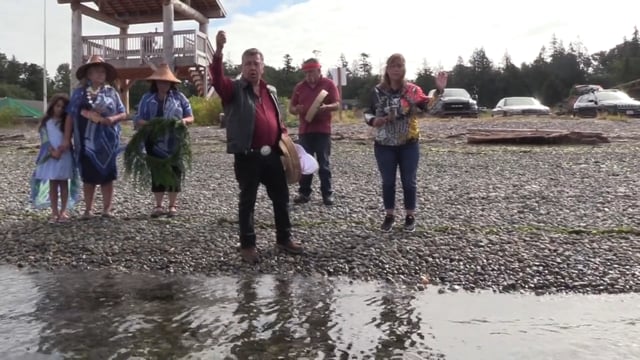
    We are respectfully asking if you might hold ceremony, in your own cultural way, for Sk’aliCh’elh-tenaut. For Tah-Mahs and Squil-le-he-le, holding ceremony for Sk’aliCh’elh-tenaut means placing cedar boughs on the sea waves and saying a prayer for Sk’aliCh’elh-tenaut, but we honor whatever way you hold ceremony, and are grateful for your spiritual and cultural support. We would be further honored if you might video your ceremony and allow us to share a clip during our virtual event on September 24th, as well as post it on our Ceremonies for Sk’aliCh’elh-tenaut Facebook page.This way, people around the world can witness one another’s ceremonies, and we can send a collective prayer to her.

    Hy’shqe! (Thank you).

    Video of Squil-le-he-le and Tah-Mahs explaining their own water ceremony
    Video on how to pronounce to pronounce Sk’aliCh’elh-tenaut and what her name means

    Facebook page “Ceremonies for Sk’aliCh’elh-tenaut”: https://www.facebook.com/Ceremonies-for-Skalichelh-tenaut-111624844000057

  • The Federal Security Service (FSB) took control over the creation of the new registry of indigenous peoples of the Russian Arctic, Siberia and the Far East

    The Federal Security Service (FSB) took control over the creation of the new registry of indigenous peoples of the Russian Arctic, Siberia and the Far East

    Compilation and maintenance of the list of small-numbered indigenous peoples of the Russian Federation became another function of the governmental system of monitoring in the sphere of interethnic and interreligious relations and early conflict prevention to be operated by FADN (Federal Agency of Ethnic Affairs). An appropriate ruling was signed by the Russian Prime Minister, Mikhail Mishustin.

    The system of monitoring of the interethnic sphere was launched at the end of 2016. By the end of 2017, it was implemented in all regions of the Russian Federation. At the same time, the Government approved the goals and objectives of the monitoring system in the sphere of interethnic relations.

    According to the new amendments, “one more function of the monitoring system, besides the identification of and response to the conflict situations, will be “registration of persons belonging to the small-numbered indigenous peoples of the Russian Federation” and “compilation of the list of persons belonging to them.”

    These amendments concluded the many years of work aimed at creating united registry of the small-numbered indigenous peoples of Russia, which was handed over to the Federal Agency of Ethnic Affairs last June.

    Igor Barinov, Director of the Federal Agency of Ethnic Affairs, is a retired FSB colonel

    The authors of this governmental ruling assume that the registry will resolve one of the main problems of indigenous peoples by simplifying their access to the natural resources they traditionally use. They would also not have to collect and submit documents every year because the list will contain all relevant information.

    This will be the first example of compilation and maintenance of a nationwide list of the small-numbered indigenous peoples in Russian history. Historically such registers existed locally in some regions only.

    Compilation of the indigenous peoples’ registry was actively supported by the Russian Association of indigenous peoples of the North (RAIPON) and its president and deputy of the RF State Duma Grigory Ledkov. In one of the interviews, he said that “this federal law will let the Association pursue systemic activities to improve the lives of indigenous peoples.”

    Igor Barinov, FADN (Federal Agency of Ethnic Affairs) Director, Grigory Ledkov (RAIPON)

    It should be noted that the development of monitoring the sphere of interethnic and interreligious relations was started in 2015. In February 2016, the President of Russia instructed the FSB (Federal Security Service), General Prosecutor’s Office, Ministry of Justice, Ministry of Telecom and Mass Communications, Roskomnadzor, and FADN (Federal Agency of Ethnic Affairs), with other Federal Government stakeholders, to submit their proposals on the organization of information threats’ monitoring on the Internet. 

    This instruction was given to Alexander Bortnikov, FSB Director, Yuri Chayka, RF General Prosecutor, Alexander Konovalov, Minister of Justice, Nikolai Nikiforov, Minister of Telecom and Mass Communications, Alexander Zharov, Roskomnadzor Director, Igor Barinov, Director of the Federal Agency of Ethnic Affairs. However, Alexander Bortnikov, FSB Director, was appointed an official in charge. 

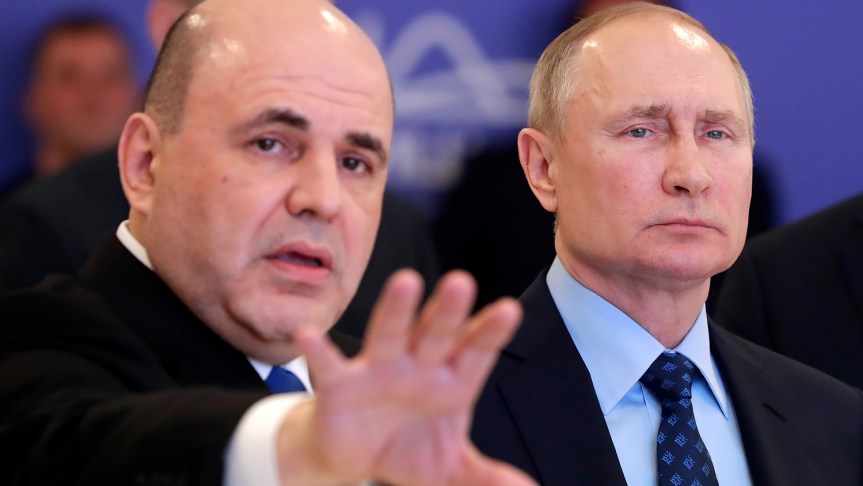
    Russian President Vladimir Putin (L) and Director of the Federal Security Service Alexander Bortnikov

    According to the Federal Agency of Ethnic Affairs, the national system of monitoring the inter-ethnic and inter-religious relations and early prevention of the conflict situations created by FADN is designed primarily to identify illegal online activities. All regions of the Russian Federation are connected to the system; 48 of them had their municipal units connected to it, which, according to FADN, enables the maximum use of artificial intelligence.

    Among the system users are the Administration of the Russian President, the institute of President’s Representatives in Federal Districts, the Russian Ministry of Internal Affairs, the National Antiterrorism Committee, the Russian Ministry of Defense. The system’s database includes over 25 mln. entries. It has information on 90 thousand media, 220 thousand NGOs, 3.2 thousand Cossack organizations, 2.1 thousand communities of the small-numbered indigenous peoples (data as of 2018). 

    It should also be noted that no such indigenous peoples’ registries exist in international practice. The only similar local population registry was created in the Xinjiang Uyghur Autonomous Region of the People’s Republic of China (earlier Eastern Turkistan) populated by the Uyghurs, a Turkic-speaking people belonging to the Sunni branch of Islam.

    Source – iRussia

  • Drop the trumped-up charges against Indigenous Kinipan land rights defenders in Indonesia!

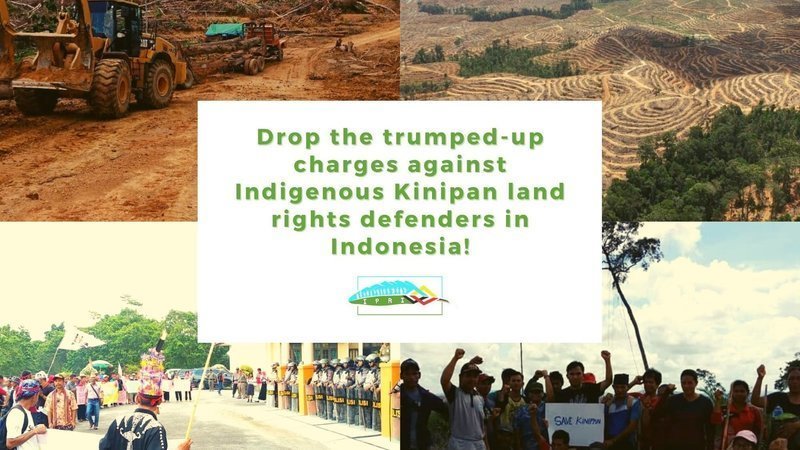
    Drop the trumped-up charges against Indigenous Kinipan land rights defenders in Indonesia!

    Amid the pandemic, six Indigenous villagers, including Kinipan community leader Effendi Buhing, and two Indigenous youth, were arrested by the Central Kalimantan Police, in Indonesia, for defending their customary forest against the expansion of PT Sawit Mandiri Lestari (PT SML), a palm oil company. Buhing was arrested on August 26, while the other five were arrested on August 15.

    All of them were released, but are now facing criminal charges for the alleged theft of chainsaw owned by the palm oil company. This chainsaw was confiscated by the villagers to stop the PT SML from further destroying their customary forest.

    Indigenous Peoples Rights International (IPRI) and Aliansi Masyarakat Adat Nusantara – AMAN (National Alliance of Indigenous Peoples of the Archipelago – Indonesia) strongly condemn these recent arrests and criminalization of the Kinipan villagers, which violates their internationally recognized right to their lands, territories, and resources.

    The unwarranted act by the police was in retaliation to the protest actions and growing resistance of Kinipan villagers against the forcible eviction from their lands by palm oil company.

    In response to the encroachment of PT SML into Laman Kinipan customary territories, the community registered their customary territories to the Customary Territory Registration Agency in March 2017. A certificate for the land was also given to the Laman Kinipan Indigenous Peoples community on July 27, 2017. 

    According to AMAN, the Laman Kinipan community found out that their forest was being taken over by PT SML in April 2018. Consequently, the community imposed customary sanctions against the company after it destroyed their customary territory, and filed complaints to the Ministry of Environment and Forestry, National Human Rights Institution Komnas HAM, and the Office of the Presidential Staff (KSP).

    The complaints of the Laman Kinipan people are yet to be acted upon. However, when PT SML filed unwarranted charges of theft against Indigenous leader Buhing and the other five villagers, the police were quick to make the arrest and file the charges.

    The arrest of Kinipan Community Leader Buhing clearly shows the double standards of the police forces. The arrest is used as a tactic to criminalize legitimate dissent so as to push for the illegal operations of PT SML into Laman Kinipan Indigenous Peoples customary lands. This tactic is being used globally to silence Indigenous Peoples in the face of the onslaught against their rights.

    Even during Covid-19 pandemic, several Indigenous Peoples communities have become targets of criminalization and violence to give way to the operations of large-scale projects involving agribusiness and extractive industries.

    If PT SML will have its way, 190, 000 hectares of forest will be lost; thereby reducing one of the biggest rain forests in Southeast Asia and causing severe damage to climate, biosphere, and ecosystem.

    Laman Kinipan Indigenous Peoples have long been protecting their forest and environment from total destruction, yet they constantly face threats and violence, arrests and detentions, and criminalization for defending their lands, forests, and territories.

    We call on President Joko Widodo, the Minsitry of Environment and Forestry, Ministry of Agrarian and Spatial Planning, the Indonesian Parliament, and the Indonesian Police:

    • To drop the trumped-up charges against Kinipan community leader Effendi Buhing and the other five villagers, and to ensure their safety against any further attacks;
    • For the police and the PT SML to stop  the criminalization of Indigenous peoples for their legitimate actions to protect their right to their customary forest;
    • For the Ministry of Environment and Forestry to revoke Decree on Forest Release for PT SML;
    • For the Ministry of Agrarian and Spatial Planning to revoke the concession of PT. SML in Laman Kinipan’s territory;
    • For the immediate and proper implementation of the Constitutional Court decision number 35/2012 to recognize customary territory in accordance with the provisions of the 1945 Constitution; and
    • For  the Indonesian Parliament to enact the law on the rights of Indigenous Peoples to ensure the full implementation of the provisions contained  in the 1945 Constitution and the  the United Nations Declaration on the Rights of Indigenous Peoples (UNDRIP).

    If you are interested to be a signatory, please sign on this petition or send your FULL NAME, TITLE/POSITION, and ORGANIZATION/AFFILIATION to [email protected] or [email protected].

    You can sign on as an organization or as an individual, please indicate which options you are amenable to. Sign ons will close on September 15, 2020 at 16:00 (GMT +7), 05:00 (EST), 02:00 (PST), 17:00 (GMT +8).

    NOTE: You are not required to donate to this petition.

    (Photo credit: Laman Kinipan Community)

    Source

  • The dirty secret behind your ‘green’ electric car

    The dirty secret behind your ‘green’ electric car

    The automotive industry is driving growing demand for nickel, critical for batteries, despite the pollution that production can cause.

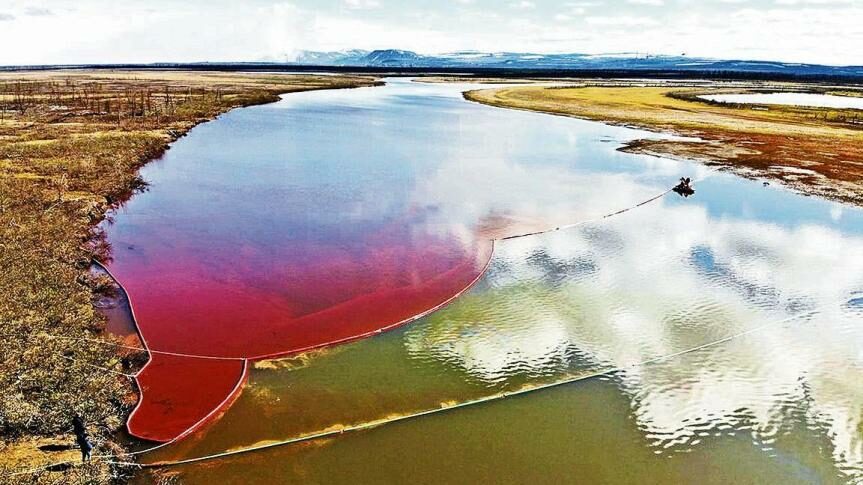
    President Putin ordered a state of emergency after a large diesel spill caused widespread damage in the Ambarnaya River outside Norilsk in Siberia this summer
    President Putin ordered a state of emergency after a large diesel spill caused widespread damage in the Ambarnaya River outside Norilsk in Siberia this summer
    MARINE RESCUE SERVICE/AFP VIA GETTY IMAGES

    As Tesla shares continued their stellar rise last month, a group representing indigenous communities in Russia sent a letter to Elon Musk.

    “We are respectfully requesting that you DO NOT BUY nickel, copper and other products from the Russian mining company Nornickel,” they told the billionaire boss of the electric carmaker.

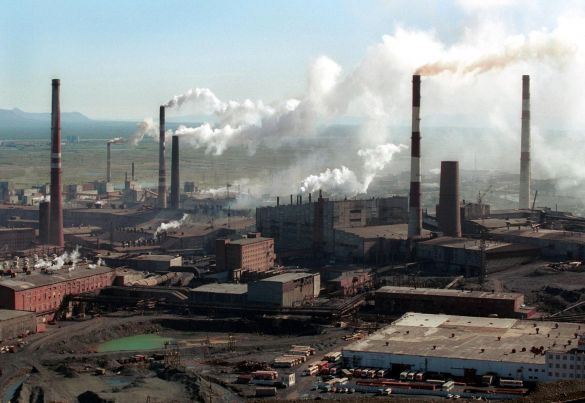
    Citing the huge diesel spill from a Nornickel plant that turned Siberian rivers crimson this summer, they alleged that the world’s leading high-grade nickel producer was “a global leader in environmental pollution” and urged Tesla to rule out buying from the miner until it cleaned up its act.

    The letter came in response to a striking plea that Mr Musk had made to mining companies weeks earlier. “Wherever you are in the world, please mine more nickel,” he said. “Tesla will give you a giant contract for a long period of time if you mine nickel efficiently and in an environmentally sensitive way.”

    While concerns over child labour and corruption in mining cobalt for electric vehicle batteries are well-documented, Mr Musk’s comments have focused attention on the less-scrutinised market for nickel. The metal is every bit as critical for batteries — and presents its own concerns for ethically minded electric vehicle buyers.

    Nickel is used in most lithium-ion batteries; it helps to provide higher energy density and to improve storage capacity. Today, batteries account for only about 7 per cent, or 150,000 tonnes a year, of global nickel demand, according to Wood Mackenzie; most nickel is still used to make stainless steel. However, the energy and mining consultancy expects battery demand to increase to 650,000 tonnes by 2030, helping to drive total nickel demand to 3.2 million tonnes a year, from 2.3 million tonnes at present.

    Andrew Mitchell, head of nickel research at Wood Mackenzie, argues that the market is in fact oversupplied now and he does not “see a particular squeeze on the availability of materials” to meet growing demand. However, “if you then start to want to look at the ESG [ethical, social and governance] issues around your nickel, then that might start to pose you problems”.

    Nornickel could increase its production of battery-grade nickel in Russia substantially, but doing so would depend on it first securing long-term contracts with customers.

    As for Nornickel’s own environmental record, Andrey Bougrov, head of environmental protection at the miner — which is facing a $2 billion fine over the diesel spill — said that the clean-up campaign was “in full swing”. He insisted that the company was “committed to environmentally sensitive production of metals”, was investing large sums in reducing hazardous emissions, but was “dealing with factories built in the Soviet times when architects largely ignored environmental aspects of the production”.

    For environmental groups, it is paramount that such concerns are addressed. “The clean energy transition cannot be underpinned by dirty mining. It’s sort of its Achilles’ heel,” Payal Sampat, mining programme director at Earthworks, said.

    Sorce

  • The Saami Council supports appeal from indigenous leaders regarding NorNickel

    The Saami Council supports appeal from indigenous leaders regarding NorNickel

    The Saami Council supports the appeal from indigenous leaders and experts of the Russian Federation to Mr. Elon Musk and Tesla, to refrain from buying nickel from NorNickel until the company implement indigenous peoples’ rights and fulfill its environmental obligations.

    A sustainable future requires responsible industry and business, and the development of so-called sustainable solutions cannot happen on the costs of indigenous peoples and the environment. Then it is no longer a sustainable solution. 

    The Russian company NorNickel is a global leader in the production of the mineral nickel. Murmansk Oblast and the Taymyr Peninsula has been the homeland for indigenous peoples of the Arctic for generations, and are the principal sites for the company’s activities. The Sámi, Nentsy, Nganasan, Entsy, Dolgan, and Evenki communities have preserved the traditional life, culture, and economy of Northern peoples, including reindeer herding, hunting, fishing, and gathering. Healthy and productive ecosystems, both on land and water, are the basis of indigenous peoples’ culture and identity. Indigenous peoples’ survival and existence must be secured and strengthened through the sustainable management of natural resources. Companies must be held accountable for cleaning up after accidents and pollution, also after ended activity.

    Free, prior and informed consent (FPIC ) is a principle enshrined in the United Nations Declaration on the Rights of Indigenous Peoples (UNDRIP, which establishes a universal framework of minimum standards for the survival, dignity, and well-being of the indigenous peoples of the world, and it elaborates on existing human rights standards and fundamental freedoms as they apply to the specific situation of indigenous peoples. This principle must apply to all industrial activities taking place on indigenous land and FPIC must be included in the code of conduct of any company.  

    Source