Category: News

  • EXPLORING THE ARCTIC OCEAN: THE AGREEMENT THAT PROTECTS AN UNKNOWN ECOSYSTEM

    EXPLORING THE ARCTIC OCEAN: THE AGREEMENT THAT PROTECTS AN UNKNOWN ECOSYSTEM

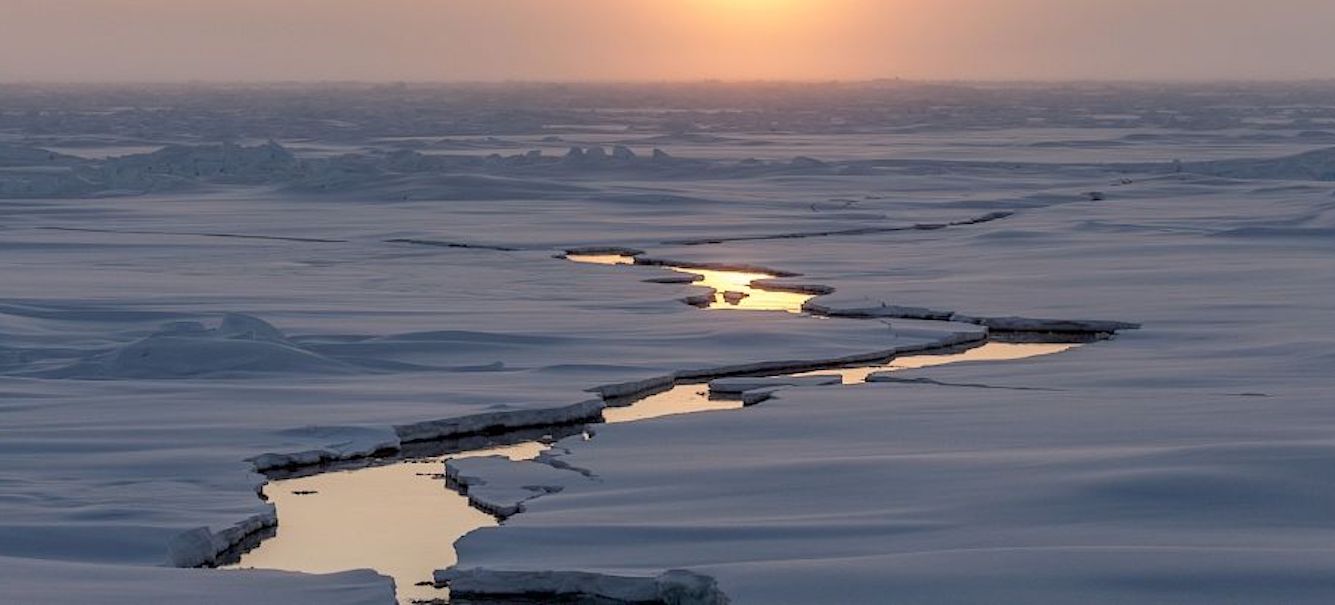
    A thick layer of multiyear sea ice once completely covered the central Arctic Ocean. But as the ice continues to retreat, waters that were previously only accessible to heavy icebreakers could soon open up and attract commercial fishing vessels. Yet, little is known about the ecosystem emerging below the ice and unregulated fishing could have detrimental impacts.

    This was a concern to the Arctic coastal states. Thus, they decided to prevent commercial fishing until better scientific knowledge was available and to engage other states with distant-water fishing capacity as well. The result was the International Agreement to Prevent Unregulated Fishing in the High Seas of the Central Arctic Ocean, signed in 2018 by Canada, Iceland, the Kingdom of Denmark, Norway, the United States and the Russian Federation, as well as China, Japan, South Korea and the European Union.

    We asked Maya Gold for an introduction to the milestone agreement. Maya Gold is a Senior Advisor within International and Intergovernmental Affairs at Fisheries and Oceans Canada and Canada’s Head of Delegation to our Protection of the Arctic Marine Environment (PAME) Working Group.

    Map showing area covered by the Agreement to Prevent Unregulated High Seas Fisheries in the Central Arctic Ocean. (PAME/Arctic Council Secretariat)

    IN BRIEF, COULD YOU EXPLAIN WHAT THE INTERNATIONAL AGREEMENT TO PREVENT UNREGULATED FISHING IN THE HIGH SEAS OF THE CENTRAL ARCTIC OCEAN IS?

    The legally binding Agreement to Prevent Unregulated High Seas Fisheries in the Central Arctic Ocean was signed in Ilulissat, Greenland on October 3rd, 2018. Once it enters into force, the agreement will commit the parties to not authorize any vessel flying its flag to engage in commercial fishing in the high seas portion of the central Arctic Ocean. The agreement will be in place for up to sixteen years, renewable in increments of five years.

    This agreement provides a framework for the parties to cooperate to better understand the ecosystems in and adjacent to the central Arctic Ocean. It prevents commercial fishing from occurring until adequate scientific information is available to inform decision making in relation to the viability and sustainability of any potential future fishing activities in the agreement area. Parties intend to meet at least every two years to review implementation progress and the scientific information developed through a joint program of scientific research and monitoring.

    To bring the area into perspective: The central Arctic Ocean is the largest area of high seas in the Arctic , it is surrounded entirely by the exclusive economic zones (EEZs) of Canada, the Kingdom of Denmark (in respect of Greenland and the Faroe Islands), Norway, the Russian Federation, and the United States, and spans an area of approximately 2.8 million square kilometers – virtually the same size as the Mediterranean Sea.

    WHY WAS THERE A NEED FOR SUCH AN AGREEMENT?

    Under the provisions of the 1982 United Nations Convention on the Law of the Sea (UNCLOS), coastal states can exercise jurisdiction over fisheries zones extending 200 nautical miles seaward from coastal baselines. In some instances, the EEZs of adjacent and/or opposite states are geographically positioned such that they totally enclose an area of the “high seas” outside their fisheries jurisdiction. However, despite being entirely surrounded by the EEZ’s of states, vessels from any state in principle have the right to fish in these high seas areas, unless they have entered into an international agreement specifying otherwise.

    The central Arctic Ocean has historically been an area completely covered with multiyear sea ice and inaccessible except to heavy icebreakers. With climate change, the ice in this area has been rapidly disappearing, with most recent studies indicating the area could be completely free of ice in the coming years, some predictions as early as 2030. In fact, there are now parts of the high seas in the central Arctic Ocean which are already free of ice and accessible to vessels in the summer months. With the reduction of ice in the Arctic Ocean, it is now feasible that fishing vessels could enter the central Arctic Ocean and fish. The lack of scientific knowledge about the marine ecosystem and the species found in the Arctic Ocean means that such a scenario could be catastrophic. For the duration of this agreement, such a scenario will be prevented, since the main objective of this agreement is to prevent commercial fishing from occurring in the near term until better scientific knowledge could be gained about the ecosystem.

    HOW DOES IT TIE INTO OTHER INTERNATIONAL AGREEMENTS FOR THE ARCTIC OCEAN?

    The three other international legally binding agreements which are specific to the Arctic and were negotiated under the auspices of the Arctic Council are the Agreement on Cooperation on Aeronautical and Maritime Search and Rescue in the Arctic, the Agreement on Cooperation on Marine Oil Pollution Preparedness and Response in the Arctic, and the Agreement on Enhancing International Arctic Scientific Cooperation.

    Given the operational nature of those agreements, there is in fact no substantial overlap between those agreements and the central Arctic Ocean fisheries agreement. Although by name you would expect the scientific cooperation agreement to be relevant, that agreement is rather about the movement of people and equipment for scientific purposes between the Arctic States, and would not be relevant for a science program in the high seas of the central Arctic Ocean, which is governed by the freedom of marine scientific research under UNCLOS.

    A notable difference between the these three agreements negotiated under the auspices of the Arctic Council and the central Arctic Ocean fisheries agreement is the membership. The fisheries agreement signatories do not mirror the Arctic Council’s membership, rather it consists of Canada, the Kingdom of Denmark, Norway, the Russian Federation, the United States, Iceland, China, Japan, Korea and the European Union.

    WHEN AND BY WHOM WAS IT INITIATED?

    In 2010, the United States effectively closed its EEZ North of Alaska to commercial fishing. Canada followed suit in 2014 with the “Beaufort Sea Fish Management Framework”, which was a partnership between the Fisheries and Oceans Canada, the Inuvialuit Regional Corporation, the Inuvialuit Game Council and the Fisheries Joint Management Committee. It determined: “Potential commercial fisheries will only be considered in light of scientifically supportable estimates of surplus and sustainable stocks” (Fisheries and Oceans Canada 2009).

    Following several rounds of bilateral discussions, in February 2014 Canada, the Kingdom of Denmark, Norway, the Russian Federation and the United States issued the “Nuuk Statement” calling for action on the central Arctic Ocean issue. These same states signed the non-binding “Oslo Declaration” the following year, in which they agreed not to allow their commercial fleets to fish in the central Arctic Ocean until there would be sound scientific base and an appropriate management regime in place (Norway 2015). The Oslo Declaration also recognized that other nations/jurisdictions with the distant-water fishing capacity needed to be engaged on this issue.

    In December 2015, negotiations began among the five states that signed the Oslo Declaration as well as China, the European Union (which has competence over fisheries policy on behalf of its member states), Iceland, Japan and the Republic of Korea. David Balton, with the US State Department, was the Chair of the negotiation process and it was the US who initiated the discussions among the coastal states, which resulted in the Oslo declaration.

    WHO ARE THE SIGNATORIES?

    • Canada
    • Iceland
    • The Kingdom of Denmark (in respect of Greenland and the Faroe Islands)
    • Norway
    • The Russian Federation
    • The United States of America
    • China
    • Japan
    • South Korea
    • The European Union

    WHAT IS THE CURRENT STATUS OF THE AGREEMENT AND WHEN WILL IT ENTERED INTO FORCE?

    As of August 2020, nine of the ten signatories have completed the ratification process for the agreement. The agreement will enter into force 30 days after receipt of the tenth and final instrument of ratification (once all ten parties ratify) and will remain in effect for 16 years. It will be automatically extended for additional 5-year periods if the parties agree.
    Read the full agreement here.

    Source

  • Acknowledging Indigenous land is the first step in taking better care of it

    Acknowledging Indigenous land is the first step in taking better care of it

    Nikoosh Carlo, Ph.D., is CEO of CNC North Consulting, which focuses on community-driven solutions to climate change, and a Public Voices Fellow of The OpEd Project and the Yale Program on Climate Change Communications.


    In September, Schitt’s Creek, a sitcom created by the Canadian actor Dan Levy and his father, Eugene, won nine Emmys. Levy’s newly raised profile called attention to his efforts to learn about Indigenous culture and history in Canada with the help of a free online course at the University of Alberta. Back in August, he invited people to join him via an Instagram post that was liked by thousands.

    The course is part of an effort in Canada to face an ugly history of nation building that continues to impact people today and that we must also confront in the U.S. Another piece of this effort is a formal land acknowledgement at the start of events or performances, such as the one offered at this year’s Academy Awards by the Maori director Taika Waititi.

    “The academy would like to acknowledge that tonight we have gathered on the ancestral lands of the Tongva, the Tataviam and the Chumash. We acknowledge them as the first peoples of this land on which the motion picture community lives and works,” Waititi said. Likewise, the new policy platform introduced at this year’s (virtual) Democratic National Convention acknowledged “that we gather together to state our values on lands that have been stewarded through many centuries by the ancestors and descendants of Tribal Nations who have been here since time immemorial.”

    A land acknowledgement highlights the ongoing stewardship by Indigenous peoples, uplifts Indigenous voices, and helps audiences and institutions reconsider their roles within a broader community. It’s a sign of respect that’s common in Canada, Australia, New Zealand, tribal nations, and increasingly in the U.S. It’s also a step toward recognizing that multiple perspectives are needed to address climate change.For a problem that is burning out of control worldwide, only cross-cultural cooperation can offer hope for the future.

    Indigenous peoples’ knowledge and leadership can drive innovative climate solutions. For example, in the southwestern Alaska village of Igiugig, people are piloting sustainable microgrid projects to replace fossil fuels with wind turbines and non-dam river technology to power a community farm. At a global level, Indigenous organizations work alongside the eight nations in the Arctic Council to address sustainable development and environmental protection. One of these organizations, Gwich’in Council International, leads efforts to coordinate wildland-fire emergency response across international boundaries. For a problem that is burning out of control worldwide, only cross-cultural cooperation can offer hope for the future.

    Indigenous peoples in Alaska, where there are over 200 federally recognized tribes making up approximately 15 percent of the population, have thrived in the extreme lands and waters of the Arctic for millennia.

    As a child, I lived a few blocks from my grandparents, aunties, and uncles, who ensured that we harvested, ate, and shared traditional foods: salmon, moose, berries. In the blueberry patch, I heard the stories of our ancestors and learned that we are all connected in community. Indigenous peoples have a connection to the land that has made us expert observers and caretakers of the environment — a connection I feel more keenly in these pandemic times.

    There’s a model for mutual respect and cooperation in traditional Alaska Native practice. It begins with how we introduce ourselves to each other — think of it as our own personal land acknowledgment:

    My name is Nikoosh Carlo. I am Koyukon Athabascan, born and raised in Fairbanks and Tanana, at the confluence of the Tanana and Yukon Rivers. I am the oldest daughter of Gail and Wally Carlo from North Dakota and Tanana. My grandparents were Poldine and Bill Carlo from Nulato and Rampart, Alaska.

    When others introduce themselves to me, I’m actively listening for family lineages and places so I can understand how we are connected. These introductions ground us in our history and shared values, and guide how we might work together.

    Indigenous and non-Indigenous peoples are inextricably linked in the battle against climate change. We can tackle it together if we build a foundation of mutual respect. It starts with acknowledgment: of land, of history, and of Indigenous leadership. Healing the environment can also heal communities.

    Source

  • Nornickel is “cynical, corrupt and socially irresponsible”, says Russia’s top legislator

    Nornickel is “cynical, corrupt and socially irresponsible”, says Russia’s top legislator

    Following a parliament visit to the far northern company town of Norilsk, the Federation Council and its Speaker Valentina Matvienko expresses shock and outrage about company mismanagement and massive pollution in the Arctic.

    After decades of massive ecological destruction in the Russian North, federal officials appear to have decided that time has come to slap the powerful mining and metallurgy company.

    Rarely has a top Russian legislator lashed out against one of the country’s biggest companies like Valentina Matvienko did on the 21st October. In a press conference, Matvienko said that company town of Norilsk used to be a “garden town”, but now looks more like a “slum” with worn-out infrastructure, and power grids, water canalization, roads and housing in disarray.

    “Cynical company”

    The vocal attack of the company did not only aim at Nornickel’s recent huge spill of diesel fuel that has ruined vast areas of tundra and waterways. Matvienko pointed her finger at the company’s general practices.

    According to the long-time speaker of the parliament body, Nornickel has put on display “complete cynicism” and “total indifference towards the motherland where they live and make huge money.”

    This is not a socially responsible company, she stressed. “That is all PR,” she underlined.

    Lenin statue in Norilsk, Siberia. Photo: Thomas Nilsen

    Corruption

    Matvienko, who over the years has had several leading posts in Putin’s Russia, also accused the managers of Nornickel of grave corruption.

    The company is bribing both local and regional legislators and have their people in control over the Norilsk town budget. Furthermore, she also points her finger at regional and state authorities indicating that they are part of corrupt practices.

    “How come that the Ministry of the Far East (and Arctic), federal structures, the presidential envoy to the district, nobody — nobody really sees that the houses are falling apart and what state the town is in? Why has everyone kept quiet? Is everyone really in the pockets of Nornickel? Really? What other conclusion can be made?” Matvienko said.

    Parliament action

    The harsh comments come after the upper house of parliament conducted a visit to Norilsk, the remote northern town that is centerpiece in the mining and metallurgy company’s Arctic operations. Fifteen senators from five different parliament committees took part in the visit, along with representatives of several federal ministries, state agencies and law enforcement authorities, the Federation Council informs.

    In an official statement issued after the visit, the legislators point at serious problems with the local social infrastructure, including housing, healthcare, schools and kindergartens.

    “Modern-day Norilsk is one of the most polluted towns not only in Russia, but in the world, and the [oil spill] catastrophe has only aggravated the environmental problems and attracted attention towards them,” says Deputy Speaker Nikolay Zhuravlev.

    Quick action

    The Federation Council now demands that Nornickel takes quick action to deal with the problems.

    “The water supply system must come in order, together with housing, kindergartens, schools and policlinics,” Chairwoman Matvienko underlines. It should not be a major problem, she argues.

    “For them, to build a kindergarten or a school is like a cup of coffee, or like going twice to a restaurant,” she underlines and points at the super-wealthy main shareholders of the company.

    And time is the essence. The work must be completed in 1-2 years, the legislators underline.

    The Nornickel company town of Nikel is located along the border to Norway and Finland. Photo: Atle Staalesen

    Kola Peninsula

    According to critics, Nornickel’s mismanagement not only applies to operations in Taymyr, but also in the Kola Peninsula.

    During the recent municipal elections in the Pechenga district, opposition politicians accused Nornickel of meddling in the vote and for putting its people in the municipal legislative assembly. They also argued that the company spent many million rubles on the election campaign of government-loyal party United Russia and that they are in full control over the local government.

    “No more! For 20 years they have shown us their attitude to the people, they have robbed us, knitted knots around our necks and weaved a web out of which we must finally get disentangled,” the election campaigners said about their opponents.

    The Pechenga district is located along the border to Norway and Finland and houses several major plants operated by Nornickel.

    Vladimir Potanin

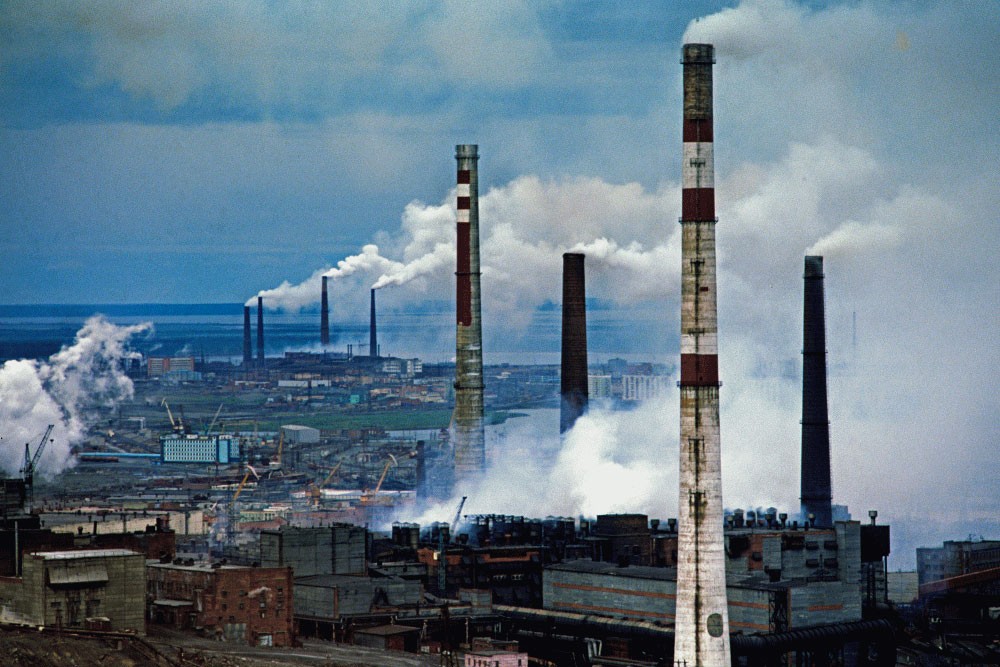
    Norilsk Nickel is the world’s leading producer of nickel and has the key parts of its operations in the Taymyr Peninsula and Kola Peninsula. Over the years, the vulnerable Arctic lands surrounding the company plants have been subject to heavy pollution. In 2018, a total of 1,9 million tons of sulfur dioxide were emitted from the chimneys of Norilsk. That was by far the biggest SO2 emissions in the world.

    At the same time, huge dividends have been cashed out by the company owners. In 2018, as much as $3,7 billion was distributed to the shareholders.

    Majority shareholder is Vladimir Potanin. He was in 2019 ranked as Russia’s richest person and the 41st richest in the world.

    Source

  • THE KILLING OF SOMKHELE ENVIRONMENTAL ACTIVIST, FIKILE NTSHANGASE

    THE KILLING OF SOMKHELE ENVIRONMENTAL ACTIVIST, FIKILE NTSHANGASE

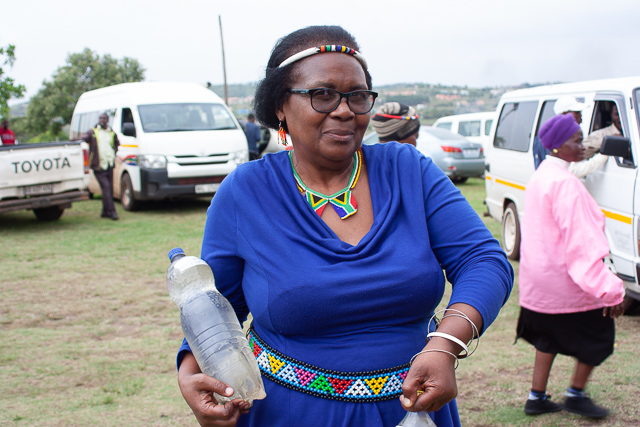
    “I refused to sign. I cannot sell out my people. And if need be, I will die for my people.” Tragically, grandmother Fikile Ntshangase’s words became a reality when she was gunned down in her home at Ophondweni, near Mtubatuba, on the evening of 22 October 2020. 

    Mama Ntshangashe was the Vice-Chairperson of a sub-committee of the Mfolozi Community Environmental Justice Organisation (“MCEJO”). MCEJO has been challenging the further expansion of a large coal mine at Somkele in KwaZulu-Natal by Tendele Coal Mining (Pty) Ltd. One of the court cases brought by MCEJO is scheduled for hearing in the Supreme Court of Appeal on 3 November 2020.

    On Thursday, 22 October 2020 at about 18:30, four gunmen arrived at Mam Nsthangase’s house, where she lives with her 11-year old grandson. Current reports say that they forced themselves into the home and shot her 5 times, and that she died on the scene.

    Tendele’s coal mining operations have caused untold destruction of the environment and the homes and livelihoods of the residents of Somkhele. (Photographs and video footage available.)

    Over the past few months, tension has been rising in the community over the proposed expansion of Tendele’s operations, and MCEJO’s opposition to that expansion. 

    Recently, Tendele was pushing for an agreement to be signed between MCEJO and Tendele to the effect that MCEJO would withdraw its Court challenges of Tendele’s expansion of its coal mine at Somkhele. Mama Nsthangase refused to sign the “agreement”, which certain of her fellow sub-committee members signed, purportedly doing so on behalf of MJECO.  

    She warned sub-committee members that they had no power to make decisions on behalf of MJECO and that the “agreement” only benefited Tendele. She  also refused to attend any of the secret meetings that other sub-committee members held with Tendele. Days before her brutal killing, Mama Ntshangase stated her intention to write an affidavit, revealing that sub-committee members had spoken to her of a payment of R350,000 in return for her signature. 

    The court challenge that placed a price on Mama Ntshangase’s life is MJECO’s pending review application of Tendele’s new mining right in respect of a 222km2 area in Mpukunyoni, KZN. This review is due to be heard by the North Gauteng High Court in March 2021. 

    Tendele has publicly characterised MCEJO’s legal challenge as a threat to the mine’s continued existence, stating that, with the current mining area depleted, it needed to expand its mining area, or face closure. 

    The expansion requires relocation of 21 families (19 of them MJECO members) from their ancestral land. Many of these families have lived on their land for generations.

    Tendele cannot commence any operations in the new mining right area until these families agree to Tendele’s “compensation” offer and sign relocation agreements. These families were subjected to months of violence and intimidation. Despite the clear volatility of the situation, Tendele has accused these families of “holding the Mine, its … employees and many families who have signed [relocation] agreements and indeed the entire community to ransom”. Tendele carried out its pressure campaign even while these families were receiving anonymous death-threats and gunmen opened fire on one of the families’ homes. 

    In May 2020, Tendele tried to bring an urgent court application to force the families to accept their compensation offer, but abruptly removed the matter from the Court roll when the families opposed the application.     

    Tendele has now embarked upon a campaign to pit the State, the Ingonyama Trust Board, traditional leaders and fellow community members against these families to pressure them into signing relocation agreements. Tendele requested the MEC for Transport, Community Safety & Liaison KZN, Minister Ntuli and department officials to set up a “task team”, with the aim of “the two court cases opened by MJECO against the mine remain a threat and needs [sic] to be withdrawn”. This Task Team has since described their role to include “deliberat[ing] on the court cases which pose a threat”.   

    It is against this backdrop that the pro-mining campaign was stepped up during the past week. On 15 October, two sub-committee members, accompanied by two known hitmen, tried to disrupt a MCEJO executive committee meeting with community leaders, which included Mama Ntshangase. One sub-committee member tried to lock the doors, and a prominent leader was assaulted. A criminal case is being opened. This leader, who works in another area, has been warned that his life will be in danger if he is seen in the vicinity.

    Billy Mnqondo, a founding member of MCEJO, reports that one of the hitman kept saying “kuzochitheka igazi” (there will be bloodshed). His appeal to the police is: “Make sure that the criminals who murdered our comrade are caught and go to jail. Mam Ntshangase was killed for standing up for what is right. This is wrong and cannot go unpunished.”     

    It appears that the mine is being supported by the KwaZulu-Natal government. In July, the Department of Community Safety and Liaison sent a staff member, apparently from its Civilian Secretariat arm (which is conspicuous in its absence whenever the threat of violence looms), to persuade community members to negotiate with the mine. 

    Since then, after MCEJO members thought it only proper to approach the office of the Ingonyama King Goodwill Zwelithini about their struggle, they have come under even further government pressure via the office of the Premier and COGTA. This is the self-same government that claims to be a custodian for land reform to redress the land imbalance – while wilfully pushing to displace rural farmers from their family land from which they subsist.

    For the State and Traditional Authorities actively to assist Tendele in its efforts to orchestrate a withdrawal of MJECO’s review application is abhorrent to our Constitutional order. Without access to Court, local communities’ right to dignity and section 24 environmental rights are illusory.

    The strategies used by Tendele are sadly typical of many companies operating in impoverished rural communities. Mines dangle incentives to impoverished community members with the inevitable consequences of stirring deep community divisions, which almost always lead to violence and deaths. In rural areas that are difficult to police, it takes someone with the determination and the courage of Mama Ntshangase to promote community solidarity and resistance in the face of these strategies. There are other leaders of this calibre in MCEJO and, if anything, the assassination of Mama Ntshangase has renewed their determination to step up the fight against exploitation by the mine.

    We mourn the senseless tragedy of Mama Ntshangase’s murder, and condemn her killing.

    We call on the South African Police Service to act swiftly to arrest and prosecute her murderers.

    We call on Tendele to stop its campaign of dividing and fomenting violence in the affected community of Somkhele, and to provide funds for Mam Ntshangase’s funeral and for maintenance for her orphaned grandson.

    We stand by all defenders of land and environmental rights, and will act to defend their Constitutional rights to life, dignity, free speech, access to justice, access to food and water, and an environment not harmful to health or wellbeing.

    Source

  • The Arctic Comes in from the Cold

    The Arctic Comes in from the Cold

    The more that global warming reduces the ice cover in the Arctic, the greater the need there will be for multilateral arrangements to govern trade, resource extraction, and other issues across the region. Without forward-looking cooperation, a zero-sum scramble will ensue, leaving everyone worse off.

    Stockholm – Whether we are heading for a future of cooperation or of increasing confrontation in the Arctic remains to be seen. But it is already clear that the region will command far more attention than it has in the past.

    The main reason is of course climate change, which is accelerating the rate of ice melt and causing arctic temperatures to rise twice as fast as the global average. Owing to their pace and scale, these changes have obvious geographic, economic, and strategic implications. As the vast ice sheet that spans the region has melted, new fossil-fuel reserves and shipping routes have opened up, including the Northern Sea Route (NSR) along Russia’s Siberian coast and the Northwest Passage through Canada’s northern archipelago. However, the same trend has also fueled the loss of permafrost, threatening billions of dollars’ worth of infrastructure that may soon be standing in mud instead of on firm ground.

    Moreover, indigenous communities that have lived in the Arctic for millennia are increasingly voicing concerns about the growing threat to their livelihoods. Nearly half of the Arctic’s land area is in Russia, as are around 70% of the four million people who live in the region. Most live in the Kola Peninsula area near Norway and Finland, which is also home to Russia’s Northern Fleet and most of its sea-based nuclear deterrent. But other parts of the region are no less important, strategically and demographically. Approximately two-thirds of the inhabitants of Canada’s arctic areas are indigenous people, as are the vast majority of the 56,000 people living on Greenland (which itself is the size of a small continent).

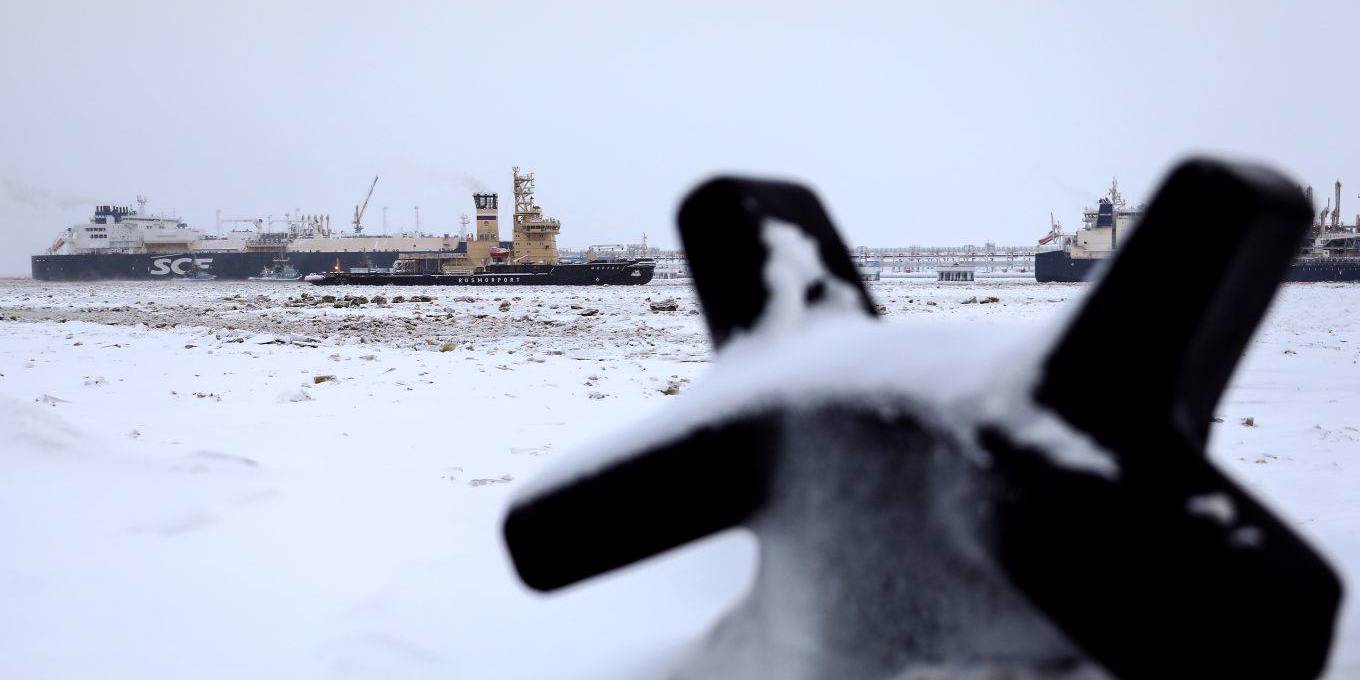
    This summer, a century-old sailing ship, the Sedov, traversed the NSR without seeing any ice at all. Such journeys still are possible only during the warmest months, whereas transit throughout the rest of the year requires special ships, often escorted by powerful icebreakers. Nonetheless, the sea traffic has been steadily increasing, driven so far by the large energy projects that Russia is developing in Siberia. Chinese and French companies each have a 20% stake in liquid natural gas extraction from the Russian-controlled Yamal gas fields, and South Korean-built tankers are shipping this LNG to Europe – and soon will be supplying East Asia. Needless to say, many more projects are in the works.

    Since 1996, the eight arctic countries – Russia, Norway, Finland, Sweden, Denmark (Greenland), Iceland, Canada, and the United States – have cooperated through the Arctic Council, mostly to address environmental issues. But now that the Arctic is becoming an increasingly important global theater, other countries are taking an interest.

    In 2013, China, India, Singapore, South Korea, and Japan were granted observer status within the Council, in recognition of their scientific research commitments and interest in future shipping opportunities. The potential for trade could be massive: the arctic sea route from Yokohama, Japan, to Hamburg, Germany, is 40% shorter than the current one that runs through the Suez Canal.

    Perhaps inevitably, the new climate of great-power competition has increasingly affected Arctic issues. At the Council’s ministerial meeting in Rovaniemi, Finland, last year, US Secretary of State Mike Pompeo shocked everyone when he refused to agree to a final communiqué and work program that mentioned climate change. The Trump administration instead used the occasion to attack China for its own designs on the region.

    In May next year, Iceland will pass the Council’s biennial rotating chairmanship to Russia, which is not likely to squander its two years in the driver’s seat. Over the past decade, the Kremlin has devoted significant resources to strengthening its Arctic positions, reviving defunct Soviet military facilities and building new ones. This military build-up has set off alarms within NATO, even though a sober analysis would find that in most cases, such facilities pose no particular threat to anyone – except, perhaps, polar bears.

    Still, other points of contention do matter. Russia regulates all of the shipping through the NSR, and thus will enjoy outsize control for as long as other parts of the Arctic remain covered with ice. But as more ice melts, new shipping channels will open up well north of Russia’s jurisdiction, and this will introduce a slew of new legal issues.Sign up for our weekly newsletter, PS on Sunday

    In light of these looming issues, a recurrence of the type of confrontation that derailed the Rovaniemi summit would be most unfortunate. With the executive meeting of the Arctic Council taking place in Reykjavik next month, we will soon know what the future holds.

    There are more than enough issues for the US, Russia, China, and others to clash over nowadays. But all should recognize a shared interest in preserving and further developing an open, collaborative framework for the world’s northernmost region. One way or another, the Arctic will become an increasingly important theater. It behooves us all to make it one of mutually beneficial cooperation, not war.

    Source

  • Protect Indigenous People’s rights to avoid a sixth extinction (commentary)

    Protect Indigenous People’s rights to avoid a sixth extinction (commentary)

    • In this commentary, David Wilkie, Susan Lieberman, and James Watson from the Wildlife Conservation Society (WCS) argue that protecting Indigenous Peoples’ traditional land rights is one of the most effective strategies for preventing the Sixth Mass Extinction.
    • “Most of humanity have been grossly negligent in our use of the Earth,” they write. “Wise stewardship of natural resources by Indigenous Peoples within their traditional territories has had a profoundly positive impact on the conservation of plant and animal species on land and in rivers, lakes, and coastal waters.”
    • “The decisions Indigenous Peoples have made over generations have done more to protect the planet’s species and ecological systems than all the protected areas established and managed by individual countries combined. The majority of our planet’s last wild, ecologically intact places on land exist because Indigenous Peoples rely on them for their wellbeing and cultural sense of self.”
    • This post is a commentary. The views expressed are those of the author, not necessarily Mongabay.

    Humanity today face multiple crises. A pandemic grips societies around the globe and with each passing year greed, poor governance, and naivete push us further toward a climate change forced sixth great extinction and the collapse of ecosystems. It may already be too late to prevent the looming catastrophe of climate change. But there is an overlooked and undervalued blueprint for our survival. We must turn for help to the Indigenous Peoples who have, for millennia, provided effective stewardship of our planet.

    Most of humanity have been grossly negligent in our use of the Earth. Businesses run according to self-interest have ignored the warnings of scientists to the detriment of a global community of bystanders. Governments have failed to attend to the long-term environmental and climate effects of those actions through necessary regulation and enforcement. And urban individuals and families continue to make choices with little if any understanding of how their consumption impacts the planet and our future on it.

    Our planet has experienced five previous extinction events—the most recent responsible for the disappearance of the dinosaurs. If we are to minimize the impact of growing threats to the ecological systems essential to human life and prevent the planet’s sixth mass extinction, we need to protect the last remaining areas on earth that are relatively intact.

    When we say “intact” we mean those dwindling places that still retain almost complete assemblages of native plants and animals, and where species are still interacting at ecologically functional population levels. Intact places resist climate change because they have multiple, redundant networks for capturing, using, and reusing energy. They better conserve plant and animal species and their complex ecological interactions, than degraded areas, when impacted by floods, fires and droughts. They sequester massive amounts of carbon and they keep wildlife pathogens out of reach of humans for whom they pose a deadly threat.

    The importance of fresh water fish in the diets and wellbeing of Indigenous Peoples and Local Communities is too often overlooked. Here a Mbira fisher casts his net in the Epulu river of northeastern DR Congo. Photo © Bryan Curran/WCS
    The importance of fresh water fish in the diets and wellbeing of Indigenous Peoples and Local Communities is too often overlooked. Here a Mbira fisher casts his net in the Epulu river of northeastern DR Congo. Photo © Bryan Curran/WCS

    The current health, economic and environmental crises are shifting public opinion around the world about our role in damaging our Planet. Today there is a growing willingness to take decisive actions that are vital for humanity’s future.

    Effectively and equitably protecting at least 30 percent of the world on land and sea by 2030, is one such way forward. But we need to be very clear that attaining this goal of “30 by 30” cannot happen unless governments, businesses, grant makers, and civil society respect and protect the territorial rights and traditional stewardship of Indigenous Peoples.

    Wise stewardship of natural resources by Indigenous Peoples within their traditional territories has had a profoundly positive impact on the conservation of plant and animal species on land and in rivers, lakes, and coastal waters.

    The decisions Indigenous Peoples have made over generations have done more to protect the planet’s species and ecological systems than all the protected areas established and managed by individual countries combined. The majority of our planet’s last wild, ecologically intact places on land exist because Indigenous Peoples rely on them for their wellbeing and cultural sense of self.

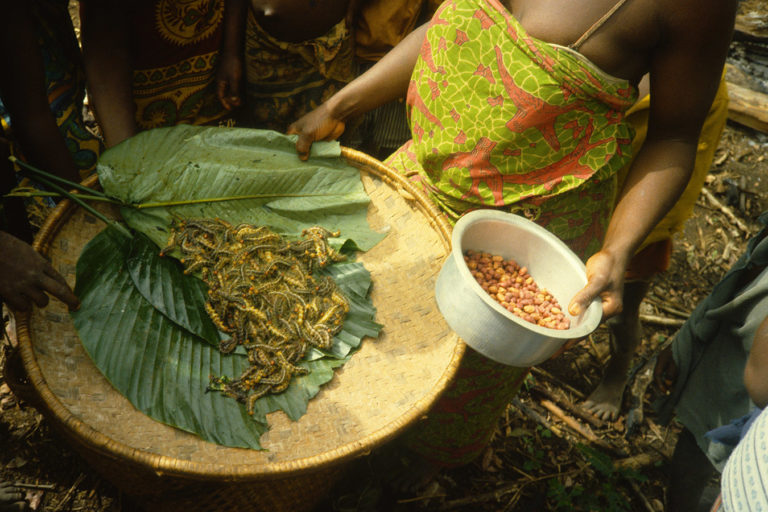
    In northeastern DR Congo, as in many places around world, the forest produces a bounty of delicious and nutritious caterpillars that are a seasonally important food for Indigenous Peoples and Local Communities. Photo © David Wilkie/WCS
    In northeastern DR Congo, as in many places around world, the forest produces a bounty of delicious and nutritious caterpillars that are a seasonally important food for Indigenous Peoples and Local Communities. Photo © David Wilkie/WCS

    John Fa and his colleagues have estimated that 36 percent of ecologically intact forests lie within Indigenous Peoples’ territories. And Stephen Garnett and his colleagues note that though Indigenous Peoples represent less than 5 percent of the human population on earth, they currently manage or have rights over “many of the world’s most sparsely populated, intact places.” And just last week, Chris O’Bryan and his colleagues showed that 646 mammal species—around 14 per cent of those assessed by the International Union for Conservation of Nature (IUCN)—have more than half of their ranges within these lands.

    That said, we know that these preliminary assessments grossly underestimate the extent of Indigenous Peoples’ territories. If you were to map the areas in which the loss of species and ecosystems has not occurred or is minimal, it would align with those last ecologically intact places on earth and the territories of Indigenous Peoples.

    If we are to minimize species loss and a collapse in ecosystem function, we must do all we can to support Indigenous Peoples’ rights and their efforts to protect their lands and waters. This means respecting and enforcing their territorial rights and ensuring that they can exercise their legitimate authority to determine who has access to and can use their resources.

    International conservation organizations should and do play a role in providing on-the-ground assistance to Indigenous Peoples.

    Working respectfully with Indigenous Peoples to support their efforts and hear their concerns is both a moral imperative and one of the  most effective pathways to achieve the 30×30 goals, protect and conserve the planet’s biodiversity and ecosystem functions, and ensure a sustainable, healthy, and equitable future for all of humanity.

    David Wilkie is Executive Director for Rights + Communities at WCS (Wildlife Conservation Society); Susan Lieberman is Vice President for International Policy at WCS; James Watson directs the Science and Research Initiative at the Wildlife Conservation Society and is a professor of conservation science at the University of Queensland. The Wildlife Conservation Society (WCS) actively engages with 205 groups of Indigenous Peoples in 39 countries around the world to help them protect their lands and waters.

    Source

  • We can’t mine our way out of the climate crisis

    We can’t mine our way out of the climate crisis

    Global upswell of civil society organisations, communities and academics tells EC to align raw materials sourcing plans with the interests of people and planet.

    Over 230 civil society organisations, community platforms and academics are urging the European Commission to reassess its plans for sourcing the raw materials it claims Europe will need to realise energy, industrial and military transitions.

    The Commission’s plans risk destroying climate-critical ecosystems and sowing social conflict in Europe and in the Global South, authors of a collective letter that has received global support have warned. 

    The letter comes in response to the Commission’s  forth September announcement of a new Raw Materials Action plan, which sets out how to meet Europe’s growing demand for ‘critical’ raw materials, such as lithium and cobalt, used in renewables and other strategic industries.

    Extraction

    While the Commission speaks of its plans in terms of sustainability and a  green recovery, the letter raises serious concerns that Europe’s current plans for sourcing critical minerals and metals will be far from sustainable.

    Instead, the authors argue, plans to intensify resource extraction to meet growing demand, if realised, will place communities, biodiversity and even climate action at risk.

    Guadalupe Rodriguez, who works on forest and extractive issues for Spanish NGO Salva La Selva, said: “The European Commission’s plans are encouraging mining projects in both the Global South and in European countries like Portugal and Spain, which we could call the ‘South of the North’.”

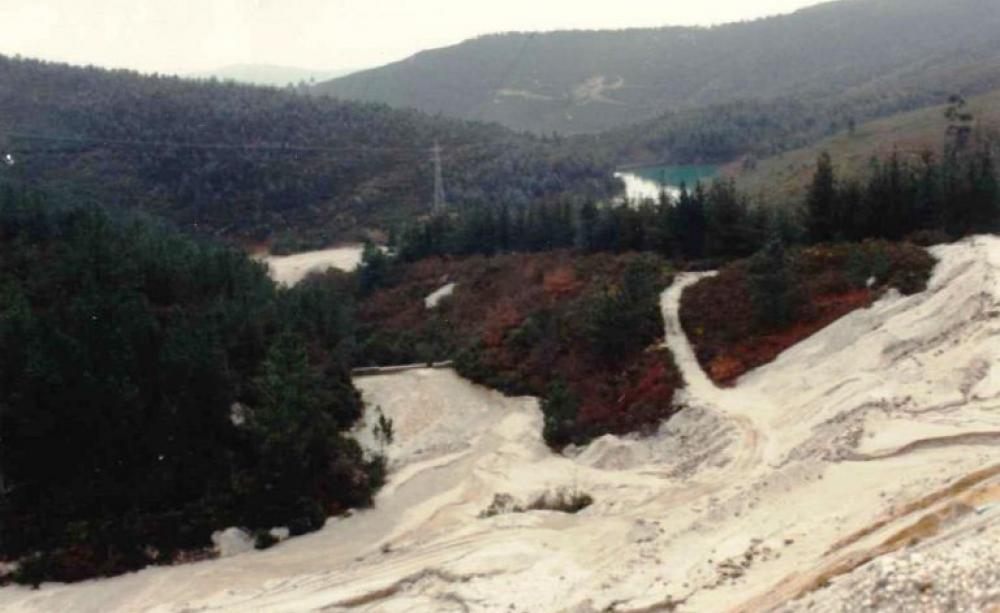
    “In these places mining is causing ecological devastation, while new mining proposals are full of irregularities, lack transparency and are faced with growing resistance from local citizens, which is being ignored.

    “Far from achieving a ‘green transition’, the Commission’s current plans effectively push for business as usual in line with European interests, at the cost of communities and the Earth.”

    Own-goal

    Plans to expand mining globally to meet the massive projected growth in mineral and metal demand, partly driven by transitions to renewable energy, could undermine climate change mitigation efforts by destroying biodiverse ecosystems essential to the functioning of the global climate system, the latest scientific studies show.

    A new paper published in the prestigious Nature Communications Journal this month found that: “Mining potentially influences 50 million km2 of Earth’s land surface, with 8 percent coinciding with Protected Areas, 7 percent with Key Biodiversity Areas, and 16 percent with Remaining Wilderness … Most mining areas (82 percent) target materials needed for renewable energy production”. 

    These numbers are set to increase in a global, market-led rush for so-called critical minerals and metals. The authors of the study conclude that, if this boom goes unchecked, “new threats to biodiversity (from mining) may surpass those averted by climate change mitigation.”

    Hal Rhoades, northern European coordinator of the Yes to Life, No to Mining Network, said: “We cannot mine our way out of the climate crisis.”

    “To display true climate leadership, the EC needs to establish and put in place policies for a low-energy, low-material transition in Europe, with a far greater focus on demand reduction and recycling. It also needs to contribute a fair share of support to Global South nations to redress the relentless, centuries-long extraction of wealth from the South to Europe.”

    Demands

    By refusing to consider options for de-growing Europe’s material consumption and alternative means of measuring wellbeing and progress other than GDP, the authors argue that the European Commission’s latest action plan represents business as usual and a threat to ambitious climate action.

    While the European Commission’s new Action Plan does mention the importance of recycling and a circular economy, the authors of the open letter challenge the fundamental logic of economic growth that underlies the plans and policies.

    They lay out a series of alternative recommendations to the Commission which could help put Europe on course for a truly just, green and sustainable future, including:

    • An absolute reduction of resource use and demand in Europe
    • Recognition and respect for communities’ Right to Say No to mining
    • Enforcement of existing EU environmental law and respect for conservation areas
    • An end to exploitation of Global South nations, and respect for human rights
    • Protection of ‘ new frontiers’ – like the deep sea- from mining.
       

    Speaking to these recommendations, Meadhbh Bolger, resource justice and new economies campaigner for Friends of the Earth Europe, said:  “Europe’s desperate plunder for more raw materials must stop. We need a truly just and equitable transformation to a 100 percent renewable energy future and an economy within environmental limits. This means rich countries must reduce our consumption of resources, respect communities’ right to say no to mining, and end exploitation.”

    This Author 

    Marianne Brooker is The Ecologist’s content editor. This article is based on a press release from Yes to Life, No to Mining. 

    Source

  • Human rights defenders who engage with UN continue to be threatened and attacked

    Human rights defenders who engage with UN continue to be threatened and attacked

    The UN Secretary-General released his annual report today on reprisals and intimidation against individuals and groups seeking to cooperate with the UN on human rights. Once again, the report identifies a very concerning number of threats and attacks aimed at silencing human rights defenders in retaliation for engaging with the UN, with evidence that a number of States have a strategy or systematic approach to obstructing and punishing those who give information, evidence or testimony in relation to human rights.

    ‘The Secretary-General’s report is appalling. Human rights defenders are integral to the international human rights system. If they are not able to safely share information about violations and abuses taking place in their countries, the entire system is undermined,’ said Madeleine Sinclair, New York Office Co-Director and Legal Counsel at ISHR.  

    ISHR contributed to the report through a submission documenting a number of cases. These  demonstrate a disturbing pattern. Cases of reprisals featured in the submission range from States dangerously maligning defenders to killing them. In Venezuela, increased monitoring of the situation by the UN has been met with increased risk, stigmatisation and harassment of defenders working with the human rights mechanisms. In the Philippines, human rights defenders continue to be vilified by the government and accused of being terrorists. Defenders in Honduras, India, Thailand, Cuba and Yemen continue to be threatened and harassed. In Russia and Cameroon, defenders who engaged with the UN have been refused entry to the country. Defenders working on China continue to be smeared and discredited and there continues to be no investigation into the death of Cao Shunli, who was jailed and died in custody for trying to provide information to the UN. Defenders in Egypt, the United Arab Emirates, and Saudi Arabia remain in jail because they dared to engage in international advocacy. Other countries cited in ISHR’s submission include The Bahamas, Brazil, Burundi, Mexico, Morocco, and the United States.

    ‘Around the world, human rights defenders continue to work tirelessly for a society that is more free, equal, just and sustainable. Because of their work, defenders continue to face unacceptable risks. They are threatened, harassed, stigmatised, attacked, jailed, even killed— there is much work to be done to ensure defenders can safely engage with the UN,’ added Sinclair. 

    The SG’s report documents cases from 45 countries. The vast majority are countries that have been cited in the report before. New countries cited this year include Andorra, Cambodia, Comoros, Equatorial Guinea, Laos and Libya. The report also documents a much larger number of countries where a pattern of intimidation and reprisals is occurring (11 this year, compared to three last year). These include Bahrain, Burundi, China, Cuba, Egypt, India, Israel, Myanmar, Saudi Arabia, Sri Lanka and Venezuela. Nearly all cases addressed in previous Secretary-General reports have not been adequately resolved. 

    ‘Is this report working as a means of addressing the problem if the cases and number of perpetrating States remains so high, and there is little to no satisfactory resolution of cases once they’ve been documented? What does seem to ‘work’ is reprisals – they dissuade engagement, and perpetrators are emboldened when nothing is actually done about these attacks’, said Sinclair. 

    ‘Documenting reprisals in a report is important but it’s only the first step. The UN and Member States must do more! We need consistent and meaningful follow up and we need more States speaking out loudly and often about these shocking cases. The report is presented every year to States: States should use that opportunity to hold their peers accountable, speak out about specific cases, push for accountability, an end to impunity, and reparations for victims,’ Sinclair concluded. 

    Source

  • Once-in-a-lifetime opportunity

    Once-in-a-lifetime opportunity

    The International Energy Agency (IEA), together with the International Monetary Fund (IMF), proposed a sustainable recovery plan to world governments. There will be no better time to move the economy into a green direction, experts say. Representatives of the Russian Socio-Ecological Union,  who’ve launched an initiative to collect proposals for a green recovery from the crisis, agree with them.​

    Since the signs of the economic crisis began to manifest, the International Energy Agency (IEA) has repeatedly called on governments to make the recovery as sustainable and green as possible. That is, to emerge from the global recession through cleaner and safer energy systems. In recent months, energy economists have also joined in searching a way to recover from the pandemic.

    A remarkable tandem, the International Energy Agency (IEA) and the International Monetary Fund (IMF) have released the  Sustainable Recovery Plan. As the developers of the document say, they are driven by the “sense of urgency of the moment”.  “Governments have a once-in-a-lifetime opportunity to reboot their economies: they can turn 2020 into a year, when the world starts to win both climate change and coronavirus,” says Fatih Birol, head of the International Energy Agency.

    The Sustainable Recovery Plan offers governments a three-year roadmap in the energy sector to stimulate economic growth, create millions of jobs and reduce global emissions. The energy policy transformation in response to the economic shock caused by the Covid-19 crisis should accelerate the introduction of modern, reliable and clean energy technologies and infrastructure changes, the plan says.

    “Together with the IMF, we have reviewed all possible energy strategies and focus on those that will meet three objectives: stimulate economic growth, create jobs and avoid a recovery in greenhouse gas emissions. And we put forward three proposals: first, to improve energy efficiency, especially in the construction sector; second, to promote the use of renewable energy sources; and third, to modernise and digitize electricity networks,” explains Fatih Birol.

    The Sustainable Recovery Plan is based on detailed assessments of more than 30 specific energy policy measures in three categories: electricity (including renewable energy), expansion and strengthening of electricity networks, development of electric vehicles and charging infrastructure, energy efficiency measures in buildings, industry and transport, and a separate category for “new technologies,” such as energy storage systems and hydrogen. The measures in the plan will require a global investment of $1 trillion. One third of the funding is expected to come from governments and the rest from private sources.

    According to the IEA and IMF Plan, global economic growth would be, on average, 1.1 per cent per year higher than without green recovery measures. At the same time, about 9 million jobs will be created and retained annually, and by the end of 2023, emissions will be 4.5 Gt lower than at present. Implementation of the plan will also contribute to achieving the UN’s sustainable development goals: improving air quality by 5%; providing access to clean energy for 420 million people and electricity for 270 million.

    The global energy sector will also become more resilient, which will make countries more prepared for future crises. If the Plan is implemented, 2019 will be the last peak in global emissions, enabling the global community to meet long-term climate targets and the Paris Agreement.

    In their document, the IEA and IMF highlight key aspects of the current situation that make it unique: “Compared to 2009, we have at least three main advantages. First, the cost of clean energy technology is now much lower. Secondly, this year’s emission reduction is very steep. And thirdly, many governments around the world are taking environmental climate issues much more seriously today than they were a decade ago. So we hope that governments will pass the test this time,” says Fatih Birol.

    “Even if we forget about the climate and environment, the implementation of the strategy presented by the IEA and IMF creates jobs and helps to lift the economy,” write the developers of Sustainable Recover. 

    During the IEA Ministerial Summit in early July, leaders from four-fifths of the world’s energy consumption were invited to discuss ways to accelerate the clean energy transition and a recovery plan. According to experts, Europe has already developed a very strong incentive package for renewable energy. Canada and Japan have also taken steps in this direction.

    Civil society representatives have also stressed the need for green recovery strategies. The Russian Social and Ecological Union (RSEU) together with non-governmental organizations of the world within the framework of the Just Recovery initiative addressed politicians, economists, governments and banks demanding that they use only environmentally friendly and socially responsible ways out of the crisis. Recently, Greenpeace Russia and the RSoEU have jointly launched a platform to put together proposals for a green recovery.

    Source

  • THE WORLD NEEDS SOLIDARITY. YOUR CONTRIBUTION COUNTS.

    THE WORLD NEEDS SOLIDARITY. YOUR CONTRIBUTION COUNTS.

    The United Nations is marking its 75th anniversary at a time of great challenge, including the worst global health crisis in its history. Will it bring the world closer together? Or will it lead to greater divides and mistrust? Your views can make a difference.

    Covid-19 is a stark reminder of the need for cooperation across borders, sectors and generations. The UN Secretary-General, Antonio Guterres, has said:“Everything we do during and after this crisis must be with a strong focus on building more equal, inclusive and sustainable economies and societies that are more resilient in the face of pandemics, climate change and the many other global challenges we face.”

    Your responses to this survey will inform global priorities now and going forward.